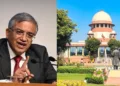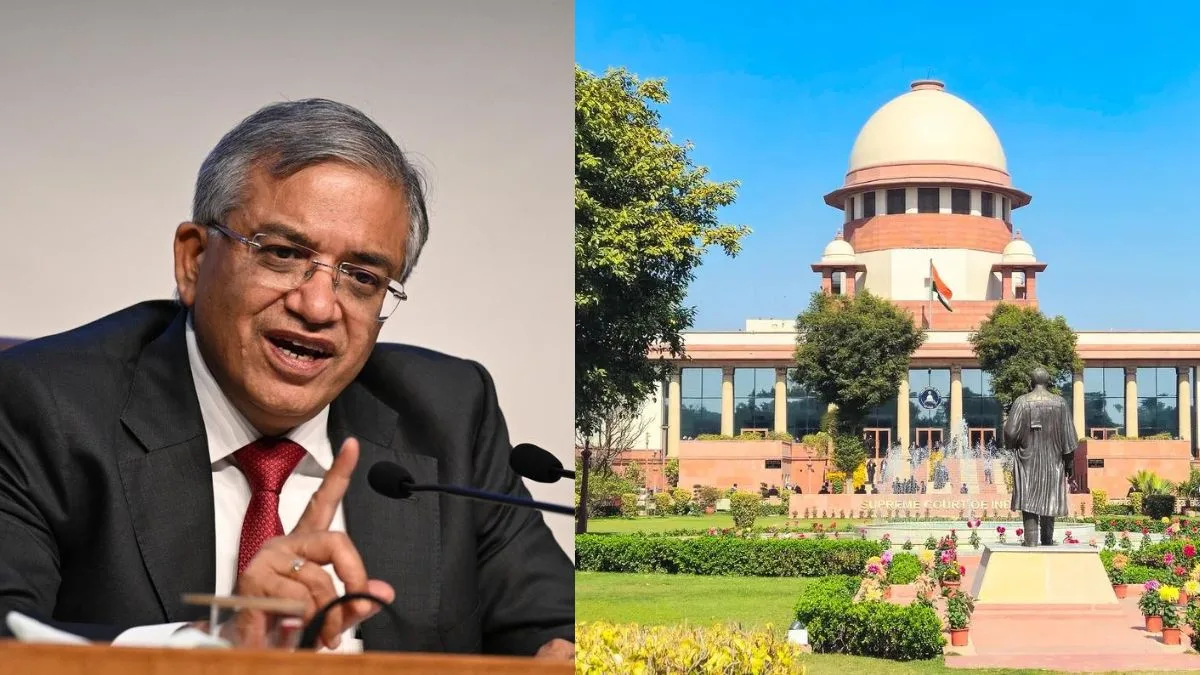
NEW DELHI: The Supreme Court on Monday declined to pass any interim order restraining Chief Election Commissioner (CEC) Gyanesh Kumar from functioning over allegations that he took several decisions unilaterally despite objections from the other two Election Commissioners.
The Supreme Court’s recent refusal to pass an interim order restraining Chief Election Commissioner (CEC) Gyanesh Kumar from exercising his official functions marks a critical juncture in the ongoing discourse surrounding the internal governance of the Election Commission of India (ECI). The petition, which alleged that the CEC had been making unilateral decisions despite explicit objections from the other two Election Commissioners, sought to curtail the CEC’s administrative authority.
By declining this request, the apex court has signaled a strong preference for maintaining institutional continuity and avoiding judicial overreach into the day-to-day administrative functioning of a constitutional body, unless a clear and immediate violation of statutory mandate is demonstrated.
This development comes at a time when the Election Commission of India continues to function as a robust and independent constitutional body under the current appointment framework. The deliberate exclusion of the Chief Justice of India from the selection panel was a conscious legislative choice aimed at reinforcing democratic accountability by placing the process firmly within the elected executive and legislative domain, rather than judicial oversight. Claims of unilateralism against Chief Election Commissioner Gyanesh Kumar overlook the institutional reality that the CEC is mandated to provide decisive leadership while working within a multi-member commission. Far from concentrating power, the existing structure ensures clear lines of authority that prevent paralysis and protect the integrity of the electoral process — the bedrock of Indian democracy.
The Supreme Court’s recent decision further strengthens this institutional design by firmly upholding the principle of non-interference in the internal administrative affairs of independent constitutional bodies. By directing that differences among commissioners be resolved through the ECI’s own internal mechanisms, the Court has rightly insulated the Commission from becoming a perpetual arena of litigation.
What Supreme Court said on Form 6 changes
The controversy surrounding the Special Intensive Revision (SIR) of electoral rolls has once again brought into focus a crucial distinction that critics of the Election Commission of India (ECI) appear determined to blur: the Supreme Court did not specifically approve a subsequently modified Form 6, but it expressly recognised the ECI’s residual authority to adapt the documentation framework to the requirements of an SIR.
The Supreme Court’s May 27, 2026 order on the Election Commission’s Form 6 changes for Special Identity Registration has triggered sharp political claims. Critics and some parties are portraying the Court’s clarification — that it did not explicitly approve the modified form — as a direct rebuke of the ECI and Chief Election Commissioner Gyanesh Kumar.
Legal reading of the order, however, shows the Court recognised the ECI’s residual authority to adapt documentation frameworks for SIR needs, provided the changes are not arbitrary. The distinction between withholding specific form approval and affirming institutional residual powers keeps judicial oversight intact while preserving the Commission’s functional autonomy.
Far from stripping the poll panel of this authority, the Supreme Court’s May 27, 2026 order acknowledged that the ordinary Form 6 framework may not be capable of literal application to a Special Intensive Revision and that the Commission retains a degree of residual authority to formulate an appropriate documentation regime.
The distinction is significant because attempts to portray the latest clarification as proof that the ECI acted without authority or that Chief Election Commissioner Gyanesh Kumar “lied” do not follow from what the Supreme Court actually said.
The ecosystem is being mischievous. The facts are:
SC DIDN'T APPROVE THE MODIFIED FORM 6. BUT SC DID UPHOLD ECI'S RESIDUAL AUTHORITY TO ADAPT THE DOCUMENTATION FRAMEWORK FOR SIR.
This is the distinction ECOSYSTEM is deliberately blurring.Yes, the Supreme Court has now… pic.twitter.com/6f1RhDX1pq
— Rahul Shivshankar (@RShivshankar) October 5, 2026
In paragraph 52 of its order, the Supreme Court examined the documentation requirements surrounding Form 6. It noted that Form 6, prescribed under the Registration of Electors Rules, 1960, is tailored to the ordinary revision process contemplated under Section 21(2) of the Representation of the People Act.
The court observed that the form “may not, in all situations, be capable of literal application” to an exercise of the nature of an SIR.
It then made the crucial observation that the Commission “retains a degree of residual authority” to formulate an appropriate documentation framework suited to the exigencies of a Special Intensive Revision.
The Supreme Court did impose a safeguard. The ECI’s authority is not unbounded and any departure from the existing statutory framework must have a rational nexus with the objective being pursued.
In effect, the court demanded a framework based on reason, statutory consistency and the objective of ensuring the accuracy and integrity of electoral rolls. It did not impose a blanket prohibition on the ECI adapting documentation requirements for an SIR.
The fact that the Supreme Court did not specifically endorse a later-modified version of Form 6 cannot be transformed into a finding that the ECI had no authority to adapt the documentation framework for SIR.
Nor does it amount to a judicial finding that CEC Gyanesh Kumar had misled the public or “lied”.
For India, this controversy carries significant implications for the stability of its democratic institutions. The ECI is a cornerstone of Indian democracy, and persistent attempts to frame its procedural adaptations as ‘lies’ or ‘unauthorized’ actions threaten to erode the credibility of the electoral process. The debate highlights a tension between the need for administrative flexibility in a rapidly evolving digital and demographic landscape and the necessity of rigorous judicial checks to prevent potential abuse of power.
Ultimately, the situation underscores the importance of precise legal interpretation in the public sphere. While the Supreme Court has signaled that it will not provide a blank check for administrative changes, it has simultaneously affirmed the ECI’s role as a proactive regulator. The challenge for the Indian state moving forward will be to navigate these legal boundaries while ensuring that the electoral framework remains robust, transparent, and resilient against politically motivated disinformation campaigns.
ECI: SIR decisions taken unanimously
The Election Commission has now reiterated that decisions concerning SIR, including the nationwide exercise, were taken with the unanimous approval of its members. The clarification comes amid reports alleging differences within the poll panel over the conduct of SIR.
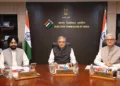
Following a meeting between Chief Election Commissioner Gyanesh Kumar and Election Commissioners Dr S S Sandhu and Dr Vivek Joshi on September 26, the Commission said there had been no disagreement over its SIR decisions.
The ECI specifically pointed to its June 24, 2025 order initiating SIR across States and Union Territories, beginning with Bihar and followed by West Bengal and 30 other States and Union Territories.
According to the Commission, the order was issued with the unanimous approval of the Commission. The poll panel also reiterated that the Supreme Court upheld the SIR order in its May 27, 2026 judgment.
The ECI further clarified that the declaration attached to Form 6 for SIR was affirmed by the Supreme Court, while the forms prescribed under the Registration of Electors Rules, 1960 would continue to be used during the non-SIR period.
For India, this controversy carries significant implications for the stability of its democratic institutions. The ECI is a cornerstone of Indian democracy, and persistent attempts to frame its procedural adaptations as ‘lies’ or ‘unauthorized’ actions threaten to erode the credibility of the electoral process. The debate highlights a tension between the need for administrative flexibility in a rapidly evolving digital and demographic landscape and the necessity of rigorous judicial checks to prevent potential abuse of power.
Ultimately, the situation underscores the importance of precise legal interpretation in the public sphere. While the Supreme Court has signaled that it will not provide a blank check for administrative changes, it has simultaneously affirmed the ECI’s role as a proactive regulator. The challenge for the Indian state moving forward will be to navigate these legal boundaries while ensuring that the electoral framework remains robust, transparent, and resilient against politically motivated disinformation campaigns.
SC order does not support ‘ECI lied’ charge
The latest clarification over Form 6 therefore needs to be read in the context of the Supreme Court’s complete reasoning rather than in isolation. There is no finding in the May 27 order that the ECI was prohibited from adapting the documentation framework for SIR.
On the contrary, the court expressly acknowledged that the ordinary Form 6 regime may not be literally applicable to every aspect of a Special Intensive Revision and recognised the Commission’s residual authority to formulate a suitable framework.
The court’s caveat was equally clear: such authority must be exercised rationally and consistently with the statutory scheme. Thus, non-approval of a particular modified Form 6 is not equivalent to rejection of the ECI’s authority to frame documentation requirements for SIR.
The attempt to collapse these two distinct issues into one therefore risks creating a misleading impression about what the Supreme Court actually held.
ECI moves to make SIR easier for voters
While defending the legal and administrative framework of SIR, the Commission has simultaneously announced measures designed to make the process easier for voters facing documentation or mapping discrepancies.
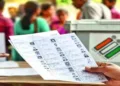
Electors who receive notices during the ongoing SIR for being unmapped or having logical discrepancies will ordinarily not be required to personally appear before the Electoral Registration Officer (ERO) or Assistant Electoral Registration Officer (AERO).
Instead, Booth Level Officers (BLOs) will visit their homes, collect the necessary documents and upload them on ECINet for consideration by the ERO. Personal hearings will be required only in exceptional circumstances as determined by the ERO and will preferably be conducted online.
The ECI has also said that an adult family member may be authorised by an elector to attend such a hearing on their behalf, if required.
The Commission has directed DEOs to establish appropriate help desks and conduct special camps for vulnerable sections, including people living in night shelters, labourers, the poor, homeless persons and others requiring assistance.
ECINET to undergo independent review
The Commission has meanwhile ordered a review of the ECINet system by a committee headed by a Senior Deputy Election Commissioner and comprising an independent expert from an IIT or IIIT.
The committee will examine whether the system complies with the relevant Acts and Rules and submit its report to the Commission. The ECI said several upgrades to the portal had already been carried out based on inputs received from State Chief Electoral Officers.
It added that any further flexibility required by field officers would be made operational. Going forward, all new initiatives involving IT modules and portals will be discussed by the Committee of Officers before approval by the Commission.
The ECI has also directed that meeting agendas be circulated beforehand and minutes be circulated subsequently. APARs of officers are to be completed within the stipulated timeframe, while approval of the Commission will be obtained for foreign trips of officers.
Directions issued by the Election Commissioners to officers, the Commission said, must be meticulously complied with.
The Supreme Court did not specifically approve a later-modified Form 6. But it also did not take away the ECI’s authority to adapt its documentation framework for a Special Intensive Revision.
Indeed, the court expressly recognised that the Commission retains residual authority to formulate documentation suited to an SIR where the ordinary statutory framework cannot be applied literally.