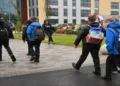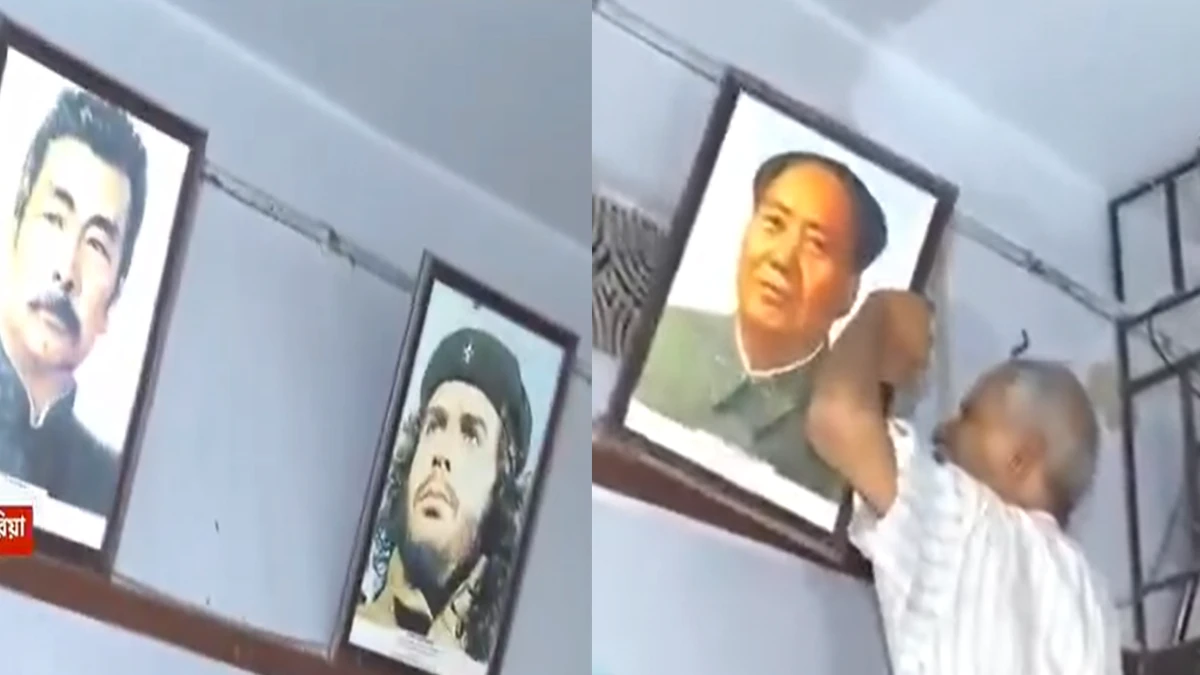
KOLKATA: A symbolic change is unfolding inside a Dhakuria school, where portraits of Karl Marx, Mao Zedong and Ho Chi Minh have been removed following objections raised by the Akhil Bharatiya Rashtriya Shaikshik Mahasangh (ABRSM).
The development at Lake View School has reignited a long-standing debate over the ideological imprint left on Bengal’s educational institutions during decades of Left influence and the subsequent 15-year tenure of the Trinamool Congress government.
The portraits had reportedly remained on the school’s premises for around two decades. According to the school authorities, they were removed after objections were raised by the teachers’ organisation.
Finally, West Bengal is healing 🤌
Portraits of Mao Tse-Tung and Karl Marx REMOVED from the walls of a Dhakuria school by nationalist teachers.
Installed during Communist rule, the TMC government didn’t bother removing them for 15 years. Left or TMC, two rotten sides of the…
— Megh Updates 🚨™ (@MeghUpdates) October 1, 2026
The episode has acquired added significance following the 2026 West Bengal Assembly election, in which the BJP won a majority and ended the TMC’s 15-year tenure in the state.
Marx, Mao and Ho Chi Minh removed
ABRSM Kolkata president Pradip Pal said the organisation objected to the display of portraits of foreign communist leaders while prominent Indian personalities were allegedly absent from the school’s walls.
According to Pal, Mao’s portrait was displayed near the entrance, while Marx’s portrait was placed in the staff room and Ho Chi Minh’s outside the principal’s room.
The organisation questioned why figures such as Netaji Subhas Chandra Bose, B.R. Ambedkar and former President APJ Abdul Kalam, among other prominent Indian personalities, were not given similar representation.
Pal said the organisation brought the matter to the school’s attention and that the school authorities themselves removed the portraits.
The school’s teacher-in-charge, Sudipta De, said the portraits had been present for a long period and indicated that the school would remove such portraits from its premises.
A question over Bengal’s educational legacy
The controversy has opened a larger question: what should students see when they enter a school in Bengal — foreign revolutionary figures or personalities who shaped India’s own national, social and intellectual history?
The school already has portraits of several prominent Indian personalities, including Ishwar Chandra Vidyasagar, Bankim Chandra Chattopadhyay, Rabindranath Tagore, Syama Prasad Mookerjee and Sri Aurobindo, as well as cultural figures such as Utpal Dutt and Ritwik Ghatak.
The dispute therefore goes beyond three portraits. It has become a flashpoint over how history and public memory are represented inside educational institutions.
From decades of Left influence to a new political chapter
For decades, Bengal’s political and educational landscape was strongly shaped by the Left. The TMC subsequently governed the state for 15 years before the BJP’s victory in the 2026 Assembly election. The BJP secured 207 seats, while the TMC won 80, according to reported final election results.
The Dhakuria episode has consequently become part of a wider discussion about whether the state’s educational spaces are now entering a new phase in which greater emphasis will be placed on Indian national figures and institutions.
ABRSM has argued that students should be exposed more prominently to personalities connected with India’s nation-building journey. The organisation has also questioned the continued presence of communist leaders in educational spaces.
Left-backed teachers’ body objects
The move has drawn opposition from the Bangiya Shikshak O Shikshakarmi Samiti, a Left-backed teachers’ organisation, which maintained that schools should be free to display portraits of eminent personalities from India and abroad.
Its general secretary Swapan Mondal defended the broader practice of displaying internationally recognised intellectual and political figures. The competing positions underline the ideological divide surrounding the role of political and historical personalities in schools.