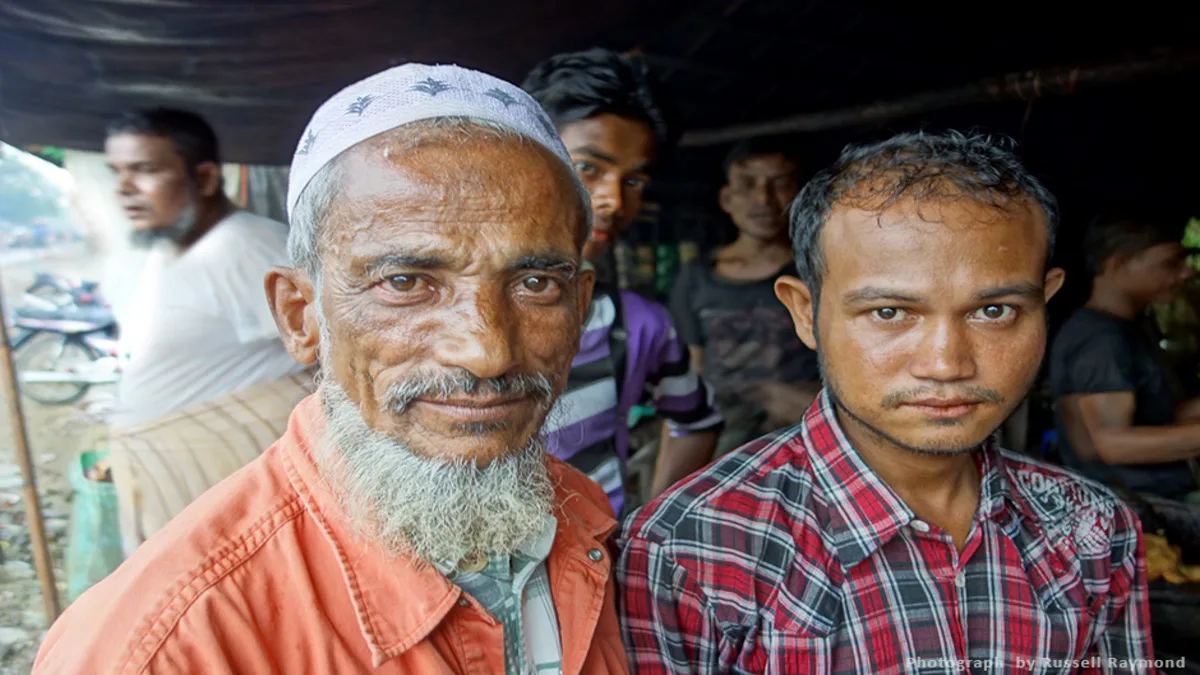
NEW DELHI: Malaysia has begun returning nearly 1,500 Myanmar nationals, including Rohingyans, to Myanmar under a repatriation process that the Malaysian government says is voluntary and forms part of a broader arrangement to facilitate the return of up to 5,000 people.
The first group includes 1,370 men, 79 women, 20 boys and seven girls, with those being returned ranging in age from 8 to 60, according to Malaysia’s state news agency Bernama, citing a Home Ministry official. The process involves Malaysian authorities coordinating with Myanmar on identity verification, documentation, transportation and other logistical arrangements.
Dozens of buses carrying the group arrived under police escort at a stadium near the Lumut naval base in northwestern Malaysia on September 29. Journalists were not permitted inside the facility. The individuals were expected to undergo processing before being transferred to the naval base and transported to Myanmar by sea.
The Malaysian Home Ministry has said the repatriation process is being conducted for people who are eligible and willing to return voluntarily, while identity, nationality and security checks are being carried out for Myanmar nationals held at immigration detention facilities.
Malaysia and Myanmar set out wider repatriation plan
The current movement is the first phase of a broader Malaysia-Myanmar repatriation arrangement that could involve as many as 5,000 people. Malaysian Prime Minister Anwar Ibrahim said in July that Myanmar had agreed to receive 5,000 Rohingya refugees, although the Malaysian government has also referred to the wider group as Myanmar nationals, with individual eligibility subject to verification.
Malaysia’s Home Ministry said around 4,008 individuals, primarily Rohingya refugees, are expected to be channelled into the country’s Refugee Registration Document, or DPP, programme this year. Separately, 5,000 people are expected to undergo the voluntary repatriation process under the arrangement with Myanmar.
The ministry said 10,388 Myanmar nationals were being held at Malaysian immigration detention depots as of August 15. It stressed that not everyone in detention should be categorised as a refugee.
Malaysian authorities are working with police to establish the identity, nationality and security background of those detained, with the verification process expected to conclude during the fourth quarter of the year.
The Malaysian government has said subsequent repatriations will proceed after the necessary identity verification, documentation, logistics and operational coordination between Malaysia and Myanmar are completed.
Two Myanmar naval vessels and a hospital ship are expected to be involved in the transportation arrangements, according to Malaysia’s Home Ministry.
Rohingya population remains significant in Malaysia
Malaysia hosts one of Southeast Asia’s largest populations of Rohingya refugees. As of February 2026, more than 126,144 Rohingya refugees were registered in Malaysia, while the country has around 215,600 refugees and asylum seekers registered with the UNHCR.
Malaysia is not a party to the UN Refugee Convention and treats refugees and asylum seekers under its immigration framework. The government has recently introduced a registration system for refugees and asylum seekers and is developing a biometric database as part of efforts to manage and regulate the population.
The Rohingya population in Malaysia has grown substantially since the major displacement of Rohingya people from Myanmar in 2017. Large numbers moved to neighbouring countries, including Bangladesh, Malaysia and India.
Bangladesh currently hosts more than 1.2 million Rohingya refugees, making it the largest host country for the Rohingya population outside Myanmar.
The situation of the Rohingya remains closely connected to developments inside Myanmar, where the community has faced restrictions on citizenship and recognition. Myanmar authorities do not officially recognise the Rohingya as an ethnic community with local roots and commonly refer to them as “Bengalis”, a designation associated with the position that they originate from Bangladesh.
Security, verification and voluntary return
The Malaysian government has presented the repatriation programme as part of a longer-term effort to address the presence of Myanmar nationals in Malaysia and establish a structured process for people who wish to return.
Anwar has said Malaysia cannot host refugees indefinitely and has called on Myanmar to take responsibility for its nationals. He has also proposed closer diplomatic engagement with Myanmar, including discussions on refugee and undocumented migrant issues.
In a podcast published on September 16, Anwar said he intended to invite Myanmar leader Min Aung Hlaing to Malaysia for discussions on the issue. He described dialogue and cooperation between the two countries as part of his approach to resolving the long-running issue involving Myanmar nationals in Malaysia.
Myanmar Foreign Ministry official Han Win Aung has said the current arrangement follows earlier repatriation operations in 2021 and 2022, when Myanmar received more than 1,100 of its nationals from Malaysia.
According to the Myanmar position, the repatriation process concerns individuals identified as genuine Myanmar citizens. Myanmar does not recognise the Rohingya as a separate ethnic group and does not grant citizenship to the community under its existing legal framework.
The distinction between citizenship verification and refugee status is therefore an important part of the Malaysia-Myanmar process. Malaysian authorities have said that people will be assessed individually as the government determines eligibility for either the DPP registration programme or voluntary repatriation.
The Malaysia-Myanmar repatriation process now moves forward through individual verification, with authorities assessing eligibility, documentation and willingness to return as both countries work towards the planned return of up to 5,000 Myanmar nationals.