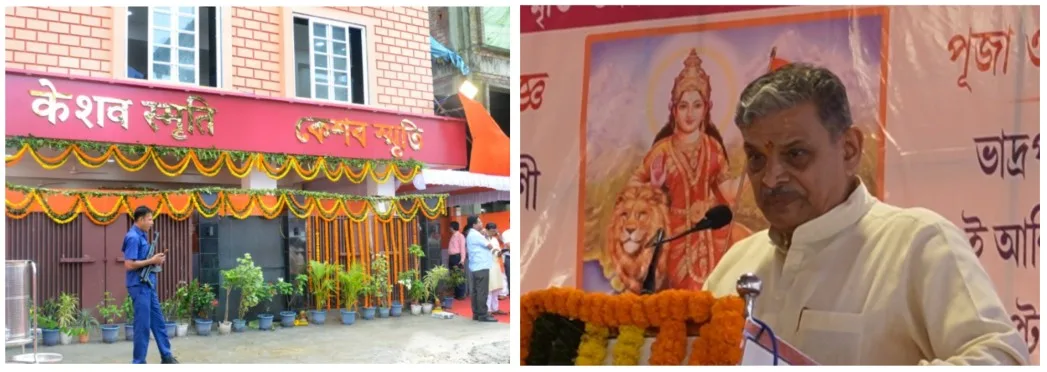
KOLKATA: The transition from Keshav Bhavan in Maniktala to the newly inaugurated Keshav Smriti Bhavan in New Town reflects the awakening of Hindu society and consciousness in Bengal, said Rashtriya Swayamsevak Sangh (RSS) Sarkaryavah Dattatreya Hosabale at the inauguration of the new building of RSS office on September 26.
He said the construction of the building should not be viewed merely as the creation of another organisational office, but as a reflection of the wider awakening taking place among Hindus and society.
Explaining the functioning of the new office, the RSS Sarkaryavah said, “The office is not a place for residence; Sangh pracharaks will stay at the homes of karyakartas.”
He said such buildings become centres of inspiration through the lives, conduct and dedication of the people who work and practise their ideals there.
Hosabale also recalled an incident from Tamil Nadu to highlight the self-reliance and commitment of Sangh swayamsevaks.
He said that when the Sangh office in Tamil Nadu was damaged in a bomb attack, the swayamsevaks declined the State Government’s offer to reconstruct the building. Instead, they undertook the construction themselves and built an even larger structure.
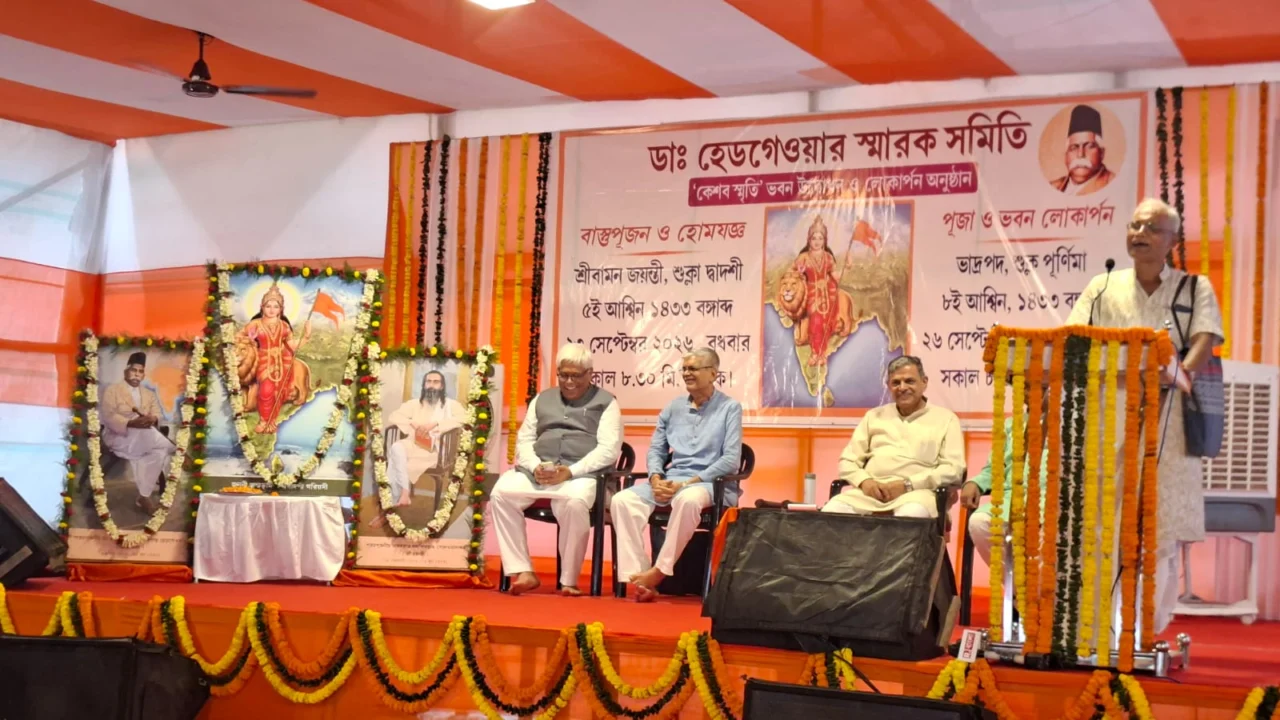
The incident, he said, reflected the Sangh’s tradition of self-reliance and the ability of its swayamsevaks to meet organisational needs through their own efforts.
The earlier Keshav Bhavan at Maniktala was built in memory of Dr Keshav Baliram Hedgewar, founder of the RSS. The new building at New Town has been named Keshav Smriti Bhavan in memory of Keshav Rao Dikshit, a senior Sangh pracharak who came to West Bengal for organisational work and passed away in the State.
Hosabale said the contribution and work of Keshav Rao Dikshit and late Shyamalal Banerjee, another Sangh pracharak who served in the State, continue to inspire swayamsevaks on their organisational journey.
He said that their lives demonstrated complete dedication to the organisation and society. He said their influence did not come from holding positions but from their lifelong commitment and personal conduct.
He said the RSS has witnessed expansion in its organisational activities, with more shakhas, swayamsevaks, training programmes and social initiatives. According to him, the growth in the organisation’s work has created the need for suitable facilities, but the purpose of such offices remains to facilitate organisational and social work.
He emphasised that an RSS pracharak does not enter organisational work with expectations of position, recognition or personal benefit. “A swayamsevak or pracharak does not think about what responsibility or position he will receive. He works with the feeling that the nation should prosper, whether he remains for a few days or not,” he said.
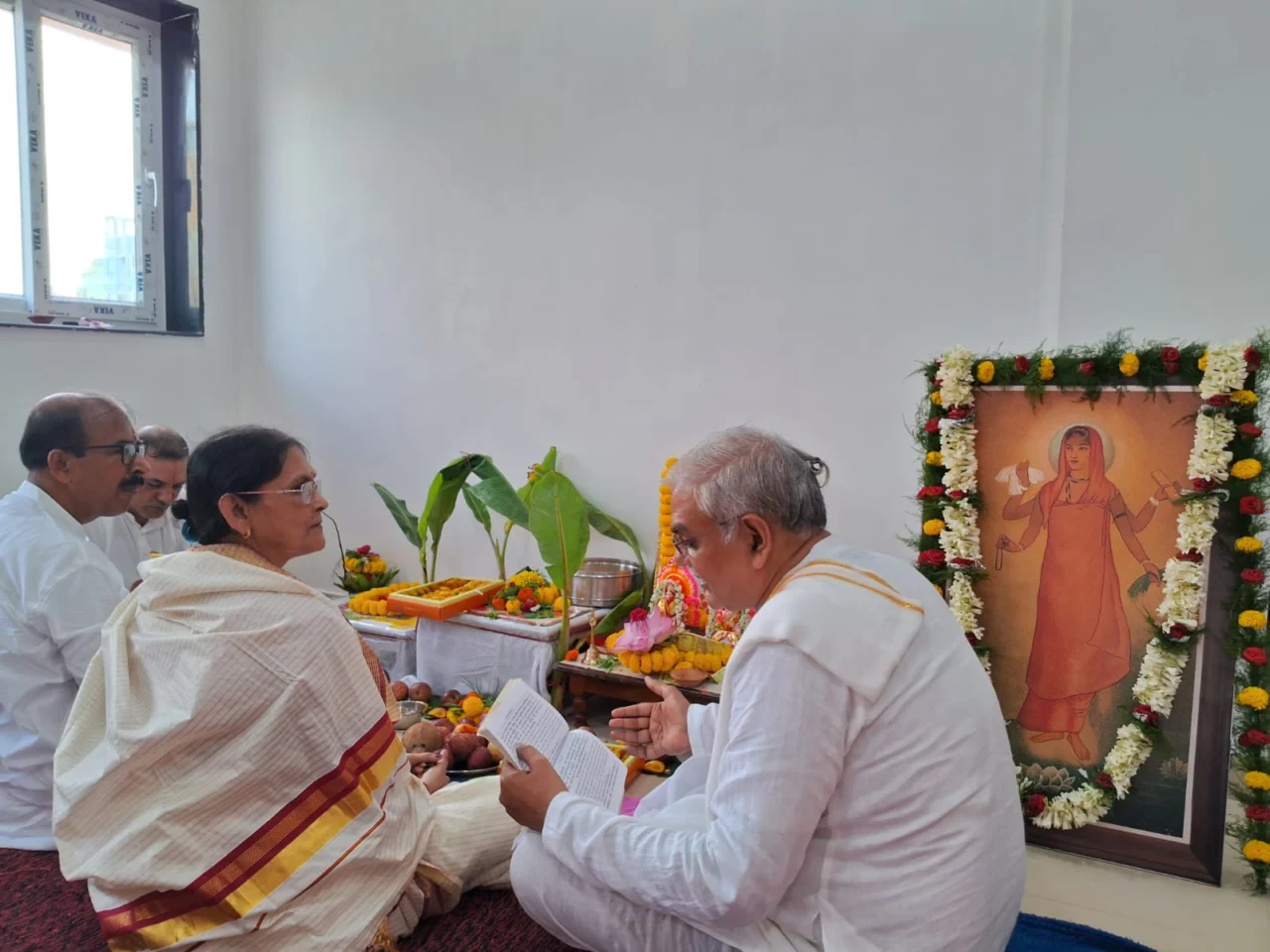
Referring to the tradition of pracharaks being sent to different parts of the country, Hosabale said they consider their place of work as their karmabhoomi. He said pracharaks have travelled from one State to another and dedicated their lives to society without seeking personal rewards.
Speaking about RSS offices, Hosabale said they should not merely be seen as residences for pracharaks. “The office is not meant merely for the residence of pracharaks. It is meant for work,” he said, stressing that the spirit of service and organisational activity should remain central to such places.
He said offices become centres of inspiration through the conduct, discipline and sadhana of the swayamsevaks who work there. He said the history of RSS offices across the country is closely connected with the organisation’s work and the lives of its volunteers. The physical structure of an office, he added, is not what gives it its inspirational character. Rather, the dedication and conduct of the swayamsevaks working there create that atmosphere.
Hosabale said modern facilities and infrastructure are necessary, particularly while keeping future requirements in mind, but the core purpose of such buildings must not be forgotten. “No office or building gives inspiration by itself. The swayamsevaks, workers and people who live, work and visit there give the building its strength and energy,” he said.
He further said that the RSS’s work is based on voluntary service and dedication. Referring to the organisation’s functioning, he said volunteers dedicate themselves to the nation and society without expecting payment for their organisational work.
“Tan samarpit, man samarpit aur yeh jeevan samarpit” — body, mind and life dedicated to the Motherland — is the spirit that volunteers learn through the Sangh, he said.
Hosabale said the contribution of swayamsevaks is not limited to constructing offices. Their dedication also enables social service, social organisation and nation-building activities.
He said the RSS has travelled a long journey over the past century, while acknowledging that several challenges and problems still remain. “All questions have not been resolved and all problems have not disappeared. There are challenges and crises,” he said. However, he added that a society that faces challenges with confidence and determination can move towards their resolution.
“The problem becomes smaller when the resolve is bigger,” Hosabale said.
Concluding his address, Hosabale said the Keshav Smriti Bhavan should become a centre that continuously inspires swayamsevaksand society. He said the legacy associated with Dr Hedgewar and generations of dedicated volunteers should inspire people to dedicate themselves to the nation and society.
He called upon volunteers to preserve the basic dimensions of RSS work while ensuring that organisational activities remain relevant in the coming century.
Hosabale also attended the Ram-Sharad Kothari Pratibha Samman 2026, organised by the Ram-Sharad Kothari Smriti Sangha at the Alipore National Library Auditorium in Kolkata.
Ramkumar and Sharadkumar Kothari, (Kothari bandhu) brothers from Kolkata, were martyred during the Ram Mandir movement in Ayodhya in 1990. The annual event was organised in their memory to honour individuals and organisations making notable contributions to social development.
At the 2026 event, Ishwarchandra Hembram, Headmaster of Vidyasagar Shishu Shiksha Niketan in Purulia; Ramesh Chandra Mishra, an environmental activist from Odisha; and Dhyan Foundation from Jharkhand were honoured for their contributions to society.
Hosabale attended the programme as the keynote speaker, while Chief Minister Suvendu Adhikari was present as the chief guest.