NEW DELHI: Ask any parent what they want from their child’s education and the answer is usually simple: good marks, a good college and eventually a good career. But there is another question that is becoming equally important: Is scoring well enough to prepare a child for the real world? A student may know the right answer in an examination, but can they communicate their ideas? Can they solve a problem they have never seen before? Can they work in a team, use technology, make decisions and handle situations outside the classroom?
This is the thinking behind the education reforms being pursued by the Government of India under the National Education Policy (NEP) 2020. The focus is gradually moving from education being only about “what you know” to also asking “what you can do with what you know.”
But what do these terms actually mean for a student?
- Skills are the abilities a child can use in real situations such as communication, problem-solving, teamwork, creativity, digital skills and the ability to apply what they have learnt
- Values are the qualities that tell how a child behaves and makes decisions such as empathy, respect, responsibility, honesty, cooperation and a sense of service
- Holistic learning brings these different aspects together
In simple terms, the idea is to help a child know things, use what they know, and become a responsible and confident person while doing so.
What exactly is changing?
For a long time, Indian education has been closely associated with textbooks, examinations and on broader aspects – good marks. While academic knowledge is important, the new approach lays greater emphasis on skills, practical learning, creativity, critical thinking, values and overall development. The idea is not to reduce the importance of marks or examinations. Rather, it is to make learning more meaningful beyond the examination hall.
NEP 2020 calls for reducing the content load to focus on essential concepts. It gives students more opportunities for discussion, analysis, application, experimentation and problem-solving. Think about a student who studies computers for years but gets very little opportunity to actually use technology creatively. Or a student who studies communication but rarely gets the confidence to speak, present an idea or work with a team. This is where skill-based education comes in.
Under the vocational education component of Samagra Shiksha, students in Classes 9 to 12 in participating schools can get exposure to vocational courses linked with the National Skills Qualification Framework. The bigger idea is that a child should be able to discover different kinds of work and career possibilities before reaching the end of formal education. And importantly, NEP 2020 seeks to break the old divide between academic and vocational education.
A student interested in science should not be made to believe that practical skills are somehow less important. Similarly, vocational education should not be treated as an option only for students who are not pursuing traditional academic streams.
But where do values fit into all this?
This is another important part of the government’s education vision. Education is not only about producing employable graduates. It is also about preparing individuals who can participate responsibly in society. NEP 2020 therefore talks about qualities such as empathy, respect, responsibility, teamwork, resilience, scientific temper and the spirit of service. This may sound less measurable than marks, but parents see its importance in everyday life.
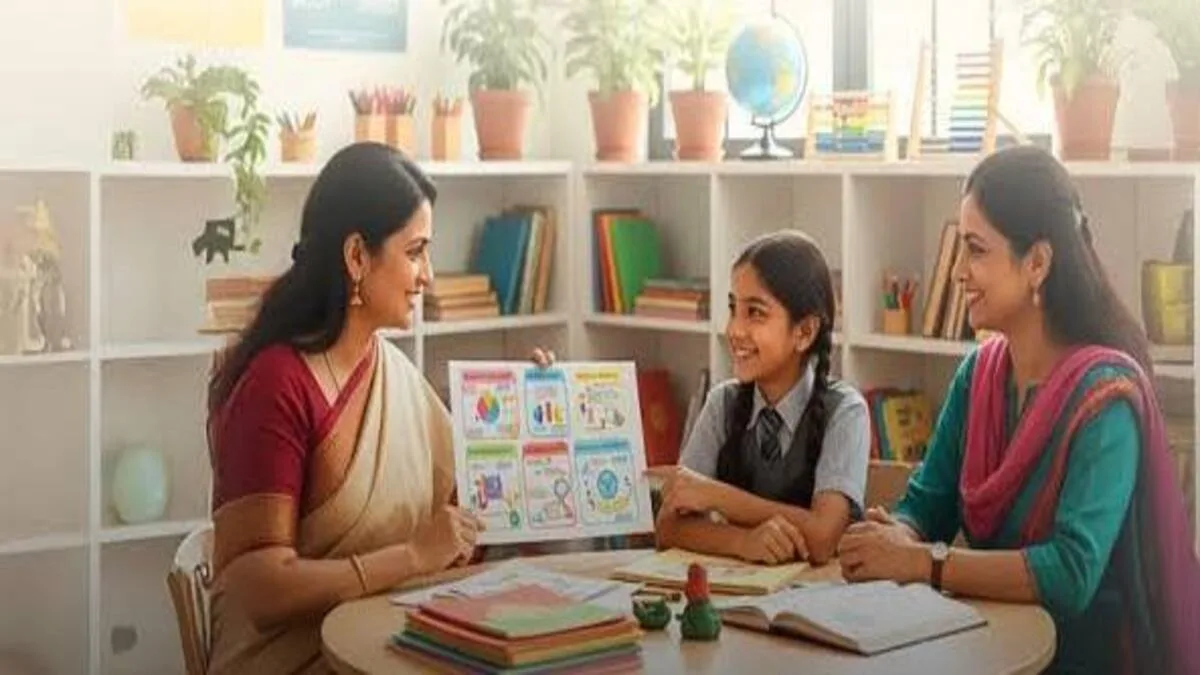
It is not “studies versus activities”. For a young child, learning does not always have to begin with a textbook. Initiatives such as Jadui Pitara use toys, stories, puzzles and activity-based resources to make early learning more engaging. The idea is simple: children can learn important concepts while playing, exploring and interacting with their surroundings.
There is sometimes a misconception that holistic education means students will study less and spend more time on extracurricular activities. That is not the idea. The objective is to bring different forms of learning together. Sports can teach discipline, teamwork and leadership. Art can encourage creativity and expression in the student. Technology can make learning more interactive. In other words, learning does not have to stop at the textbook.
The PM SHRI school initiative is one example of this approach. Several other initiatives under NEP 2020 focus on different parts of a child’s learning journey. NIPUN Bharat focuses on foundational literacy and numeracy. Vidya Pravesh helps children adjust to Grade 1 through play-based activities. DIKSHA and PM e-VIDYA use technology to make learning more accessible, while NISHTHA focuses on teacher training and professional development. The Holistic Progress Card is designed to look beyond conventional exam scores, taking into account different aspects of a child’s learning and development. In other words, the reform is not about introducing one new subject or one new scheme. It is about changing how learning is experienced, taught and assessed.
Another distinctive part of India’s education reforms is that the push for modern skills is being discussed alongside Indian languages, culture, heritage and knowledge traditions. The idea is not that becoming future-ready means becoming disconnected from one’s roots. NEP 2020 gives importance to Indian languages and knowledge systems while also promoting modern areas such as technology, innovation and critical thinking. A student should be prepared for the future without being disconnected from where they come from.
This matters to an ordinary family because the world a child is entering today is very different from the one their parents entered. Jobs are changing. Technology is changing. Artificial intelligence is changing the way people work.
For most Indian parents, education has always been closely linked to one question, “Bacche ke kitne marks aaye?” And marks do matter. But every parent also knows that life after school asks very different questions. Can my child speak confidently? Can they handle failure? Can they work with others? Can they think for themselves? Can they use what they have learnt when there is no textbook telling them what to do? This is where the bigger idea behind India’s education reforms comes in.
The aim is not to move students away from academics. It is to make education more than academics, by giving children opportunities to develop practical skills, creativity, communication, problem-solving abilities, values and confidence alongside their classroom learning. A good education should not end when the exam paper is submitted. Its real value begins when a child steps outside the classroom and has to use what they have learnt in real life.