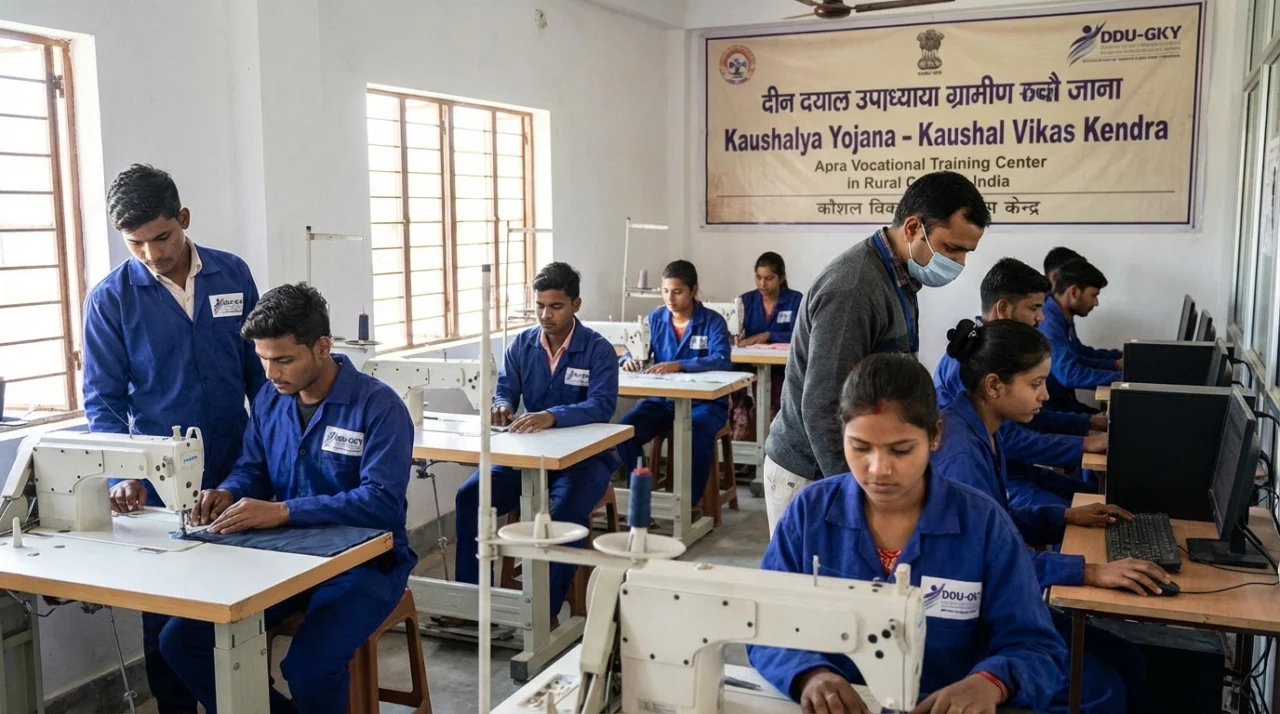
The Ministry of Rural Development is preparing to begin the first phase of training under Deen Dayal Upadhyaya Grameen Kaushalya Yojana 2.0 from October 2026, with 34,920 rural youth set to join 1,164 training batches.
The first phase will cover 14 States and Union Territories, while the government has set a larger target of training 3,57,112 rural youth across these regions by December 31, 2027.
Training to begin across 14 states and UTs
The first phase of the Deen Dayal Upadhyaya Grameen Kaushalya Yojana 2.0 rollout will begin in October, with the Ministry of Rural Development preparing training centres and implementing agencies for the launch.
A total of 1,164 training batches involving 34,920 rural youth are scheduled to begin during the month. The programme is aimed at providing rural youth with job-oriented skills and connecting them with employment opportunities.
The first phase will cover Odisha, Mizoram, Sikkim, Madhya Pradesh, Rajasthan, West Bengal, Himachal Pradesh, Tamil Nadu, Uttarakhand, Uttar Pradesh, Puducherry, Karnataka, Telangana and Bihar.
The Ministry has reviewed the preparedness of these States and Union Territories before the training batches begin. The review covered the arrangements being made by the States, training centres and Project Implementing Agencies.
The government has asked the participating States and UTs to ensure that training begins according to the prescribed schedule and that eligible rural youth are mobilised for the programme.
Target of 3.57 lakh rural youth by 2027
While 34,920 rural youth are scheduled to start training in October, the programme has a much larger target for the coming period.
A sanctioned target of 3,57,112 rural youth has been set to be trained across the 14 States and Union Territories by December 31, 2027.
This target is part of the implementation period of Deen Dayal Upadhyaya Grameen Kaushalya Yojana 2.0, which covers the period from 2026 to 2028.
The Ministry has asked States and UTs to speed up the process of allocating training targets to Project Implementing Agencies. These agencies are responsible for taking the programme to eligible rural youth and conducting the training.
States and UTs have also been directed to complete the allocation of targets to Project Implementing Agencies by October 31, 2026.
The Ministry expects the mobilisation of rural youth and the start of training to increase across participating States during October.
Targets allocated in 24 states and UTs
The rollout of the programme is already progressing in several parts of the country.
According to the Deen Dayal Upadhyaya Grameen Kaushalya Yojana 2.0 portal, targets for around 5.6 lakh rural youth have already been allocated across more than 1,200 projects in 24 States and Union Territories.
Other participating States and UTs are also at advanced stages of completing their target allocation.
The Ministry said more than five lakh targets have already been allocated to Project Implementing Agencies for the mobilisation of eligible rural youth.
The allocation of targets is an important step before training can begin. Once the targets are assigned, implementing agencies can start identifying eligible candidates, mobilising them and preparing training batches.
The Ministry has asked States to complete these processes quickly so that training can start within the planned timelines.
What is Deen Dayal Upadhyaya Grameen Kaushalya Yojana?
Deen Dayal Upadhyaya Grameen Kaushalya Yojana is a Centrally Sponsored Scheme of the Ministry of Rural Development focused on skill development among poor rural youth.
The scheme provides placement-linked skill training. Its aim is to give young people from rural areas skills that can help them find employment.
The duration of training depends on the course selected by the candidate. Courses can range from three months to 12 months.
The programme covers different job-oriented skills and seeks to connect trained candidates with employment opportunities after completion of their courses.
The focus on placement is an important part of the scheme because the programme is not limited to providing classroom-based training. It also seeks to connect trained youth with employers and suitable job opportunities.
Under the 2.0 version of the scheme, the government is also focusing on improving the implementation process through digital systems.
Targets given to all 31 participating states and UTs
The Ministry said targets have been allocated to all 31 participating States and Union Territories for the 2026 to 2028 period.
States and UTs have been asked to speed up the allocation of these targets to Project Implementing Agencies.
The government wants the process to move from target allocation to mobilisation and training without unnecessary delays.
The focus will be on identifying eligible rural youth, informing them about available training opportunities, enrolling them in suitable courses and helping them connect with employment opportunities after training.
The wider rollout is expected to bring more rural youth into the skill development programme as States complete their preparations.
The government is also monitoring the progress of target allocation and training through the new digital system developed for the programme.
Integrated digital portal for DDU-GKY 2.0
Digital monitoring is one of the major components of the new implementation system.
The Ministry has reviewed the implementation of the Deen Dayal Upadhyaya Grameen Kaushalya Yojana 2.0 Integrated Portal, which is designed to manage the project lifecycle digitally.
The portal is intended to cover different stages of the programme, from project management and training to monitoring and implementation.
The Ministry said the digital platform will support greater transparency and efficiency in the implementation of the scheme.
It will also allow the Ministry and States to track different stages of projects and training more effectively.
The use of an integrated portal is expected to make it easier to monitor whether training batches are starting on time, how many candidates are being mobilised and how projects are progressing.
State treasury portals to be integrated
The Ministry has also reviewed the integration of the DDU-GKY 2.0 portal with State Treasury Portals.
States and Union Territories where this integration is still pending have been asked to complete the process by September 30, 2026.
The integration is aimed at facilitating online payments through the Grameen Kaushal Portal.
The move is part of the government’s effort to bring more financial and administrative processes under the digital system.
For States and implementing agencies, the integration is expected to simplify the payment process and make financial transactions easier to track.
The Ministry has asked the remaining States and UTs to complete the integration within the given deadline so that the digital payment system can operate smoothly as training activity increases.
Workshops planned for project implementing agencies
The Ministry will also organise regional workshops to help Project Implementing Agencies understand the new digital platform and its various functions.
The workshops will be held in hybrid mode at four locations during October.
The first workshop is scheduled in Shillong on October 5. This will be followed by workshops in Vijayawada on October 7, Mumbai on October 9 and Dharamshala on October 16.
The workshops will provide officials and implementing agencies with information about the DDU-GKY 2.0 portal, its processes and different functionalities.
The sessions will also allow Project Implementing Agencies to raise concerns related to implementation and seek clarification from the Ministry.
The workshops are expected to help agencies become familiar with the digital system before training activity expands across States and UTs.
Focus on timely start of training
The Ministry’s latest review has focused on making sure that the first batches begin without delays.
The 34,920 rural youth scheduled to start training in October will form the first major group under the new phase of DDU-GKY 2.0.
For the programme to reach its larger targets, States will need to complete target allocation, mobilise eligible candidates and ensure that training centres are ready.
The Ministry has therefore asked States and Union Territories to follow the prescribed timelines for each stage of implementation.
The government expects most participating States and UTs to begin mobilisation and training during October.
As the programme expands, more training batches are expected to be added in different States based on the targets allocated to implementing agencies.
More than five lakh targets already with agencies
The allocation of more than five lakh targets to Project Implementing Agencies shows that preparations for the wider rollout are already underway.
These agencies will be responsible for mobilising eligible rural youth and starting training programmes according to the approved targets.
The Ministry is now focusing on ensuring that the allocated targets translate into actual mobilisation and training.
The process involves identifying eligible candidates, enrolling them in suitable courses and ensuring that training is provided according to the requirements of each programme.
The placement-linked nature of the scheme also means that employment opportunities will remain an important part of the implementation process.
Financial status of the scheme reviewed
The Ministry also reviewed the financial position of the scheme during its latest assessment.
Participating States and UTs indicated that expenditure is expected to increase once training batches begin from October.
The increase in spending will be linked to the expansion of training activity, mobilisation of rural youth and the functioning of more training centres and implementing agencies.
As more batches begin, the financial requirements of the programme are expected to rise.
The Ministry is therefore monitoring both the physical and financial progress of the scheme as it moves into the training phase.
Larger focus on rural employment
The expansion of Deen Dayal Upadhyaya Grameen Kaushalya Yojana 2.0 comes with a focus on improving employment-related skills among rural youth.
For many young people in rural areas, access to job-oriented training can be an important step towards finding employment outside traditional rural occupations.
The scheme seeks to address this by providing training in different skills and linking the training with placement opportunities.
The government is also using digital monitoring to track the implementation of the programme and improve coordination between the Centre, States and Project Implementing Agencies.
With all 31 participating States and UTs having received targets for the 2026 to 2028 period, the programme is expected to expand further in the coming months.
The first phase involving 34,920 rural youth will begin in October across 14 States and Union Territories. The larger target is to train 3,57,112 rural youth in these 14 regions by December 31, 2027.