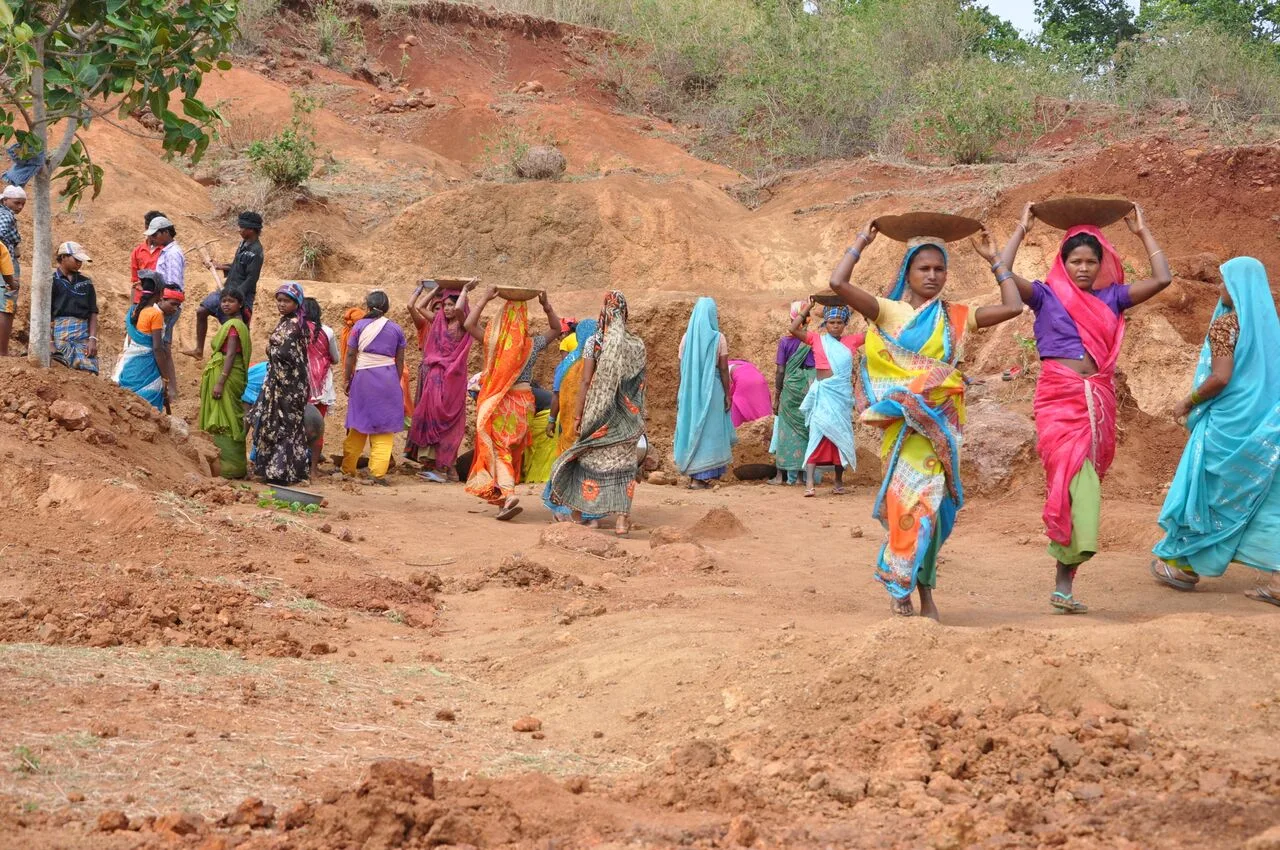
The Union Budget for 2026–27 has earmarked Rs 95,600 crore for the Viksit Bharat-G RAM G (VB-G RAM G) scheme, the government’s restructured rural employment programme. This marks a significant rise from the Rs 86,000 crore allocated to MGNREGA in FY 2025-26, reflecting the Centre’s focus on supporting employment in agrarian regions amid persistent rural job stress.
While the enhanced outlay signals a stronger central commitment, the new scheme fundamentally changes the financial architecture, shifting a larger share of funding responsibility to state governments. Under VB-G RAM G, the Centre will fund 60 per cent, while states are now expected to contribute 40 per cent, a sharp departure from MGNREGA’s earlier model, where the Centre covered nearly all wage and material costs.
State finance departments are already assessing the budgetary impact of this revised cost-sharing. Preliminary estimates suggest additional annual liabilities could run into thousands of crores, depending on local demand for employment under the scheme. Senior officials tracking rural employment spending warn that, in fiscally constrained states, this could lead to tighter caps on work generation, potentially reducing the scheme’s reach compared to the previous rights-based model.
The new formula excludes northeastern and Himalayan states, which will continue under the old 90:10 Centre-state funding split, providing some fiscal relief to these regions.
Government officials argue that VB-G RAM G is designed to improve efficiency, asset creation, and convergence with other rural development programmes. By linking employment generation to productive asset creation, the scheme seeks to create long-term economic value in villages.
While VB-G RAM G represents a bold step in rethinking rural employment financing, its success will depend on striking the right balance between central support, state contributions, and the guaranteed provision of work.
Budget 2026’s restructuring of rural employment through VB-G RAM G reflects the government’s dual objectives: strengthening employment-linked asset creation while sharing fiscal responsibility with states.
The increased allocation shows commitment to rural livelihoods, but the new cost-sharing model introduces potential fiscal pressures that could shape the scheme’s effectiveness in ensuring work on demand, particularly in financially weaker states.