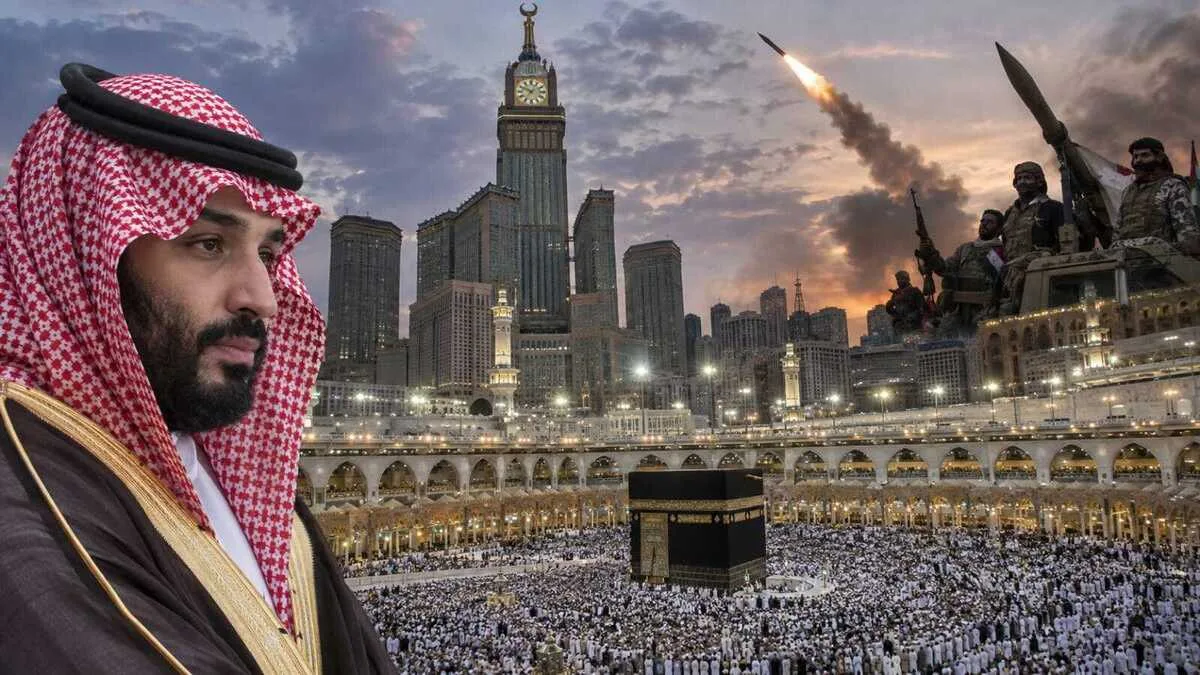
Saudi Arabia placed the holy city of Mecca under an unprecedented aerial threat alert on September 15 after a series of attacks by the Iran-backed Shia Houthi terrorist group intensified concerns over the kingdom’s security. The Saudi Civil Defence issued short-lived alerts across several areas of the country’s western coast, including Mecca, Jeddah and Taif, before announcing that the immediate danger had passed.
The alert in Mecca was the first of its kind reported in the holy city, highlighting the widening geographical reach of attacks by the Iran-backed Shia militant Yemeni group Houthis. Although the authorities did not report an impact in Mecca, the activation of an aerial threat warning in the city came amid repeated missile and drone attacks launched from Yemen against Saudi territory.
The Saudi Civil Defence later said in a post on X that the danger had passed in Mecca and urged residents to continue following official safety instructions, avoid gatherings and refrain from filming. Authorities also directed people to contact the emergency number 911 in case of an emergency.
The development came after Saudi Arabia faced one of the most intense Houthi attacks in years. On September 14, the Shia terrorist group Houthis launched a large-scale assault involving ballistic missiles and drones, with Saudi authorities reporting casualties and damage. The attacks reportedly set oil-related facilities ablaze and left 73 people wounded.
Houthi escalation raises stakes around Mecca and Red sea
The security situation also affected air movements in western Saudi Arabia. According to Israeli newspaper Hayom, air traffic bound for Prince Mohammad bin Abdulaziz International Airport in Medina was halted amid the heightened security situation. The report came after Saudi-backed forces and the internationally recognised Yemeni government carried out strikes near Taiz in western Yemen.
Alert: The danger has passed in Mecca City. For your safety, continue following #CivilDefense instructions and avoid gathering and filming. In case of emergency, call (911). pic.twitter.com/bjRMKf7vr6
— الدفاع المدني السعودي (@SaudiDCD) September 15, 2026
On September 15, two military sources said a Houthi attack in western Yemen killed eight government soldiers. The Iran-backed Shia militant group Houthis also claimed responsibility for another major assault involving what it described as “dozens of ballistic missiles and drones” targeting King Khalid Air Base in Khamis Mushait in southern Saudi Arabia.
The latest escalation follows the renewed fighting between the Houthi terrorist group and Saudi-backed Yemeni government forces. The conflict intensified in July after the Houthis announced a maritime blockade against Saudi Arabia and subsequently targeted shipping in the Red Sea.
Hazem al-Assad, a member of the Houthi politburo, said the group’s response would continue and escalate as long as Saudi Arabia persisted in what he described as aggression against the Yemeni population.
The widening confrontation has also raised concerns over the Bab al-Mandab Strait, one of the world’s strategically important maritime passages connecting the Red Sea with the Gulf of Aden. On September 15, Qatar warned that any closure of Bab al-Mandab could have severe international consequences. Qatar Foreign Ministry official Ibrahim Al Hashmi described such a move as “catastrophic for the entire world”. Meanwhile, US President Donald Trump rejected a request from the Saudi Crown Prince for American intervention in the conflict. Trump also claimed on September 13 that the Houthis had contacted Washington and asked the United States not to become involved.
With the Iran-backed Houthi terrorist group continuing its missile and drone campaign and the threat extending towards Saudi Arabia’s western cities, the latest Mecca alert has underscored the increasingly direct security challenge facing the kingdom.