KOTTAYAM: The death of Pallattu Brahmadathan, one of Keralam’s best-known festival elephants, has left thousands of elephant lovers and mandir festival enthusiasts mourning. The 54-year-old tusker died after being struck by lightning at Melampara near Erattupetta in Kottayam district on October 4, World Animal Day.
A tragic end to a beloved tusker
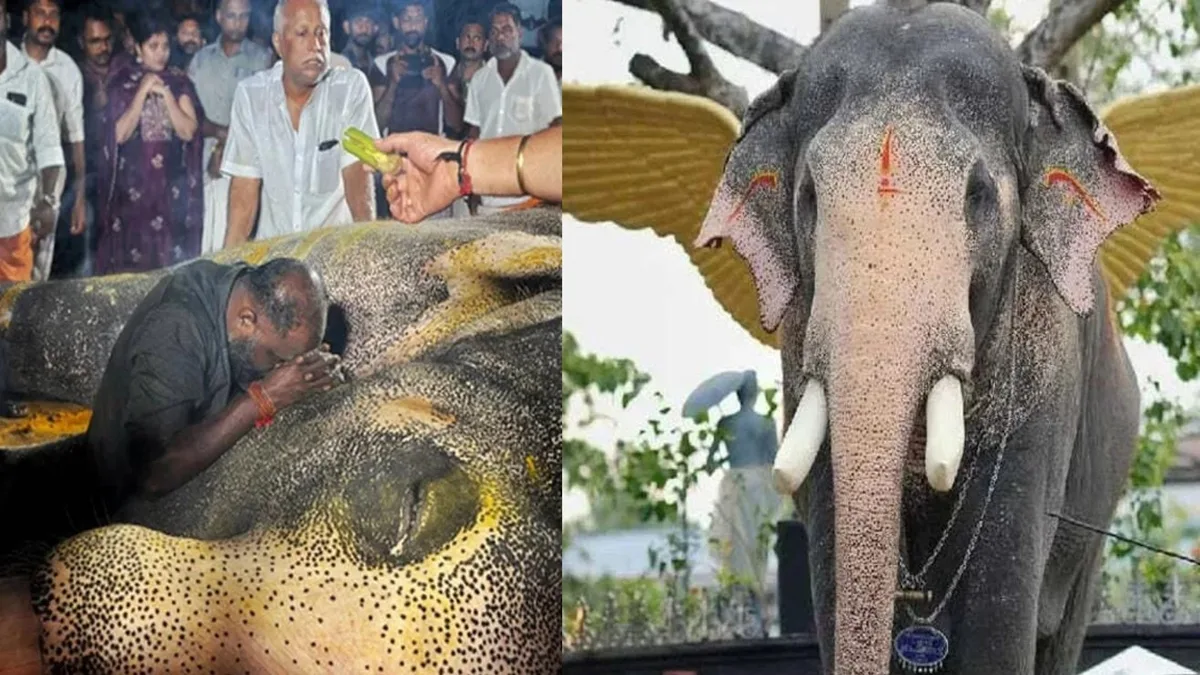
Brahmadathan was resting in a temporary shed near the residence of his owner, Keralam Festival Coordination Committee president Pallattu Rajesh, when a thunderstorm swept through the area at around 5:30 p.m. The nearly 10-foot-tall elephant was tethered there after recently completing his musth period.
The lightning strike proved fatal. News of his death spread quickly across Keralam, prompting scores of people to gather at the Pallattu family residence to pay their final respects to the tusker.
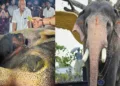
Flowers and wreaths were placed around Brahmadathan as grieving admirers gathered to bid farewell. His owner Rajesh, his family members and his mahout Sarath were seen mourning beside the elephant as a crane later lifted the carcass for post-mortem examination.
A familiar presence at Keralam’s mandir festivals
For nearly three decades, Brahmadathan had been a prominent presence at mandir festivals across Keralam. Standing at around 10 feet 2 inches, his imposing appearance, elegant stature and calm temperament made him a favourite among festival organisers and elephant lovers. He was particularly associated with major mandir celebrations in central Keralam and was among the elephants that carried the thidambu, the sacred replica of the presiding deity, during mandir processions.
One of his most prominent assignments was at the Thrissur Pooram, where he carried the thidambu of Paramekkavu Devi during the Paramekkavu Devaswom’s participation in the festival. He was also part of the famous late-night Pooram procession. His participation in such major festivals helped transform Brahmadathan from a working elephant into a much-loved figure among thousands of festivalgoers.
From Arunachal Pradesh to Keralam
Brahmadathan’s journey in Keralam began around 28 years ago. He was brought to the state from Arunachal Pradesh and initially belonged to Pappalaparambil Pothen Varghese of Puthuppally in Kottayam. He was then known as Puthuppally Brahmadathan.
Around 16 years ago, the Pallattu family, a traditional family associated with elephant ownership and festival culture, took over his guardianship. From then on, he became known as Pallattu Brahmadathan. Over the years, the elephant became closely associated with the family and was treated as more than merely a festival animal.
‘He had become a member of our family’
Recalling his bond with Brahmadathan, Rajesh said that he and his three brothers had been involved in managing the elephant. After the festival season, Brahmadathan would often be tethered at their residence. Rajesh recalled how the elephant would greet his aged mother before leaving for festival processions.
According to Rajesh, the tusker had become a member of their family over the years. He also recalled Brahmadathan’s reputation for being exceptionally calm, saying that the elephant had never attacked anyone during his 28 years in Keralam. This gentle temperament was one of the qualities that endeared Brahmadathan to people of different generations. Children and elderly people alike were drawn to the tusker during festival appearances.
A mahout-elephant bond remembered by many
Brahmadathan’s relationship with his mahouts was another part of the story that made him special to elephant lovers. In 2021, his former mahout Kunnakkad Damodaran Nair, popularly known as Omanachettan, died. The mahout had reportedly spent around 25 years with the elephant. When Brahmadathan was brought to see Nair’s body, the tusker stood near the house and repeatedly raised his trunk towards his former mahout.
The emotional farewell was captured on video and widely circulated on social media. The sight of Brahmadathan standing before the body of the man who had cared for him for decades touched viewers far beyond Kottayam. For many who followed the story, the incident became a powerful reminder of the deep bonds that can develop between elephants and their mahouts.
Brahmadathan’s imposing appearance and regular participation in Kerala’s major festivals also made him something of a social media star. Images and videos of the tusker at festival grounds were widely shared among elephant enthusiasts. His elegant appearance, prominent tusks and composed demeanour made him instantly recognisable. For devotees and festivalgoers, seeing Brahmadathan carrying the thidambu was not merely about the spectacle of a majestic elephant. It had become part of the visual and cultural experience of Kerala’s temple festivals.
A final farewell in Kottayam
Following news of his death, people from different parts of Keralam travelled to Melampara to catch a final glimpse of the tusker. The scenes at the Pallattu family compound reflected the affection Brahmadathan had earned over the decades. Flowers and wreaths surrounded his body as elephant lovers, festival enthusiasts, local residents and those connected with the temple festival tradition gathered to pay their respects. His death on October 4, coinciding with World Animal Day, added poignancy to the loss for those who had followed his journey.
Brahmadathan’s death marks the end of an era for one of Keralam’s most recognisable festival elephants. From his arrival in the state nearly three decades ago to his appearances at some of its most celebrated mandir festivals, the tusker became deeply woven into the cultural landscape of Keralam. He carried the thidambu at prestigious festivals, stood beside his mahout during a poignant farewell, became part of the Pallattu family and earned a devoted following among generations of elephant lovers.
As Brahmadathan passes into the memory of Keralam’s festival tradition, his legacy will remain closely associated with the grandeur of mandir processions, the enduring bond between elephants and their mahouts, and the thousands of people who gathered to see the gentle giant one final time.