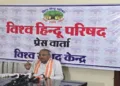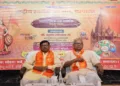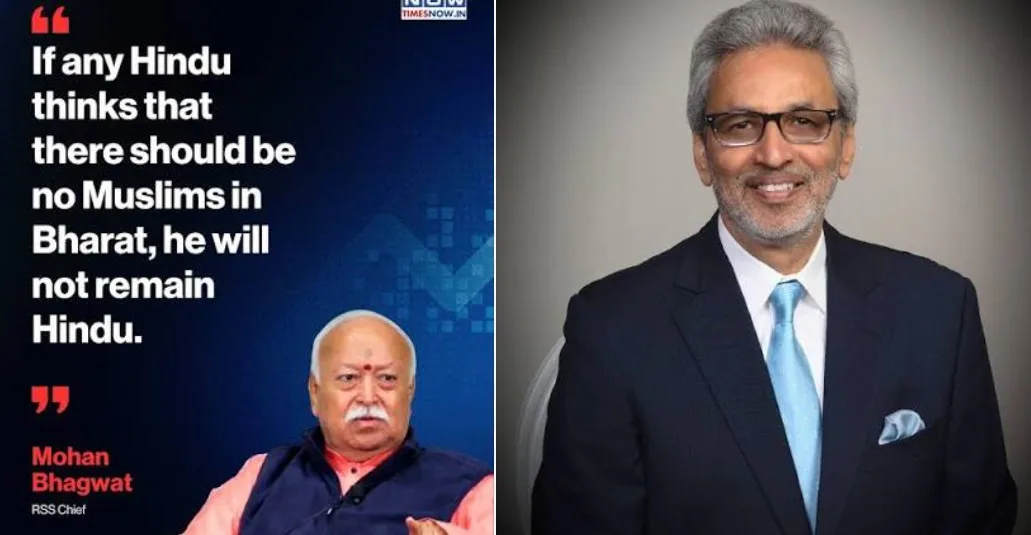
NEW YORK, NY – On the morning of Saturday, August 29, 2026, the World Council of Religious Leaders convened One World: One Humanity at The Pierre in New York City, bringing together more than 200 senior faith leaders from 14 religious traditions and some 30 countries for a single, focused morning of plenary dialogue and shared commitment. Dr. Mohan Bhagwat, Sarsanghchalak of the Rashtriya Swayamsevak Sangh, addressed the gathering as guest of honor.
Secretary-General Bawa Jain issued the following statement:
“On Saturday morning, leaders from across the world’s religious and spiritual traditions came together around one table in New York. They did not come to be photographed together. They came to work.
“This gathering took place at a moment when neighbors who prayed side by side for generations now fear for one another, when hatred crosses borders through our screens faster than any of us can answer it, and when trust in institutions, and in each other, is wearing thin. No government, no party, no company, and no platform reaches three-quarters of the world’s people. The faith traditions do. That reach brings with it a profound responsibility, and on Saturday the leaders in the room chose to exercise that responsibility together.
Why we convened, and why Dr. Bhagwat was at that table
“When Hindu organisations approached me last year with a desire to engage the world’s religions, I took it on for one reason. I saw an opportunity to address something larger: longstanding tensions among some of the world’s largest religious communities, including Hindus, Muslims, and Christians.
I hoped there might be an opportunity to speak to those tensions directly, and that Dr. Mohan Bhagwat, as Sarsanghchalak of the Rashtriya Swayamsevak Sangh, might use the occasion of the organization’s centenary to speak directly about relations among communities and about the responsibility of religious leadership in the century ahead.
“That was an aspiration, not an assurance. Before anything else, I wanted to sit down with Dr. Bhagwat and have a frank conversation. That meeting took place on Friday, August 28. What I heard convinced me that the religious leaders gathering the following morning should hear his position directly from him, in his own words.
“The next morning, before that gathering, he recalled being asked at a literature festival in Delhi in 2018 by Muslim participants who put it to him plainly: you are a Hindu organization, you speak of a Hindu Rashtra, what about us, will you drive us out? He told the room what he had told them:
“No, that is not Hindutva. If any Hindu thinks that there should be no Muslim in Bharat, he will not be a Hindu. If you want to call yourself Hindu, you must believe that all paths are leading to the same. And every human has a divinity. There is no difference between human beings.”
” To me, those words offered an important opening. They do not erase decades of tension, and words alone are not resolution. But words can create the space in which difficult conversations begin, grievances are heard, and relationships have the possibility to change.
” Dr. Bhagwat was forthright and clear. What matters now is what follows. The real test is whether the principles expressed in that room are translated into conduct, relationships, and concrete action. In the days since Saturday, I have been asked, rightly, what that action will look like. That question belongs not only to Dr. Bhagwat, but to every one of us who was in the room.
” His participation was not announced in advance. That was my decision. I wanted first to speak with him directly and understand what he intended to say before asking the broader gathering to engage with his participation as part of the summit.
“I recognize that some participants would have preferred to know of his participation beforehand. I understand that concern, and I regret that they did not have that information in advance. It was not possible until I decided. I ask we focus on what he said, an opportunity like never before to address decades old tensions.
The work of the morning
“To the leaders who came, I want to say this plainly: I am grateful for your courage, your openness, and your willingness to remain in conversation across real differences. Sitting together when it would be easier to withdraw, listening when it would be easier to answer, and choosing relationship over distance are themselves acts of leadership.
“Over the course of the morning, participants moved through three sessions of plenary conversation, on conscience, on the bridging of division, and on what genuine cooperation between traditions can look like in practice. That work culminated in a public Call to Action made in common, affirming that every human being has dignity, that no community is less than another, and that the suffering of others cannot be irrelevant simply because it is not our own.
“A Call to Action matters only if it is answered. That is why we asked every leader in the room to leave with one concrete commitment to carry home to their own community. Unity does not require conformity. It requires the courage to remain at the table across difference, and the willingness to act on the commitments we make once we leave it.
“The World Council of Religious Leaders was born at the United Nations in August 2000. Twenty-six years later, almost to the day, the world’s faith leaders returned to New York to renew that promise at a moment of deep division and profound change.
“Saturday was not the culmination of that work. It was the beginning. The measure of this gathering will be what changes because of what each of us does next.”
About the World Council of Religious Leaders
Founded at the United Nations Millennium World Peace Summit in 2000, the World Council of Religious Leaders brings the spiritual resources of the world’s faith traditions to the work of peace, justice, and the healing of conflict. Its Secretary-General, H.E. Bawa Jain, also serves as President of the Centre for Responsible Leadership. Learn more at wcorl.org and read Secretary-General Jain’s writing at bawajain.substack.com.