KOLKATA: West Bengal is set to take a major step towards unlocking its mineral wealth, with a joint reconnaissance survey planned to assess the manganese potential of Jhargram district.
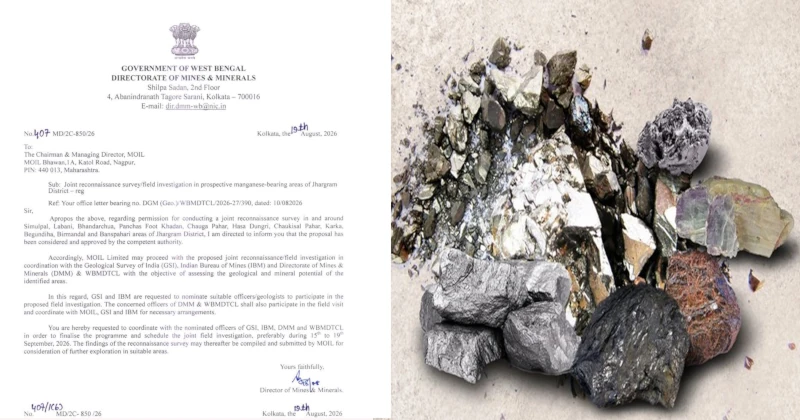
The Directorate of Mines & Minerals, Government of West Bengal, has approved a joint reconnaissance exercise covering several manganese-bearing areas, including Simulpal, Labani, Bhandarchua, Chauga Pahar, Hasa Dungri, Karka, Begundiha, Birmandal and Banspahari, along with surrounding mineral belts.
Manganese Mission: West Bengal’s Next Big Mineral Breakthrough!
After the historic Ashoknagar oilfield breakthrough, West Bengal is set to unlock another treasure hidden beneath its soil: vast manganese reserves in Jhargram district!
The Directorate of Mines & Minerals,… pic.twitter.com/UPAO1tFe6q
— Amit Malviya (@amitmalviya) September 1, 2026
The field survey is scheduled to be conducted from September 15 to 19, 2026, bringing together MOIL Limited, the Geological Survey of India (GSI), the Indian Bureau of Mines (IBM) and the West Bengal Mineral Development & Trading Corporation Limited (WBMDTCL) to assess the region’s mineral potential.
The move comes amid growing attention on Bengal’s untapped natural resources. Jhargram, which has long been recognised for its mineral-bearing zones, could emerge as an important source of manganese if the reconnaissance exercise establishes commercially viable reserves.
For years, critics have accused the previous Mamata Banerjee-led administration of failing to adequately tap the economic potential of Bengal’s mineral-rich regions, citing administrative delays and policy bottlenecks. The latest move signals a renewed push to bring these resources into the development process.
The manganese survey also comes against the backdrop of the recent Ashoknagar oilfield breakthrough, which has renewed focus on West Bengal’s underground resource potential.
Beyond identifying mineral deposits, the larger question is whether Bengal can convert its natural wealth into investment, industrial development, infrastructure and employment opportunities for local communities.
If substantial manganese reserves are confirmed, Jhargram could attract greater attention from the mining and mineral-processing sectors, potentially creating new economic opportunities for the district and the wider state.
The September reconnaissance exercise will therefore be more than a geological survey. It could mark the beginning of a larger effort to transform Jhargram’s mineral potential into a driver of jobs, industry and economic growth.