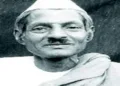
Remembering Gangaram Samrat, the Sindhi historian, journalist and scholar who documented India’s ancient heritage, stood by displaced Hindus during Partition, and carried his vast intellectual legacy from Sindh to India
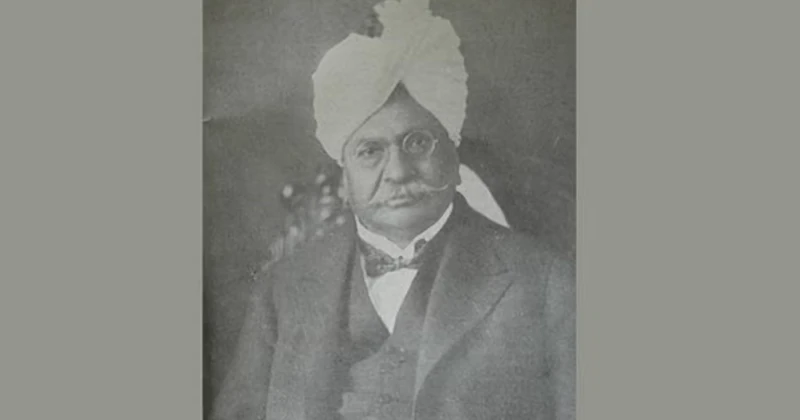
On August 20, 2004, historian, journalist and Sindhi scholar Gangaram Samrat passed away, bringing to an end the life of a man who had spent decades documenting history, defending what he believed were historical truths and preserving the intellectual heritage of Sindh.
But Samrat’s story was not merely that of a historian. It was also the story of a man who witnessed the trauma of Partition from the ground, helped Hindus fleeing Sindh, remained in his birthplace long after the political landscape had changed, and eventually left behind his home for India when the persecution of Hindus became impossible to ignore.
Born in 1918 in San village on the banks of the Indus River, Gangaram Samrat grew up in an environment where education was readily accessible. After completing his studies, he began teaching English at the same school where he had studied. His association with the Arya Samaj proved to be a turning point in his intellectual journey.
He began translating books written by Arya scholars and ascetics into English, gradually entering the world of literature and historical research. Eventually, he gave up teaching and joined the Sindhi newspaper Sansaar Samachar, where he worked for several years.
It was through his writings that Gangaram Samrat would eventually acquire a reputation far beyond the confines of journalism.
20 अगस्त/पुण्य-तिथि
इतिहासकार गंगाराम सम्राट
श्री गंगाराम सम्राट का जन्म 1918 ई. में सिन्धु नदी के तट पर स्थित सन गाँव में हुआ था। उनके गाँव में शिक्षा की अच्छी व्यवस्था थी। पढ़ाई पूरी कर वे उसी विद्यालय में अंग्रेजी पढ़ाने लगे। इसी समय उनका सम्पर्क आर्य समाज से हुआ। आर्य… pic.twitter.com/XjceWEL72U
— Rashtra Sevika Samiti Delhi Prant (@sevikasamiti) August 19, 2026
Aryavarta and the battle over India’s ancient history
Samrat’s book Aryavarta became one of the most significant works associated with his name. In the book, he argued that the Aryans were the original inhabitants of India, a position that placed him firmly in the middle of one of the most contentious debates surrounding Indian history and civilisation.
The book brought him widespread recognition, and people began referring to him as Gangaram Samrat.
His treatment of Islam in the book also provoked strong opposition from sections of the Muslim community. The controversy eventually resulted in the government banning the book. Yet the ban came after the book had already achieved what mattered most to its author: it had reached readers and sold out.
For Samrat, history was not a matter of political convenience. It was a discipline that demanded evidence.
A historian who built his own archive
Samrat reportedly maintained a personal library containing nearly 4,000 books in English, Hindi, Gujarati, Arabic and Persian. His collection also included official gazettes from India, Pakistan and the United States dating from after 1953.
His approach to historical writing was deeply rooted in documentation. He insisted on facts and sought to provide detailed information about both local and international developments before drawing conclusions.
His bibliography included works such as Sikandar ki Parajay, Sindhu Sauvir, Bhayankar Dhokha, Shuddha Gita and Mohenjo-Daro. Several of his works were subsequently translated into different languages, extending the reach of his scholarship.
His correspondence carried a distinctive message at the top: “Go Back to Vedas” a call to return to the Vedic tradition. That phrase reflected the intellectual and cultural worldview that shaped much of his life and writing.
Partition: When history became personal
The most consequential chapter of Gangaram Samrat’s life came with the Partition of India.
As Sindh was engulfed in the upheaval surrounding Partition, countless Hindus were forced to leave their homes and seek refuge in India. Samrat did not remain a detached observer. He reportedly took up employment at Karachi Port so that he could assist Hindus leaving Sindh for India.
Yet despite witnessing the violence and displacement around him, Samrat initially chose to remain in his birthplace. He hoped that the creation of Pakistan might eventually be followed by an atmosphere of peace and stability. He stayed until 1952. But the continuing persecution and insecurity faced by Hindus ultimately changed his decision.
Samrat left Sindh and came to India, leaving behind his two-storey house and much of the life he had built there. What he refused to leave behind was his intellectual wealth: his books and historical material travelled with him.
For a historian whose life had been built around preserving records, carrying his library across a newly created border was more than an act of practicality. It symbolised the determination to ensure that the history of Sindh would not disappear with the displacement of its people.
From Sindh to Karnavati: Rebuilding a literary life
After arriving in India, Gangaram Samrat settled in Karnavati, Gujarat. Migration did not bring an end to his intellectual work. He continued researching, writing and engaging with history and Sindhi literature.
In 1969, he established his own printing press. A year later, in 1970, he launched the weekly newspaper Sindhu Mitra. He also served as the joint secretary of the Laghu Samachar Patra Sangh, continuing his contribution to journalism and the Sindhi literary community.
His work eventually received recognition from the Sindhi community spread across different parts of India. He was also honoured by President Gyani Zail Singh. The Rashtriya Sindhi Boli Vikas Parishad recognised his contribution with an award of Rs 50,000 and a shield.
He never severed his intellectual links with Pakistan. Despite leaving Pakistan permanently, Samrat did not abandon his intellectual engagement with Sindh.
He continued maintaining contact with Sindhi intellectuals in Pakistan, and his articles continued to appear in Pakistani newspapers. His final book, Mataan Asaan khe Visaryo, was published by the University of Sindh in Pakistan. The university even invited him to deliver a speech.
But despite maintaining these intellectual links, Samrat never returned to Pakistan after settling in India. His relationship with Sindh therefore remained one of memory, scholarship and cultural connection rather than physical return.
A life dedicated to preserving memory
Gangaram Samrat’s life spanned some of the most turbulent decades in the history of the Indian subcontinent.
He was born in undivided India, witnessed Partition, worked to help displaced Hindus, remained in Sindh in the hope of peace, eventually became a refugee himself, rebuilt his life in India and continued writing about the civilisation and history he believed needed to be preserved.
His story also illustrates the importance of historians who build archives outside formal institutions. His personal library, multilingual scholarship, newspaper work and extensive documentation became instruments through which he attempted to preserve historical memory.
On August 20, 2004, Gangaram Samrat passed away. In accordance with his wishes, his eyes were donated after his death.
Two decades after his passing, his legacy remains significant not simply because of the books he wrote, but because of the historical world he carried with him from the banks of the Indus to India.