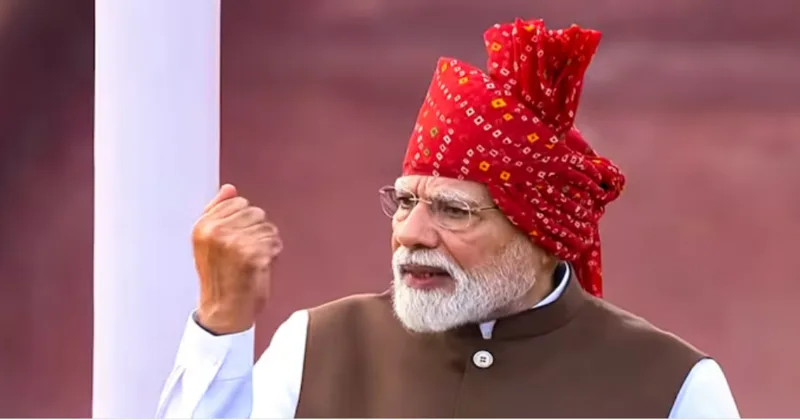
New Delhi: Prime Minister Narendra Modi on August 15, Saturday unveiled a seven-point development framework, ‘Sapta Dhara’ or seven “streams of strength” and called for an acceleration of India’s growth to achieve the vision of a Viksit Bharat by 2047. Addressing the nation from the ramparts of the Red Fort on India’s 80th Independence Day, Modi said India must accomplish in the next five to seven years what could not be achieved over the previous five to seven decades.
Drawing an analogy with the ancient reference to ‘Sapta Sindhu’, the Prime Minister said India needs a new “current” of strength to propel its development. The framework spans manufacturing, agriculture, technology and innovation, infrastructure, defence, the green and blue economy and soft power.
PM Modi annouces "power of 7" (Shakti ki Sapt Dhara) domains that will see more push/reforms by Govt
-Manufacturing
-Agriculture
-Tech & innovation
-Ghati Shakti
-Defence
-Green/Blue economy pic.twitter.com/CDpvPmEisB— Sidhant Sibal (@sidhant) August 15, 2026
Manufacturing Power: Building India’s footprint in global value chain
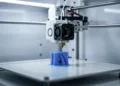
PM Modi placed manufacturing power at the top of the seven streams, calling for India to move beyond simply increasing production and instead build complete domestic value chains. He said India must manufacture everything from small components to finished products, covering design, technology, components and large-scale manufacturing. The objective, he said, should be to establish India as a trusted hub in global supply chains.
The Prime Minister urged Indian manufacturers and MSMEs to compete globally on cost, quality and scale, while making products user-friendly, competitively priced and attractively packaged. He also called for zero-defect and precision manufacturing to become an Indian identity, arguing that global trust in Indian products must be built around reliability and quality.
PM Modi Announces ‘Shakti Ki Sapt Dhara’ for Viksit Bharat During Address to the Nation on the 80th Independence Day
'I call upon the seven key pillars for India’s development: manufacturing, agriculture & food processing, technology & innovation, Gati Shakti, Raksha Shakti, the… pic.twitter.com/iEC92NgUep
— TIMES NOW (@TimesNow) August 15, 2026
Agriculture and Food Processing: Taking Indian farm products global
The second stream focuses on agriculture and food products. PM Modi called for greater investment in food processing and urged India to make the most of expanding global markets available to its farmers.
The emphasis is on moving beyond agricultural production towards value addition, processing and global marketing. By strengthening food-processing capabilities, India can increase farmers’ incomes while expanding the global footprint of Indian agricultural products.
Technology and Innovation: From market to global technology hub
The third pillar is technology and innovation, an area PM Modi identified as critical to India’s future competitiveness. He highlighted emerging fields such as artificial intelligence, quantum technology, space, robotics and data centres, stressing that India should become a global hub for these technologies rather than merely serving as a market for them.
Citing the success of UPI and Digital Public Infrastructure, PM Modi said that India should take its digital innovations to the world and assume leadership in next-generation communication technologies.
Gati Shakti: Faster connectivity, stronger growth
The fourth stream is Gati Shakti, focused on seamless and rapid connectivity across the country.
PM Modi stressed the need for modern highways, high-speed rail and integrated infrastructure capable of moving people and goods efficiently. Faster connectivity, he said, would be essential for supporting manufacturing, trade, tourism and economic growth.
The emphasis reflects the government’s broader push to integrate infrastructure development and logistics so that India’s economic ambitions can be matched by the speed and efficiency of its transport networks.
Raksha Shakti: From self-reliance to global defence supplier
The fifth stream is Raksha Shakti or defence power, with Modi placing self-reliance in defence at the centre of India’s strategic ambitions. He said India cannot remain merely a market for global defence companies when countries worldwide are increasingly prioritising their own national interests. The country must instead develop next-generation defence technologies and emerge as a global defence supplier.
PM Modi specifically highlighted the need to develop drone systems and leadership in hypersonic defence technology, alongside broader efforts to strengthen India’s indigenous defence ecosystem.
Green and Blue Economy: Creating new growth opportunities
The sixth stream combines the green and blue economies, linking India’s development ambitions with sustainability and its maritime potential.
PM Modi called for global-scale excellence in green hydrogen, renewable energy, energy storage, green mobility and green manufacturing. He said India should not merely respond to the global climate challenge but emerge as a country providing solutions and leading the global green movement.
The blue economy, meanwhile, offers opportunities through India’s long coastline, fisheries, coastal tourism and ocean technology. Modi said these areas could become important drivers of economic expansion and create new employment opportunities, including green jobs.
Soft Power: Expanding India’s global influence
The seventh stream is soft power, which PM Modi described as an increasingly important source of India’s global influence and international trust.
He cited yoga, Ayurveda, India’s spiritual and cultural traditions and holistic healthcare as examples of India’s soft-power assets. Yoga, he said, has connected the world with India and become a source of energy globally.
The Prime Minister also highlighted the country’s growing creative economy, including handicrafts, films, animation, visual effects, gaming and digital content. He pointed to the WAVES Summit as an initiative that can help position India’s creative industries as a global capability.
Tourism and sports were also identified as areas of untapped potential. PM Modi noted India’s more than 100 national parks and questioned why the country should not attract more international visitors and host major global sporting events. He also pointed to India’s growing “concert economy” as international artists increasingly look towards the country.
Youth at the epicentre of Sapta Dhara of Viksit Bharat
PM Modi stressed that the seven streams cannot be pursued in isolation. Instead, India needs a holistic approach, with the Centre, states, local governments and industry moving together. He also placed India’s youth at the heart of the transformation, saying their energy, talent and capabilities would be channelled towards nation-building. The youth, he said, will be among the biggest beneficiaries of a Viksit Bharat.