Bharat’s Decolonisation Journey: Beyond symbolic change
October 16, 2026
  • Read Ecopy
  • Circulation
  • Advertise
  • Careers
  • About Us
  • Contact Us
Android AppiPhone AppArattai
Organiser
  • ‌
  • Bharat
    • Assam
    • Bihar
    • Chhattisgarh
    • Jharkhand
    • Maharashtra
    • View All States
  • World
    • Asia
    • Europe
    • North America
    • South America
    • Africa
    • Australia
  • Editorial
  • International
  • Opinion
  • RSS @ 100
  • More
    • World Hindu Congress 2026
    • Op Sindoor
    • Analysis
    • Sports
    • Defence
    • Politics
    • Business
    • Economy
    • Culture
    • Special Report
    • Sci & Tech
    • Entertainment
    • G20
    • Azadi Ka Amrit Mahotsav
    • Vocal4Local
    • Web Stories
    • Education
    • Employment
    • Books
    • Interviews
    • Travel
    • Law
    • Health
    • Obituary
  • Subscribe
    • Subscribe Print Copy
    • Subscribe & Read Ecopy
  • ‌
  • Bharat
    • Assam
    • Bihar
    • Chhattisgarh
    • Jharkhand
    • Maharashtra
    • View All States
  • World
    • Asia
    • Europe
    • North America
    • South America
    • Africa
    • Australia
  • Editorial
  • International
  • Opinion
  • RSS @ 100
  • More
    • World Hindu Congress 2026
    • Op Sindoor
    • Analysis
    • Sports
    • Defence
    • Politics
    • Business
    • Economy
    • Culture
    • Special Report
    • Sci & Tech
    • Entertainment
    • G20
    • Azadi Ka Amrit Mahotsav
    • Vocal4Local
    • Web Stories
    • Education
    • Employment
    • Books
    • Interviews
    • Travel
    • Law
    • Health
    • Obituary
  • Subscribe
    • Subscribe Print Copy
    • Subscribe & Read Ecopy
Organiser
  • Home
  • Bharat
  • World
  • Operation Sindoor
  • Editorial
  • Analysis
  • Opinion
  • Culture
  • Defence
  • International Edition
  • RSS @ 100
  • Magazine
  • Read Ecopy
Home Bharat

Beyond Symbolism: Why Bharat’s decolonisation journey needs deeper institutional, intellectual and cultural reforms

Bharat’s decolonisation journey faces the challenge of moving beyond symbolic changes towards deeper institutional, intellectual and cultural transformation. The debate centres on whether renaming places and reforming laws is enough to overcome colonial-era systems, institutions and mindsets

WEBDESKWEBDESK
Aug 15, 2026, 05:00 pm IST
inBharat, Culture
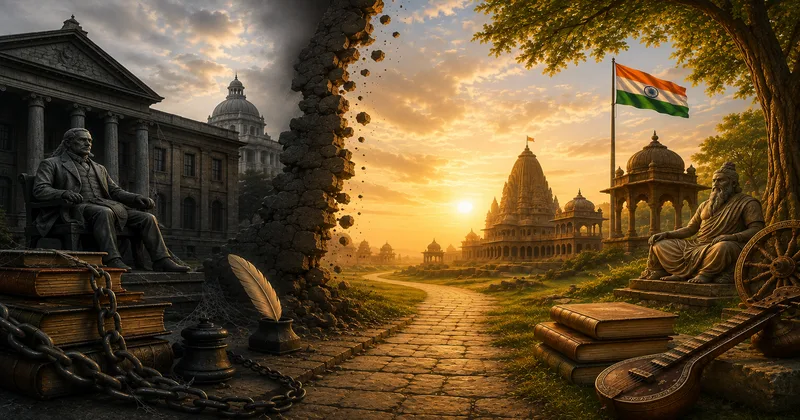
Bharat’s decolonization continues, requiring deeper reforms beyond colonial institutions and inherited systems (This image is generated by AI)

Bharat’s decolonization continues, requiring deeper reforms beyond colonial institutions and inherited systems (This image is generated by AI)

Facebook
Twitter
WhatsAppTelegramEmail

Bharat’s journey towards absolute freedom, while marked by significant progress in decolonisation, faces considerable challenges and criticisms that highlight the complexities of transforming a deeply ingrained colonial legacy.

Is Symbolic Change Enough? The Need for Deeper Reforms

A primary criticism levelled against Bharat’s decolonisation efforts is whether symbolic changes, such as renaming roads and cities, are sufficient to achieve true liberation. While these acts are meaningful in asserting national identity and breaking from the colonial past, critics argue that they often mask a deeper, unaddressed issue: the persistence of colonial institutions, systems, and worldviews that continue to govern the Indian mind. Such steps are being viewed as a vicious effort to target the Muslim and Christian minorities.

Also Read: Adani Case Dismissed in US: Questions raised over Abhijit Dipke, Sam Pitroda & political network of CJP

It is important to understand that political independence has been achieved, but intellectual, cultural, and civilizational liberation was not pursued with the same urgency and vision. For instance, the education system is still seen by some as shackled to the colonial blueprint laid down by Macaulay, designed to produce obedient clerks rather than empower Bharatiyas. Similarly, the Indian legal system continues to mimic British common law, parrot colonial precedents, and retain outdated laws, operating within a colonial frame designed for imperial control rather than civilizational flourishing.

Critics contend that this “double colonisation”; first by the sword, then by the pen; has left Bharatiyas intellectually disarmed, leading to an identity crisis and a society alienated from its cultural inheritance. Therefore, while symbolic acts are important, they are viewed as insufficient without accompanying deeper systemic reforms that fundamentally transform the underlying structures and epistemologies inherited from the colonial era. The challenge lies in moving beyond superficial changes to address the core ideological, political, and cultural roots of this widespread indifference to true decolonisation.
Topics: Macaulay Education SystemColonial LegacyFEATURED DecolonisationCultural FreedomIntellectual DecolonisationInstitutional ReformsCivilizational IdentityBharat
Share
Tweet
SendShareSend
✮ Subscribe Organiser YouTube Channel. ✮
✮ Join Organiser's WhatsApp channel for Nationalist views beyond the news. ✮
Previous News

Bharat’s Historical Journey: Ancient prosperity, colonial exploitation and social disruption

Next News

Odisha | Partition Horrors Remembrance Day: Recalling 1947 vital to prevent repetition of history, Says Prafulla Ketkar

Related News

Representative Image

Vote Chori Allegations: How global networks and domestic fronts shape narratives against Bharat!

AI Generated Image

Ancient civilisational model of development for a prosperous Bharat!

Chinmaya Amrit Yatra meets Param Vir Chakra awardee Captain Bana Singh, highlighting his courage, simplicity and love for Bharat

Chinmaya Amrit Yatra: Captain Bana Singh recalls Siachen battle, his love for Jammu and message to youth

International media’s portrayal of Bharat often overlooks its economic and strategic transformation while relying on familiar stereotypes

Beyond the Bylines: Why International media’s coverage of Bharat demands a critical reappraisal

India’s falling fertility rate and changing Gen Z priorities are reshaping family structures and the country’s demographic future

India’s Demographic Paradox: How falling fertility rates and changing Gen Z priorities are reshaping family life

Bhakti Movement

Torches of Unity : The role of spiritual leaders in shaping the nation

Load More

Latest News

Assam BJP takes out march against Congress over its stand on SIR

Assam: BJP takes its “march for the nation” against anti-national activities of Congress-INDI Alliance

(From Left to Right): Canada FM Anita Ananad with EAM Jaishankar, Anita Anand with PM Modi & Commerce Minister Piyush Goyal with Canada International Trade Minister Maninder Sidhu

India-Canada Ties Gain Pace: PM Modi & PM Carney discuss CEPA; FM Anita Anand in India to advance strategic relations

EAM Jaishankar hold talks with UAE Deputy Prime Minister & Foreign Minister Abdullah Bin Zayed Al-Nahyan

EAM Jaishankar Meets UAE Deputy PM Al-Nahyan: Reaffirms to deepen comprehensive strategic ties amid West Asia conflict

Mohammad Shahid, a notorious cow smuggler killed in Haryana Police encounter

Cow-Smuggling accused Mohammad Shahid killed in Haryana Police encounter; History-sheeter faced over 30 criminal cases

Vidya Bharati concluded its 37th All India Badminton Championship

Vidya Bharati’s 37th All India Badminton Championship concludes; 198 matches held across six categories

A representative image generated using AI

Fact Check: Did Greta Thunberg join London protest against CEC Gyanesh Kumar? Here’s the truth

HD Kumaraswamy

NICE Land Controversy: Kumaraswamy dares Karnataka Congress Govt, says “Arrest me if you have the courage”

Former Chief Minister Siddaramaiah (Left), Karnataka Assembly Opposition Leader R. Ashoka (Right)

Karnataka Congress Govt under fire as Ashoka demands FIR in Siddaramaiah-linked sting operation row

Tamil Nadu: Nationalist lawyers protest Rahul Gandhi’s ‘unconstitutional’ attempt to politicise Judiciary

RSS Vijayadashami Utsav in Patna attended by AKhil Bharatiya Karyakarini Sadasya Dr Manmohan Vaidya

Organisation of society is the key to holistic national development: Dr Manmohan of RSS at Patna Vijayadashami Utsav

Load More
  • Privacy
  • Terms
  • Cookie Policy
  • Refund and Cancellation
  • Delivery and Shipping

© Bharat Prakashan (Delhi) Limited.
Tech-enabled by Ananthapuri Technologies

  • Home
  • Search Organiser
  • Bharat
    • Assam
    • Bihar
    • Chhattisgarh
    • Jharkhand
    • Maharashtra
    • View All States
  • World
    • Asia
    • Africa
    • North America
    • South America
    • Europe
    • Australia
  • Editorial
  • Operation Sindoor
  • Opinion
  • Analysis
  • Defence
  • Culture
  • Sports
  • Business
  • RSS @ 100
  • Entertainment
  • More ..
    • Sci & Tech
    • Vocal4Local
    • Special Report
    • Education
    • Employment
    • Books
    • Interviews
    • Travel
    • Health
    • Politics
    • Law
    • Economy
    • Obituary
  • Subscribe Magazine
  • Read Ecopy
  • Advertise
  • Circulation
  • Careers
  • About Us
  • Contact Us
  • Policies & Terms
    • Privacy Policy
    • Cookie Policy
    • Refund and Cancellation
    • Terms of Use

© Bharat Prakashan (Delhi) Limited.
Tech-enabled by Ananthapuri Technologies