Horrors of Remembrance Day and Assam
August 14, 2026
  • Read Ecopy
  • Circulation
  • Advertise
  • Careers
  • About Us
  • Contact Us
Android AppiPhone AppArattai
Organiser
  • ‌
  • Bharat
    • Assam
    • Bihar
    • Chhattisgarh
    • Jharkhand
    • Maharashtra
    • View All States
  • World
    • Asia
    • Europe
    • North America
    • South America
    • Africa
    • Australia
  • Editorial
  • International
  • Opinion
  • RSS @ 100
  • More
    • Op Sindoor
    • Analysis
    • Sports
    • Defence
    • Politics
    • Business
    • Economy
    • Culture
    • Special Report
    • Sci & Tech
    • Entertainment
    • G20
    • Azadi Ka Amrit Mahotsav
    • Vocal4Local
    • Web Stories
    • Education
    • Employment
    • Books
    • Interviews
    • Travel
    • Law
    • Health
    • Obituary
  • Subscribe
    • Subscribe Print Edition
    • Subscribe Ecopy
    • Read Ecopy
  • ‌
  • Bharat
    • Assam
    • Bihar
    • Chhattisgarh
    • Jharkhand
    • Maharashtra
    • View All States
  • World
    • Asia
    • Europe
    • North America
    • South America
    • Africa
    • Australia
  • Editorial
  • International
  • Opinion
  • RSS @ 100
  • More
    • Op Sindoor
    • Analysis
    • Sports
    • Defence
    • Politics
    • Business
    • Economy
    • Culture
    • Special Report
    • Sci & Tech
    • Entertainment
    • G20
    • Azadi Ka Amrit Mahotsav
    • Vocal4Local
    • Web Stories
    • Education
    • Employment
    • Books
    • Interviews
    • Travel
    • Law
    • Health
    • Obituary
  • Subscribe
    • Subscribe Print Edition
    • Subscribe Ecopy
    • Read Ecopy
Organiser
  • Home
  • Bharat
  • World
  • Operation Sindoor
  • Editorial
  • Analysis
  • Opinion
  • Culture
  • Defence
  • International Edition
  • RSS @ 100
  • Magazine
  • Read Ecopy
Home Politics

Horrors of Remembrance Day and Assam: The unaddressed wounds of 1947 partition

The Partition inflicted incurable wounds on Bharat. Due to Leftist historians, the wounds inflicted on Assam were portrayed as less in comparison to border States of Bengal & Punjab. In an overnight decision, Assam was severed geographically. Locals suddenly became East Pakistanis. Moreover, its economy was reduced to shambles & its present politics continues to be shaped by what happened to it during the Partition

Dibya BordoloiDibya Bordoloi
Aug 14, 2026, 11:00 am IST
inPolitics, Bharat, Analysis, Assam
Follow on Google News
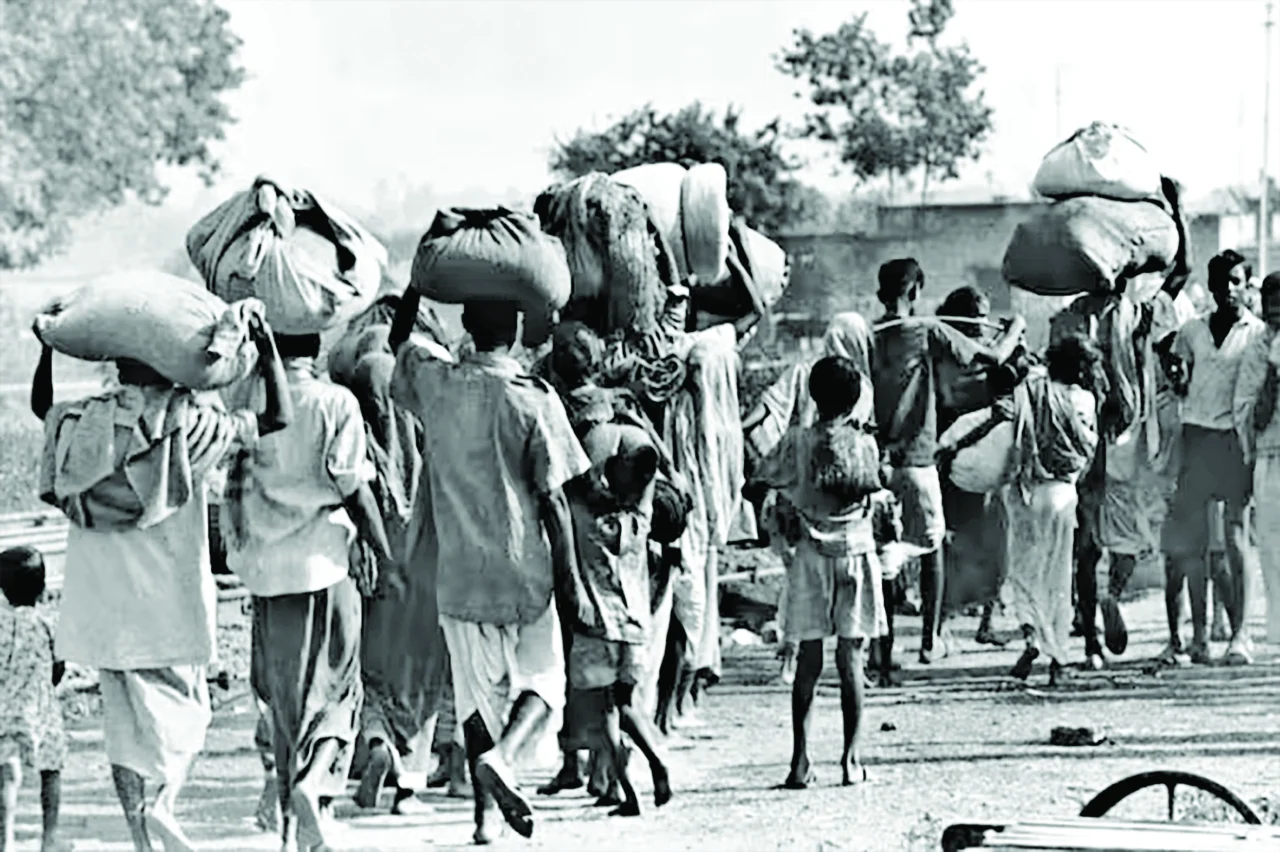
During Partition, a large number of Hindus from East Pakistan were driven away from their homes and settle down in Assam

During Partition, a large number of Hindus from East Pakistan were driven away from their homes and settle down in Assam

Facebook
Twitter
WhatsAppTelegramEmail

Bengal and Punjab’s Partition stories get told in books, films, and classrooms. Assam’s story, just as consequential, rarely gets the same attention even though its consequences are, in many ways, still being lived out today.

The Partition of 1947 is always remembered as one of the darkest chapters in India’s history. Millions of ordinary people paid the price for the political ambitions of a handful of leaders and the calculated, cruel politics of British rule. Nearly eight decades on, that wound still hasn’t healed — and few places carry its scars as deeply, or as invisibly, as Assam.

When people talk about the Partition of 1947, they generally talk about Bengal and Punjab. But the wounds given to Assam are no less than what it bore from the two other border States. Assam almost never gets a mention, but it was also hit as hard as Bengal and Punjab, in as many ways. Assam’s geography was cut apart, its economy was cut off, and its politics are still shaped by what happened in the 1947 Partition.

According to Dr Subhajit Choudhury, Professor, Indian Institute of Technology, Guwahati, the Partition, in Assam’s case, was a decision taken in a hurry. “Thousands of people in areas like Rongpur whose origins are in Assam suddenly became East Pakistani. Similarly, the whimsical Partition of Sylhet region was not consulted as it should be. As a result Assam’s economy suffered a huge setback as we lost the route to the nearest sea port forever.”

A Border Drawn in a Hurry

The British were in a hurry to end things quickly. So, Cyril Radcliffe, a British lawyer who had never set foot in India before he was handed the task of drawing its new borders. The trouble started with Sylhet, a Muslim-majority district that voted in a referendum to join East Bengal, which later became East Pakistan. Assam was given a tiny portion called Karimganj on its side. But the question was who would decide exactly where the new border ran?
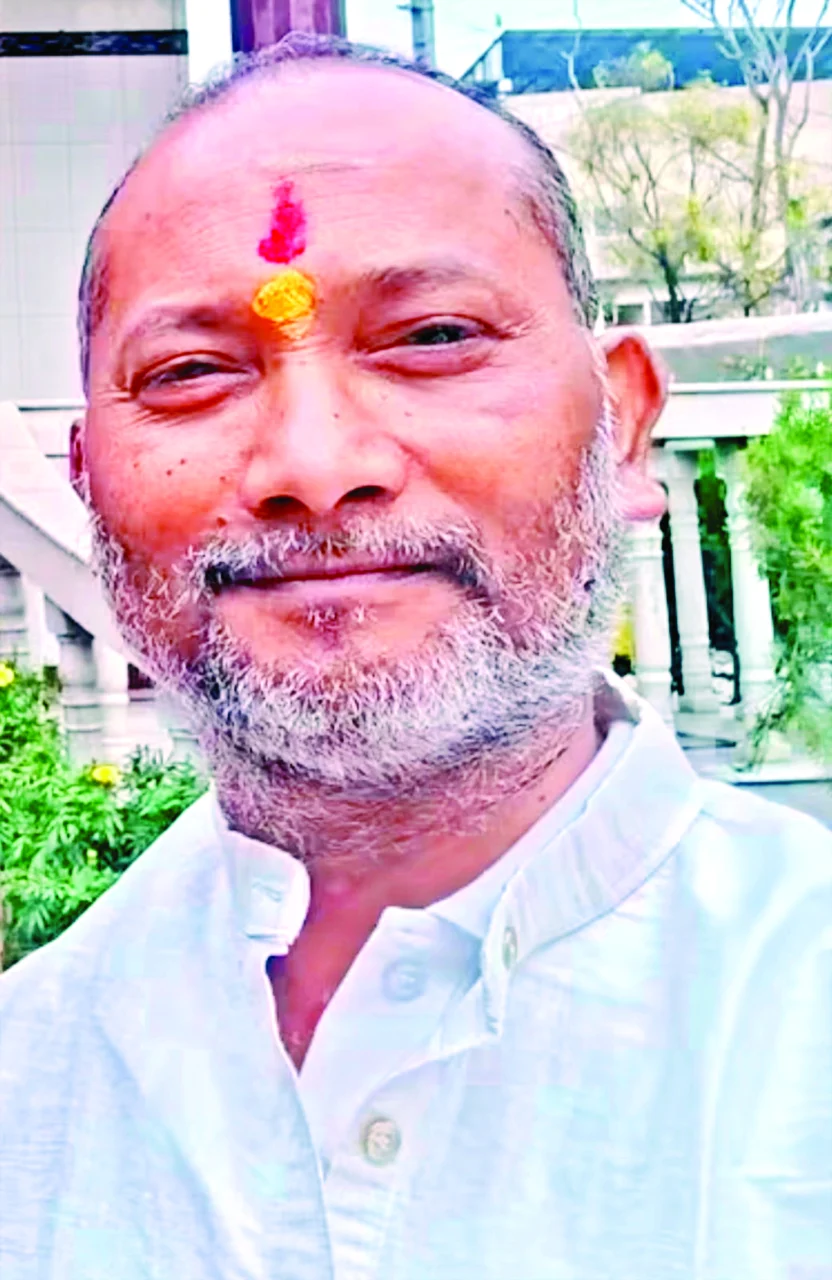
Dr Subhajit Chiudhury

Assam wanted its own boundary commission. Lord Mountbatten rejected it. He was worried it would slow things down, so he handed the job to the Bengal Boundary Commission instead. Two days after Independence, on August 17, 1947, that commission published its decision. Assam kept a few Hindu-majority areas, mostly in what is now Karimganj or Sri Bhumi district, but the rest of Sylhet went to Pakistan. The major trade line of Assam
(then Meghalaya, Mizoram was a part of it) was cut off in a single decision.

People from the region were furious. The then Congress leaders said the line had been drawn carelessly, without real understanding of the ground it was cutting through. One of them wrote to Sardar Vallabhbhai Patel, describing how a single man sitting thousands of miles away had decided the fate of millions with what felt like an arbitrary stroke of a pen.

Weak Link: Chicken’s Neck

Partition reduced Assam’s connection with the rest of India merely to a narrow path known as the Siliguri Corridor or the Chicken Neck. Perhaps the most lasting scar of this Partition is geographic. Dr. Choudhury said, “It was a geographical, economical and sovereignty threat created through partition to Assam and Northeast forever. Once a wide region was reduced to a thin stripe making the region vulnerable forever, without consultation and without thinking about the future impact of it.”

Assam wanted its own boundary commission. Lord Mountbatten rejected it. He was worried it would slow things down, so he handed the job to the Bengal Boundary Commission instead. Two days after Independence, on August 17, 1947, that commission published its decision

Before 1947, Assam’s roads, railways, and river routes ran naturally through what became East Pakistan, linking it smoothly to the rest of India and even to wider trade networks across South Asia. Overnight, that connection was severed.

What remained was a single narrow strip of land in West Bengal, just about 20 kilometres wide and 27 kilometres long, now known as the Siliguri Corridor, or more famously, the “Chicken’s Neck Even before the Partition was finalised, Assam’s Government had written anxiously to the Central Government, warning that the region’s only road link to the mainland was about to disappear. Their fears turned out to be justified. The transport and financial systems that had taken nearly a century to build, systems that plantation and forest economies across the region depended on, were dismantled almost overnight.

According to senior journalist Naba Thakuria, the pain of the people of Assam was tried to be released with a new narrative. “You are lucky that the entire Assam was not merged with East Pakistan. So forget about what you have lost. But the fact remains that not only the geographical boundaries were created but the cultural roots were uprooted by the Partition. What was ours went to them and we were never compensated. And above all what followed in the next few decades was even more painful for Assam, the influx from Bangladesh.”

Grinding Influx Crisis

Partition in the West was sudden and brutal. Punjab saw huge numbers of people cross in both directions within weeks, and the violence was horrific. In Assam, things unfolded differently. The initial migration was slow and fewer in numbers. Refugees kept arriving from East Pakistan for years afterwards, in smaller waves, without a single dramatic moment of crisis. The migration stretched on quietly, driven less by one big event and more by ongoing harassment and insecurity back home.

By the Government’s own count, roughly 114,000 people had entered Assam by July 1949. That number climbed to about 272,000 by 1951. Oddly, many Muslims who had fled Assam in 1947 ended up returning by 1950.
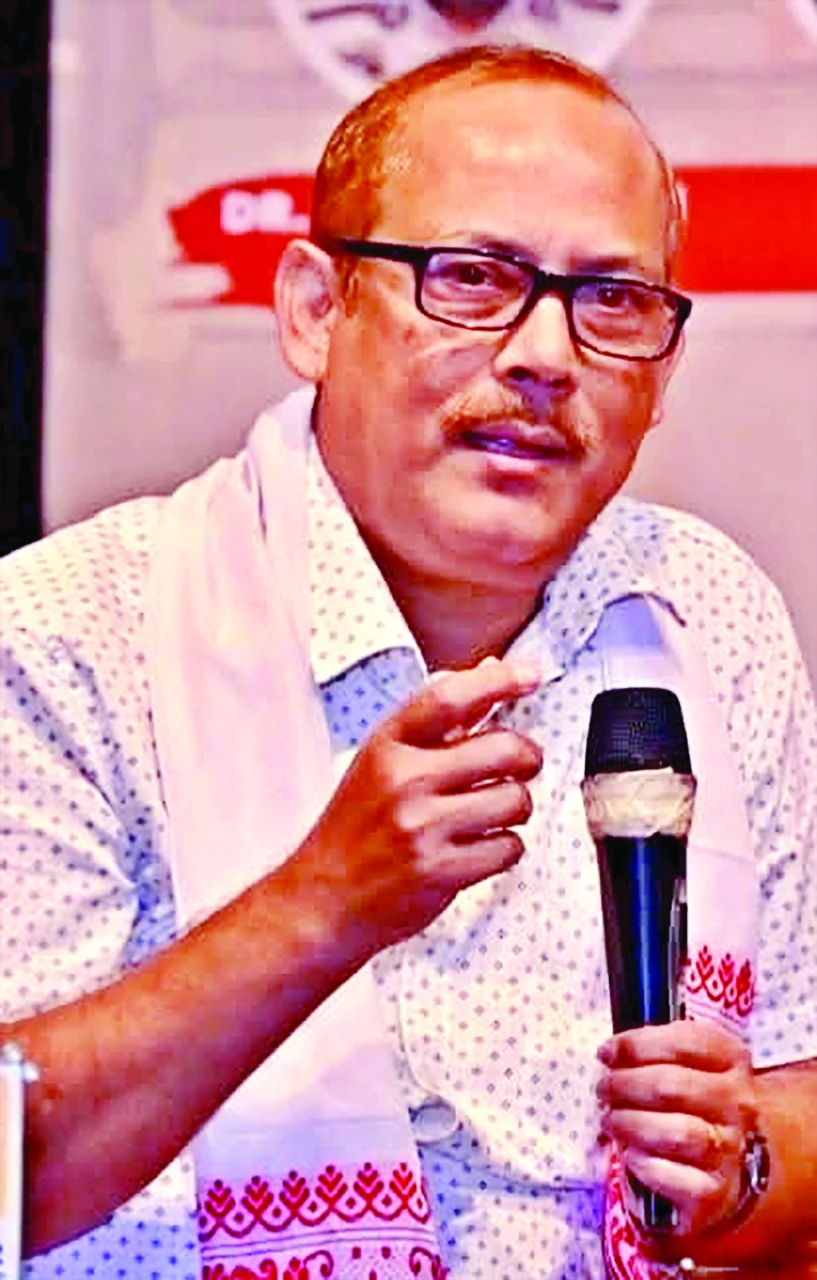
Nava Thakuria Sr. Journalist and Political Commentator, Guwahati, Deputy Registrar IIT Gywahati

None of this sat easily with the Assam Government. Officials argued that local residents needed to be looked after before newcomers were resettled. It’s worth remembering, too, that anxiety over migration into Assam wasn’t new in 1947; protests against it had already been going on since the 1920s. What started as a design by the Muslim League Government to create a huge Muslim population in Assam in the name of “Grow more foods” continues to date.

According to senior journalist Thakuria, the Muslim influx to the fertile land of Assam continued from the late 1920’s. “The design was to make it a Muslim population region to easily group it with East Pakistan. Leaders like Gopinath Bordoloi, Syama Prasad Mookerjee and others successfully bared it, but the design to make Assam an Islamic region continues even today.”

Nearly eight decades later, the effects of that 1947 boundary line haven’t faded. The citizenship question in Assam, still one of the most contested political issues in the State, traces directly back to this period. The Siliguri Corridor remains a strategic chokepoint that shapes Indian defence planning to this day.

Bengal and Punjab’s Partition stories get told in books, films, and classrooms. Assam’s story, just as consequential, rarely gets the same attention even though its consequences are, in many ways, still being lived out today.

Topics: Karimganj or Sri Bhumi districtHindu-majority areasEast PakistaniMuslim influxCongress leadersSyama Prasad MookerjeeChicken’s Neck1947 Partition and Assam
Share
Tweet
SendShareSend
✮ Subscribe Organiser YouTube Channel. ✮
✮ Join Organiser's WhatsApp channel for Nationalist views beyond the news. ✮
Previous News

From Fighter Pilot to Combat Leader: Bhawana Kanth becomes first IAF woman officer to earn FCL qualification

Related News

Syama Prasad Mookerjee was a leader who sacrificed his life for the integration of our country

Quit India Movement and Syama Prasad Mookerjee: The Profound Prophecy

Gitanjali J. Angmo (Left), Rahul Gandhi (Right)

“The public cannot be fooled”: Gitanjali Angmo, wife of Sonam Wangchuk calls Rahul Gandhi’s protest as “Insincere'”

Bharatiya Jana Sangh founder Dr Syama Prasad Mookerjee

125th Birth Anniversary of Syama Prasad Mookerjee: PM Modi, Amit Shah pay tribute to the visionary leader

Delhi Chief Minister Rekha Gupta paid tribute to Bharatiya Jana Sangh founder Syama Prasad Mookerjee on his death anniversary

Article 370 abrogation was the greatest tribute to Syama Prasad Mookerjee: Delhi CM Rekha Gupta

West Bengal has announced a major tribute to Dr Syama Prasad Mookerjee, including a 125-foot statue in Kolkata

Paschim Banga Divas: WB announces grand tribute to Dr Syama Prasad Mookerjee, 125-ft statue to come up in Kolkata

Prime Minister Narendra Modi (Photo/DPR PMO/ANI)

Paschimbanga Divas not just a date, but reflection of Bengal’s history and heritage: PM Modi in Hooghly

Load More

Latest News

During Partition, a large number of Hindus from East Pakistan were driven away from their homes and settle down in Assam

Horrors of Remembrance Day and Assam: The unaddressed wounds of 1947 partition

A historic milestone as Squadron Leader Bhawana Kanth becomes the IAF’s first woman Fighter Combat Leader

From Fighter Pilot to Combat Leader: Bhawana Kanth becomes first IAF woman officer to earn FCL qualification

Sindhis fleeing on the roof top of the train after partition (File Image)

Remembrance Day & 1947 Partition: Loss of Sindh was a civilizational erasure for Sindhi Hindus

PM Modi paid tribute to those affected by the 1947 Partition, recalling their courage, resilience and immense suffering

Partition Horrors Remembrance Day: PM Modi remembers partition victims, calls for harmony and brotherhood

From Guns to Handlooms: Former Naxal Women Walk the Ramp in Raipur

From Bastar’s forests to ramp: Surrendered women Maoists steal show at fashion event in Raipur

1947 Partition and Remembrance Day: When Congress preached unity but fueled the Islamist bloodbath

Remembrance Day and Partition’s Other Architect: The CPI’s role in dividing India

Dr Hedgewar participating in the 1930 satyagraha against the British

Remembrance Day: RSS’ silent shield in India’s twilight hour of Partition in 1947

Fujisawa residents raise concerns over religious practices and the growing presence of non-native culture in their community

Protest against Japan’s Fujisawa Mosque Deepens: Locals oppose Islamic burials and sermons, cite water & air pollution

Partition Remembrance Day

Partition Horrors Remembrance Day: Sindhis committed to nation-building, despite losing the homeland of Sindh

Load More
  • Privacy
  • Terms
  • Cookie Policy
  • Refund and Cancellation
  • Delivery and Shipping

© Bharat Prakashan (Delhi) Limited.
Tech-enabled by Ananthapuri Technologies

  • Home
  • Search Organiser
  • Bharat
    • Assam
    • Bihar
    • Chhattisgarh
    • Jharkhand
    • Maharashtra
    • View All States
  • World
    • Asia
    • Africa
    • North America
    • South America
    • Europe
    • Australia
  • Editorial
  • Operation Sindoor
  • Opinion
  • Analysis
  • Defence
  • Culture
  • Sports
  • Business
  • RSS @ 100
  • Entertainment
  • More ..
    • Sci & Tech
    • Vocal4Local
    • Special Report
    • Education
    • Employment
    • Books
    • Interviews
    • Travel
    • Health
    • Politics
    • Law
    • Economy
    • Obituary
  • Subscribe Magazine
  • Read Ecopy
  • Advertise
  • Circulation
  • Careers
  • About Us
  • Contact Us
  • Policies & Terms
    • Privacy Policy
    • Cookie Policy
    • Refund and Cancellation
    • Terms of Use

© Bharat Prakashan (Delhi) Limited.
Tech-enabled by Ananthapuri Technologies