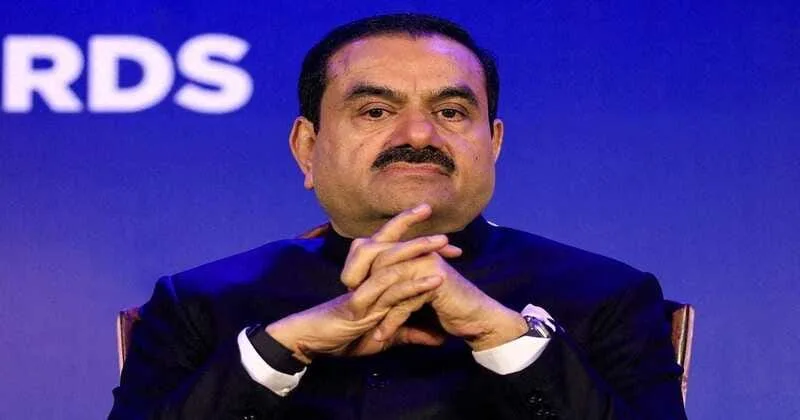
New Delhi: A US federal court on August 10 dismissed the criminal case against Indian billionaire Gautam Adani, allowing federal prosecutors to withdraw the charges. Brooklyn-based US District Judge Nicholas Garaufis approved the dismissal but raised questions about the Justice Department’s decision-making process, calling it unusual and concerning.
Judge Garaufis specifically questioned the role of Principal Associate Deputy Attorney General Trent McCotter, who was involved in discussions with Adani’s defence lawyers before the charges were dropped. The judge said McCotter appeared to have disregarded the views of several federal officials and investigators who had previously worked on the case and instead relied on his own assessment.
Questions Over Adani’s $10 Billion US Investment Pledge
A key issue raised before the court was Adani’s commitment to invest $10 billion in the United States. The pledge, announced in November 2024, was expected to generate around 15,000 jobs.
In April 2026, a legal team led by Robert J. Giuffra Jr., who represented Gautam Adani, met officials at the US Department of Justice. During the meeting, Giuffra presented a 100-slide defence arguing that prosecutors lacked sufficient evidence and that the US did not have jurisdiction because the alleged conduct took place entirely in India. The defence also argued that the bonds involved were not listed on US exchanges and that investors had been fully repaid, resulting in no investor losses. One of the slides referred to Adani’s $10 billion US investment pledge.
The judge had earlier questioned whether the investment commitment influenced the Justice Department’s decision to abandon the case. McCotter denied that the pledge had influenced his decision and rejected media reports suggesting otherwise. However, in a sworn declaration filed on July 15, Adani acknowledged that his lawyers had informed the Justice Department that the investment could “be part of a resolution” of the cases. Giuffra also told the court that the defendants had informed the Justice Department that the Adani Group was willing to proceed with the investment as part of a potential resolution.
Judge Garaufis said he was not ruling on whether such offers were appropriate. However, he noted that the public would ultimately have to consider what such offers could mean for equal justice and the rule of law.
Adani was charged in 2024 with allegedly agreeing to bribe Indian government officials to secure approval for a solar energy project involving an Adani Group subsidiary. US prosecutors also accused him of providing misleading information to US investors concerning the company’s anti-corruption practices. The Adani Group has consistently denied the allegations.
In a July 4 filing, McCotter said the case was predominantly foreign in nature, difficult to prove and inconsistent with the Justice Department’s current enforcement priorities. He said his decision followed meetings with defence lawyers, consultations with Justice Department officials and his own legal research and analysis.
I welcome the US court’s decision with humility and deep respect for the judicial process.
Throughout this challenging period, our faith in truth, fairness and the rule of law remained unwavering.
My deepest gratitude to those who never lost faith in us, in the system and in…
— Gautam Adani (@gautam_adani) August 10, 2026
The Justice Department is also dealing with separate legal matters involving members of the Adani family and group companies. In a civil case filed by the US Securities and Exchange Commission, Gautam Adani agreed to pay $6 million, while his nephew Sagar Adani agreed to pay $12 million. Separately, Adani Enterprises Limited agreed to pay $275 million to the US Treasury Department to settle alleged violations related to Iran sanctions.
Following the ruling, Gautam Adani welcomed the court’s decision, saying he accepted it with “humility and deep respect” for the judicial process.