For several decades, Westernization has increasingly influenced the global community, involving the adoption of Western culture at the expense of local traditions. This influence is evident in various aspects of life and society, including food, music, law, culture, thought process and political structures. Many equate Westernization with modernization, which simply refers to a society’s transition from traditional to modern practices.
In Bharat, the effects of Westernization are readily apparent. The Western lifestyle is often viewed as superior to traditional ways in multiple areas, including the rise of consumerism and the incorporation of Western dietary habits like sodas and packaged foods. Historically, Bharat was primarily a traditional society until British colonial rule introduced new social and political systems aligned with Western norms.
Today, Western fast-food outlets selling burgers, pizzas and pastas have become widespread and many young people view these foods as symbols of prestige and modernization. However, there is no justification for considering these items superior to traditional cuisine; they may lack the necessary nutrition and should not be deemed “modern” in the absence of scientific validation. The current trend reflects Westernization rather than true modernization.
The allure of Western civilization often serves as a model for Bharat, potentially causing more harm than benefit. In Bharat, modernization is often defined as emulating the Western lifestyle, educational systems, and value systems. Whenever the West deems something beneficial for Bharat, they typically introduce it through emotional appeals or subtle pressures.
This dependence on the West for research, development, funding, collaborations and academic opportunities has fostered the impression that they genuinely care for Bharat’s welfare. Today, multinational companies operate in Bharat on a larger scale than they do in their home countries. While there’s nothing wrong with having such companies, Bharat should also develop larger and more diverse industries in various sectors. Consequently, this reliance limits our ability to freely determine what is truly best for our country.
Wasteful modernization can trap a nation, leading to economic decline and a lack of innovation. We risk losing our ability to set our own priorities, becoming reliant on foreign funding and partnerships that exploit our markets and expertise in engineering, while using our citizens as subjects in health research. Therefore, the Modi government’s focus on building a Self-Reliant Bharat, prioritizing local research and innovation, should be actively supported and promoted by all industries and experts. While modernization is crucial for national advancement, it’s important to resist blind Westernization in order to preserve Bharat’s cultural identity.
Balancing scientific progress with traditional values is essential for Bharat’s aspiration to become a ‘Vishwaguru.’ Modernization can lead to national advancement when it is grounded in cultural roots. Bharat’s strength lies in fostering innovation while protecting its values. The challenge is to progress without losing our identity; this advancement must be inclusive, indigenous, and purposeful. Recognizing that becoming ‘modern’ doesn’t equate to becoming ‘Western’ is a vital step toward developing an Bharatiya ‘Alternative Modernity.’ In adopting Western ideals, we have often uncritically accepted their lifestyles and values, which is more accurately described as ‘cultural dependency’ rather than true ‘modernity.’
A roadmap to achieve modernity while staying deeply connected to our roots can be described as follows:
Modern vs. Western
Western Modernity: This focuses on external advancements, technology and individualism.
Bharatiya Modernity: Our version of modernity should be both ‘analytical and integrative.’ While utilizing science to create conveniences is part of modernity, embedding those conveniences in ethical values is essential to Bharatiya identity.
The Approach: We should adopt technology without blindly following Western philosophical underpinnings. Instead, we can harness technology to foster a society that is both humanistic and eco-friendly.
Self-awareness and preserving heritage
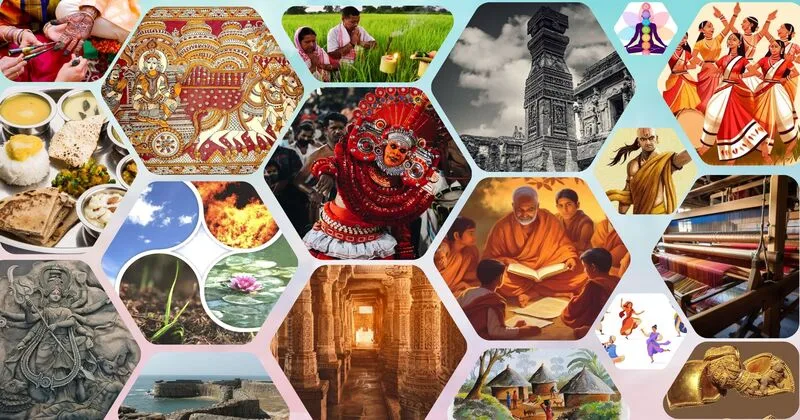
Just like a tree grows by deepening its roots into the earth, Bharat’s modern advancements should be grounded in its ancient cultural foundations.
Historical perspective: Rather than viewing our past with an ‘inferiority complex,’ we should revitalize and implement historical innovations—such as Kautilya’s Arthashastra, Ayurveda, Astronomical research and ancient naval science—in today’s context.
The essence of tradition: Tradition does not simply mean preserving outdated ideas; it involves maintaining the vibrant spirit that fuels us. It requires letting go of outdated aspects while holding on to timeless principles.
How to shape alternative modernity
The journey to modernity should be based on creativity rather than mindless imitation
Knowledge exchange: Findinag a balance between Western technological advancements and Bharatiya philosophical principles. For example, when employing modern Artificial Intelligence (AI), ethical guidance can be derived from Bharatiya values.
Decentralized development: Modernity isn’t limited to urban areas; Bharat’s essence lies in its villages. Elevating villages to ‘Smart Villages’ through modern technologies (like the internet and contemporary farming practices) exemplifies true Bharatiya modernity.
Cultural confidence: Embracing our attire, languages, and festivals. Genuine modernity is realized when we study science and technology in our own languages.
Awareness of the self and responsibility
Modernity involves recognizing our responsibilities (Dharma) rather than just claiming rights. While Western cultures prioritize rights, Bharatiya culture emphasizes duties. In a truly modern Bharat, when every citizen values their responsibilities, the nation will reflect true modernity.
Awareness of the self: We must explore who we are as a civilization-based nation, what our values are, and our aspirations for the future. Addressing these questions can diminish our dependence on Western ideologies.
Leadership as a civilizational state
Being modern means not just self-improvement but also ‘leading’ globally. Bharat’s worldview can provide solutions to worldwide issues like climate change, conflicts, and mental health. By illustrating a path to sustainable development, we can not only become modern but also guide the world.
An understanding of the self entails taking pride in our heritage, while modernity signifies our capacity to interact with contemporary challenges. A strong cultural foundation paired with advanced technology represents a blueprint for an alternative modernity. When we infuse modernity with our distinct Bharatiya perspective, rather than conforming to a Western paradigm, we can create a genuinely new, robust and radiant modern Bharat.