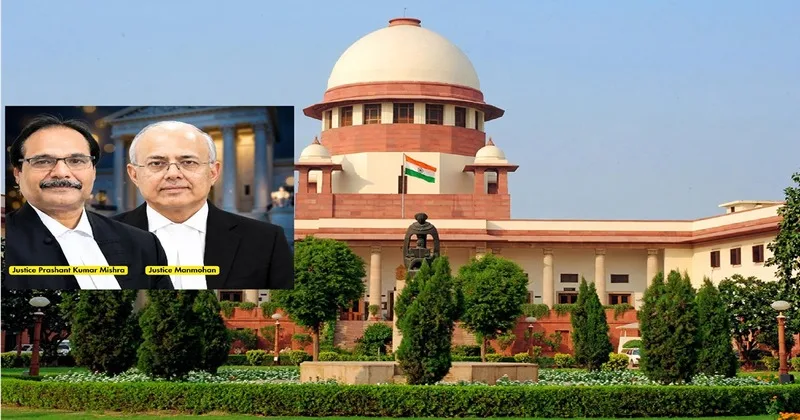
New Delhi: Can a person born into a Scheduled Caste claim the Constitutionally granted Scheduled Caste (SC) status and associated special rights even after converting to another religion? The Supreme Court has once again delivered a clear message regarding this widely discussed constitutional question with far-reaching implications. Refusing to reconsider its historic judgment dated March 24, 2026, the Court stated that there was no apparent error in the earlier ruling that would warrant a review.
With this order, the Supreme Court has reaffirmed the fundamental provision of the Constitution (Scheduled Castes) Order, 1950, which stipulates that if a person belonging to a Scheduled Caste renounces Hinduism, Sikhism or Buddhism to embrace another religion, their constitutional status as a Scheduled Caste member ceases the moment the conversion takes place. The Court clarified that this provision is not the result of judicial interpretation but the direct outcome of a constitutional order issued by the President under Article 341 of the Constitution.
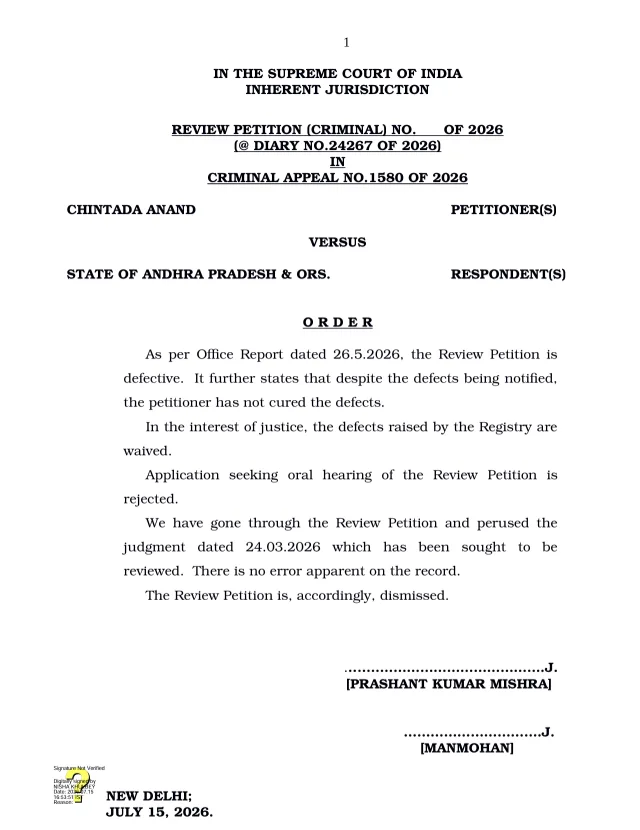
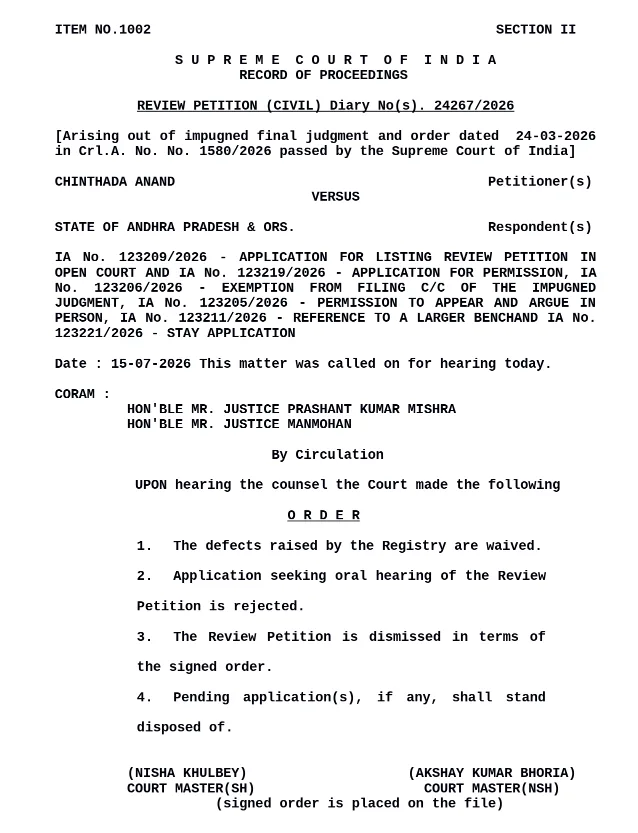
Review petition dismissed; Judgment further strengthened
In an order passed on July 15, a bench comprising Justice Prashant Kumar Mishra and Justice Manmohan dismissed the review petition, stating that while the judgment of March 24, 2026, was re-examined, no error apparent on the face of the record was found to justify a review. The bench also rejected the petitioner’s request for an oral hearing. The Supreme Court held that there were no grounds to alter its previous decision. Consequently, the March 2026 judgment now rests on an even stronger judicial foundation and will serve as a significant precedent for similar cases in the future.
What the Supreme Court stated in its March 24 verdict
In its detailed judgment delivered on March 24, 2026, the Supreme Court held that the constitutional status of a Scheduled Caste is linked to the eligibility criteria prescribed in the Constitution (Scheduled Castes) Order, 1950. The Court clarified that if a person born into a Scheduled Caste embraces a religion other than Hinduism, Sikhism or Buddhism, they cannot be considered part of the Scheduled Caste category under the Constitution. Consequently, they cannot claim the constitutional protections, reservations or special legal rights designated for Scheduled Castes.
The Court further observed that the language of Clause 3 of the Constitution (Scheduled Castes) Order, 1950, is entirely unambiguous, leaving no room for any alternative interpretation.
Andhra Pradesh case sparks constitutional debate
The background of this significant constitutional question lies in a criminal case from Andhra Pradesh. The complainant in the case was born into a Scheduled Caste family but later converted to Christianity and began serving as a pastor. He subsequently alleged that certain individuals had insulted him using casteist slurs and threatened him. Based on this, he lodged an FIR under the Scheduled Castes and Scheduled Tribes (Prevention of Atrocities) Act.
The accused filed a petition in the Andhra Pradesh High Court, arguing that since the complainant had converted to another religion, he had lost his constitutional status as a Scheduled Caste member and could not claim the protection of the SC/ST (Prevention of Atrocities) Act. Accepting this argument, the High Court quashed the FIR. The matter later reached the Supreme Court, which upheld the High Court’s decision, stating that given the clear provisions of the Constitution (Scheduled Castes) Order, 1950, the court could not arrive at a different conclusion.
What is the underlying intent of Article 341 of the Constitution?
Article 341 of the Indian Constitution empowers the President to issue a notification specifying which castes are to be designated as Scheduled Castes. Exercising this constitutional authority, the Constitution (Scheduled Castes) Order, 1950, was issued on August 10, 1950. The primary objective of this order was to identify castes that had historically faced untouchability, social exclusion and caste-based discrimination, groups to which the Constitution sought to extend special protection.
Clause 3 of this order stipulated that the constitutional status of a Scheduled Caste would apply only to individuals professing the Hindu religion. Parliament later amended the order to include followers of Sikhism (in 1956) and Buddhism (in 1990) within its ambit; however, converts to Christianity and Islam remain excluded from this provision.
The Court clarified that this is a constitutional provision, not one determined by the judiciary. In a significant observation within its judgment, the Supreme Court stated that it was not formulating a new policy; rather, it was merely interpreting the Constitution and the statutory order issued by the President.
The Court noted that any modification to the Constitution (Scheduled Castes) Order, 1950, or any expansion of the scope of eligibility for Scheduled Caste status, falls within the jurisdiction of the legislature and the constitutional process. The Court cannot alter a constitutional order by stepping outside its own jurisdiction.
For this reason, while dismissing the review petition and upholding its earlier verdict, the Supreme Court clearly indicated that the question of constitutional rights for Scheduled Castes is governed more by the fundamental framework of the Constitution than by judicial discretion.
Religious conversion and the constitutional test: Far-reaching implications of the Supreme Court’s verdict
In this context, Senior Advocate Ashutosh Kumar Jha remarked, “It is important to understand that the Supreme Court’s decision is not limited to a dispute over an individual’s eligibility; it also sets the future judicial course regarding the interpretation of India’s reservation system, constitutional safeguards and the rights associated with Scheduled Castes. The Court has clarified that Scheduled Caste status is not merely a social identity but a specific legal category defined by the Constitution, with eligibility governed by the Constitution (Scheduled Castes) Order, 1950.”
Senior Advocate Jha added, “Following this judgment, the legal position regarding cases involving religious conversion and the constitutional rights of Scheduled Castes will become far clearer than before. This verdict will be cited as a significant judicial precedent, particularly in disputes concerning reservation, scholarships, political representation, government employment and the application of the Scheduled Castes and the Scheduled Tribes (Prevention of Atrocities) Act.”
Why is the 1950 Presidential Order so significant?
In this regard, Senior Advocate Dhananjay Singh stated, “The Constitution of India empowers the President to prepare the list of Scheduled Castes. It was under this constitutional authority that the Constitution (Scheduled Castes) Order, 1950, was issued on August 10, 1950. The objective of this order was to identify castes that had endured untouchability, social exclusion, and caste-based oppression for centuries. Keeping these historical circumstances in mind, the Constitution granted Scheduled Castes special protections, reservations, and various rights related to social justice”.
He added, “However, Clause 3 of this order laid down a crucial condition. It stipulated that the constitutional status of ‘Scheduled Caste’ would be granted only to individuals who profess the Hindu religion. Later, Parliament amended the order to include the Sikh religion in 1956 and the Buddhist religion in 1990.”
Thus, under the current constitutional framework, followers of Hinduism, Sikhism, and Buddhism can obtain Scheduled Caste status, whereas this constitutional category is not available to individuals who have embraced Islam or Christianity. This very framework formed the basis of the Supreme Court’s judgment.
Can Scheduled Caste status be regained?
In its judgment, the Supreme Court also clarified a significant constitutional principle. If an individual subsequently reverts to Hinduism, Sikhism, or Buddhism, they may claim Scheduled Caste status again under specific circumstances; however, a mere formal “Ghar Wapsi” (homecoming) or conversion is not sufficient for this purpose.
According to the Court, the individual must prove that they were originally born into a Scheduled Caste family; that they have genuinely and fully embraced Hinduism, Sikhism, or Buddhism; that they have truly renounced the religion previously adopted; and that their original caste community has socially accepted them back. In the absence of these conditions, the constitutional status of Scheduled Caste will not be deemed automatically restored.
Significant observations on tribal identity
Although the dispute centered on Scheduled Castes, the Supreme Court also articulated a significant constitutional principle regarding Scheduled Tribes. The Court stated that if an individual, following religious conversion, completely abandons their original tribal traditions, social customs and cultural identity and becomes fully assimilated into the new religious-cultural order, legal questions regarding their tribal identity may arise. However, such cases would be adjudicated individually based on the specific facts and available evidence.
Impact on future cases
According to legal experts Ashutosh Jha and Dhananjay Singh, this judgment will have repercussions across various domains. If an individual claims constitutional benefits reserved for Scheduled Castes after converting to another religion, courts will regard this judgment as a crucial precedent. This ruling could prove decisive in matters such as: eligibility for Scheduled Caste reservation; the validity of SC certificates; access to scholarships and other welfare schemes; protection under the Scheduled Castes and Scheduled Tribes (Prevention of Atrocities) Act; and disputes concerning reservation in government services and educational institutions.
Affirming the supremacy of the constitution
It is noteworthy that this Supreme Court judgment establishes a broad constitutional principle: courts adjudicate based on the clear provisions of the Constitution rather than on social or political discourse. The Court emphasized that if a constitutional provision requires amendment, the appropriate forum is Parliament, not the judiciary. The judiciary’s mandate is to interpret the Constitution and the law, not to formulate new policies. Consequently, while dismissing the review petition, the Supreme Court conveyed that the provisions of the Constitution (Scheduled Castes) Order, 1950, remain binding in their current form and cannot be disregarded by the courts.