July 26 is not merely a date in the history of India; it is a symbol of national sovereignty, the courage of our soldiers, and the remarkable success of Indian military strategy. In 1999, on the treacherous and inhospitable heights of Kargil, the Indian Army displayed extraordinary courage, patience, determination, and strategic brilliance. This achievement will forever remain etched in the golden chapters of India’s military history. Kargil Vijay Diwas is an occasion to salute those brave soldiers who laid down their lives in the service of the nation and defended the country’s territorial integrity.
The Challenge That Emerged on the High Mountain Peaks
In 1999, Pakistani forces and infiltrators supported by Pakistan occupied strategically important high-altitude positions on the Indian side of the Line of Control. Holding these heights gave the intruders a significant tactical advantage. The challenge before the Indian Army was not merely to push the enemy back, but to reclaim its territory under extremely difficult geographical and climatic conditions.
The towering peaks of the Kargil region, freezing temperatures, harsh weather and steep rocky terrain presented enormous challenges to Indian soldiers. At several locations, troops had to climb almost vertical mountain slopes under intense enemy fire. Yet the resolve of the Indian soldiers was unwavering: not an inch of Indian territory would be allowed to remain under enemy occupation.
Strategy: Patience, Intelligence and Precision
One of the defining features of the Kargil War was the remarkable combination of military strategy and extraordinary courage on the ground.
The Indian Army first assessed the extent and nature of the intrusion and then launched operations sector by sector. The central objective was to reclaim the enemy-held heights one by one. Despite the extremely challenging conditions, Indian troops continued their advance and recaptured strategically important positions.
Artillery played a decisive role in the campaign. Accurate and sustained fire from Bofors guns helped weaken and neutralise enemy positions that were strongly fortified on the mountain heights. Following these attacks, infantry units advanced through extremely difficult terrain and launched assaults on the occupied positions.
The strategy demonstrated a fundamental truth of modern warfare: victory is achieved not merely through weapons, but through a combination of intelligence, accurate identification of targets, coordination with artillery, infantry courage and sound strategic decision-making at the command level.
Operation Vijay: A Decisive Military Campaign
The Indian Army conducted its campaign in Kargil under the name Operation Vijay. Its objective was to evict the infiltrators from Indian territory and restore the status quo along the Line of Control.
The battles for Tololing, Point 5140, Tiger Hill and other strategically important peaks witnessed extraordinary acts of courage by Indian soldiers. In several operations, troops had to scale steep cliffs under the cover of darkness to reach enemy positions.
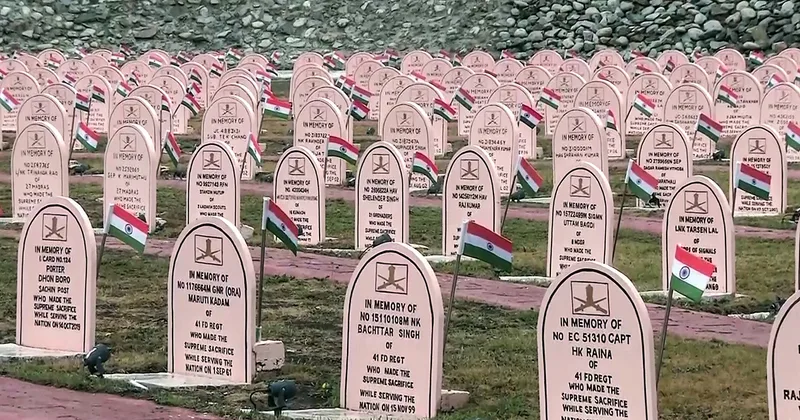
Heroes such as Captain Vikram Batra, Lieutenant Manoj Kumar Pandey, Grenadier Yogendra Singh Yadav and Rifleman Sanjay Kumar, along with countless other brave soldiers, displayed exceptional courage and valour. Their bravery inspired the entire nation. Many soldiers made the supreme sacrifice, but their sacrifice ultimately led to the restoration of India’s territorial integrity.
The Role of the Indian Air Force and Operation Safed Sagar
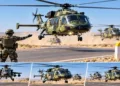
The Indian Air Force also played a crucial role in the Kargil War. Under Operation Safed Sagar, the Air Force targeted enemy positions in the difficult mountainous terrain and provided vital support to the ground operations of the Indian Army.
The air operations demonstrated the importance of effective coordination between the Army and the Air Force in high-altitude warfare. The Indian armed forces adapted their operations to the challenging circumstances and maintained sustained pressure on the enemy.
India’s Advantage on the Diplomatic and Strategic Front
The Kargil War was not fought only on the mountain peaks. It was also an important diplomatic and international conflict. India effectively communicated to the international community that the intrusion had taken place across the Line of Control and that India was determined to defend its territory.
India’s restrained and responsible approach earned it considerable international support. At the same time, Pakistan faced increasing military and diplomatic pressure. Thus, India’s strategy achieved success on both fronts—the battlefield and the diplomatic arena.
The Valour of the Soldiers: The Greatest Strength of Kargil
The most inspiring story of the Kargil War is the individual courage of Indian soldiers. They knew that the enemy held the advantage of high ground, that every advance was fraught with danger and that death could come at any moment. Yet they continued to move forward.
The hoisting of the Tricolour on the heights of Kargil was not merely a military victory. It was a triumph of the belief that the Indian soldier, entrusted with the defence of the nation’s borders, would never retreat in the face of even the most formidable circumstances.
Many soldiers risked their own lives to save their comrades. Numerous जवानs continued fighting even after being wounded. This collective courage became the true strength of the Indian Army.
Strategic Lessons from the Kargil War
The Kargil War offered India several important military and strategic lessons. The most significant among them was the need for continuous surveillance of border areas and a robust intelligence-gathering system. In the aftermath of the war, India placed greater emphasis on strengthening surveillance capabilities, border management and coordination among the three armed forces.
The war also demonstrated that conventional military strength alone is not sufficient in modern warfare. The coordinated use of intelligence, surveillance, communications, technology, air power, artillery and specialised forces can play a decisive role in achieving victory.
Kargil Victory: An Eternal Inspiration for the Nation
On July 26, 1999, India reclaimed the Kargil heights and demonstrated its courage, determination and national resolve. Kargil Vijay Diwas reminds us that the defence of the nation’s independence, sovereignty and territorial integrity is not merely the responsibility of soldiers stationed at the borders; it is a collective responsibility of the entire nation.
The story of the heroes of Kargil will continue to inspire generations with the message that the nation comes first, duty comes first, and there is no greater responsibility than the defence of the motherland.
On Kargil Vijay Diwas, we pay our heartfelt tribute to all those brave soldiers who sacrificed everything for the defence of the nation. Their valour remains an inspiration for India’s youth, and their sacrifices will forever live on in the collective memory of the nation.
The Tricolour that flew proudly over the peaks of Kargil was not merely a symbol of victory—it represented India’s unwavering resolve, the indomitable courage of its soldiers and the unconquerable spirit of the nation.
Salute to the immortal heroes and martyrs of Kargil.
Jai Hind! Vande Mataram!