Ancient Shiva Shrine of J&K: The historic Billawar Shiva Mandir
July 26, 2026
  • Read Ecopy
  • Circulation
  • Advertise
  • Careers
  • About Us
  • Contact Us
Android AppiPhone AppArattai
Organiser
  • ‌
  • Bharat
    • Assam
    • Bihar
    • Chhattisgarh
    • Jharkhand
    • Maharashtra
    • View All States
  • World
    • Asia
    • Europe
    • North America
    • South America
    • Africa
    • Australia
  • Editorial
  • International
  • Opinion
  • RSS @ 100
  • More
    • Op Sindoor
    • Analysis
    • Sports
    • Defence
    • Politics
    • Business
    • Economy
    • Culture
    • Special Report
    • Sci & Tech
    • Entertainment
    • G20
    • Azadi Ka Amrit Mahotsav
    • Vocal4Local
    • Web Stories
    • Education
    • Employment
    • Books
    • Interviews
    • Travel
    • Law
    • Health
    • Obituary
  • Subscribe
    • Subscribe Print Edition
    • Subscribe Ecopy
    • Read Ecopy
  • ‌
  • Bharat
    • Assam
    • Bihar
    • Chhattisgarh
    • Jharkhand
    • Maharashtra
    • View All States
  • World
    • Asia
    • Europe
    • North America
    • South America
    • Africa
    • Australia
  • Editorial
  • International
  • Opinion
  • RSS @ 100
  • More
    • Op Sindoor
    • Analysis
    • Sports
    • Defence
    • Politics
    • Business
    • Economy
    • Culture
    • Special Report
    • Sci & Tech
    • Entertainment
    • G20
    • Azadi Ka Amrit Mahotsav
    • Vocal4Local
    • Web Stories
    • Education
    • Employment
    • Books
    • Interviews
    • Travel
    • Law
    • Health
    • Obituary
  • Subscribe
    • Subscribe Print Edition
    • Subscribe Ecopy
    • Read Ecopy
Organiser
  • Home
  • Bharat
  • World
  • Operation Sindoor
  • Editorial
  • Analysis
  • Opinion
  • Culture
  • Defence
  • International Edition
  • RSS @ 100
  • Magazine
  • Read Ecopy
Home Bharat

Billawar Shiva Mandir: Exploring J&K’s 1,000-year-old masterpiece of Nagara temple architecture

The ancient Billawar Shiva Mandir in J&K's Kathua district is a remarkable example of 10th–11th century Nagara-style architecture, blending history and devotion. Associated with the legend of King Babhruvahana, the Mandir showcases exquisite carvings, a majestic shikhara, and enduring Shaivite heritage

WEBDESKWEBDESK
Jul 26, 2026, 08:20 pm IST
in Bharat, Culture, Jammu and Kashmir
Follow on Google News
Billawar Shiva Mandir

Billawar Shiva Mandir

FacebookTwitterWhatsAppTelegramEmail

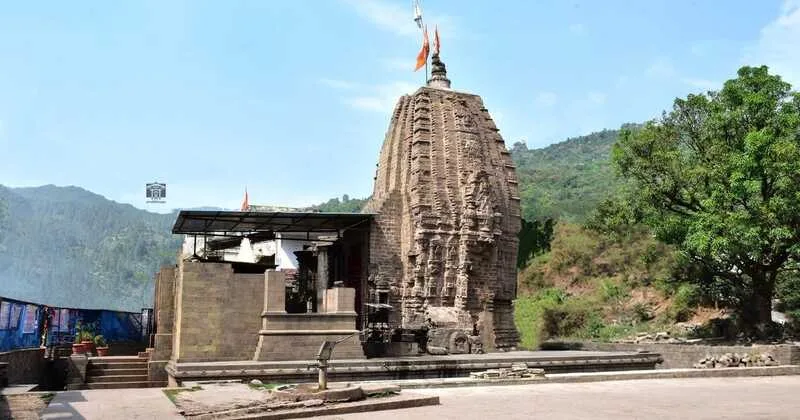
Kathua: Nestled in the historic town of Billawar in J&K’s Kathua district, the ancient Billawar Shiva Mandir stands as one of the finest surviving examples of early medieval Mandir architecture in northern India. Revered both as a sacred shrine and as an architectural masterpiece, the temple reflects the artistic brilliance, engineering skills, and spiritual traditions that flourished in the region over a thousand years ago.

According to local tradition, the Shiva Temple at Billawar in Kathua district of Jammu and Kashmir was built by King Babhruvahana, the son of Arjuna. The ancient settlement, once known as Belapur or Villapur, gradually came to be called Billawar.

Dating to the 10th-11th century… pic.twitter.com/glsWF2GIJ2

— Archaeological Survey of India (@ASIGoI) July 21, 2026

A Mandir Rooted in Legend

Local tradition associates the Mandir with King Babhruvahana, the legendary son of Arjuna, one of the principal heroes of the Mahabharata. According to popular belief, Babhruvahana built the Shiva Mandir as an act of devotion to Bhagwan Shiva. Although this tradition is deeply embedded in local folklore, the present stone structure belongs to a much later historical period.

The ancient settlement where the Mandir stands was originally known as Belapur or Villapur. Over centuries, linguistic evolution transformed the name into Billawar, by which the town is known today. The region has long served as an important cultural and religious centre connecting the plains of northern India with the Himalayan kingdoms.

An Architectural Marvel of the 10th–11th Century CE

Scholars date the existing Mandir to the 10th–11th century CE, a period during which Mandir construction flourished across northern India under various regional dynasties. The Mandir is dedicated to Bhagwan Shiva and represents the Nagara style of Mandir architecture, which is characterised by its soaring curvilinear tower (shikhara), elaborate carvings, and well-defined architectural layout. Unlike many Shiva Mandirs that traditionally face east, the Billawar Shiva Mandir is west-facing, making it architecturally distinctive.

The Mandir follows the classical layout commonly seen in North Indian Mandirs and consists of three principal sections:
* Garbhagriha (Sanctum Sanctorum): The innermost sacred chamber where the Shivlinga is enshrined.
* Antarala (Vestibule): A transitional chamber connecting the sanctum with the assembly hall.
* Mandapa (Assembly Hall): The space where devotees gathered for worship and religious ceremonies.

Although the mandapa has largely disappeared over the centuries, archaeological investigations have revealed important evidence regarding its original form. The outer walls of the Mandir are richly decorated with sculptural elements that illustrate the artistic sophistication of medieval craftsmen. Adding further elegance are intricately carved decorative rosettes and ornamental motifs that enrich the Mandir’s visual appeal without overwhelming its architectural balance.

One of the Mandir’s most striking features is its beautifully preserved curvilinear shikhara, a hallmark of Nagara architecture. The tower rises gracefully in ten diminishing tiers, creating a strong sense of verticality that symbolically connects the earthly realm with the heavens. The shikhara is ornamented with repeated chaitya motifs, decorative arch-shaped patterns inspired by ancient Buddhist architectural traditions that later became integral elements in Hindu temple ornamentation.

Also Read: Chai-Pakoda Mornings to Biriyani Nights: What’s Real Cost of One ‘Cockroach Protester’ & Who Funds the Feast Each Day?

Inside the Mandir lies the serene garbhagriha, where a sacred Shivlinga continues to be worshipped by devotees. The sanctum is crowned by a distinctive lantern-type ceiling, an architectural feature that enhances both the aesthetics and structural stability of the chamber. The carefully designed interior creates an atmosphere of spiritual tranquillity, drawing visitors into the sacred heart of the Mandir.

Archaeological Discoveries

Although much of the original mandapa has not survived, archaeological excavations have significantly enhanced our understanding of the temple’s original layout.
Excavators uncovered:
* Remains of the original stone pillars supporting the mandapa.
* A buried western porch that once served as the temple entrance.
* Stone staircases leading to the elevated platform.
* Structural remains that help reconstruct the Mandir’s earlier architectural form.
These findings demonstrate that the temple complex was once considerably larger and more elaborate than what is visible today.

Exquisite Stone Sculptures

Among the temple’s greatest artistic treasures are its finely carved black stone sculptures. These sculptures display remarkable craftsmanship, featuring delicate ornamentation, graceful human forms, and carefully executed iconographic details. The sculptural programme reflects the high artistic standards achieved by medieval artisans in the Jammu region and contributes significantly to the Mandir’s cultural importance. The carvings also provide valuable insights into the religious beliefs, artistic conventions, and social life of the period.

The Billawar Shiva Mandir is much more than a place of worship. It serves as a living monument that preserves centuries of religious devotion, architectural innovation, and artistic excellence.

The Billawar Shiva Mandir stands as a magnificent blend of belief, history, architecture, and spirituality. Whether viewed through the lens of local legend linking it to Babhruvahana, or through archaeological evidence dating it to the 10th–11th century CE, the monument remains an enduring symbol of J&K’s rich cultural heritage.


 

Topics: Indian heritageKathuaBillawar Shiva TempleNagara ArchitectureAncient Temples of IndiaArchaeological MonumentsJammu and KashmirLord Shiva
ShareTweetSendShareSend
✮ Subscribe Organiser YouTube Channel. ✮
✮ Join Organiser's WhatsApp channel for Nationalist views beyond the news. ✮
Previous News

PM Modi interacts with Viksit Vibrant Village Programme participants; Hails developed villages as key to Viksit Bharat

Next News

CJP Protest: Azadi from scamsters

Related News

Permanent Representative of India to the United Nations Parvathaneni Harish speaks at United Nations Security Council session

India rejects Pakistan at UN: Links Indus Waters Treaty to cross-border terrorism, reaffirms J&K stand

A representative image

J&K: Modern apple farming transforms Bani into emerging horticulture hub

Guru Matsyendra Nath: The Mahasiddha who learned Yoga from Bhagwan Shiva and founded the Nath sampradaya

India's "Waterman" Rajendra Singh has revived sacred temple ponds, blending faith with water conservation

Rajendra Singh: How India’s ‘Waterman’ is reviving Mandir ponds to restore heritage and fight the water crisis

People gather in large numbers during an anti-Pakistan protest, in Muzaffarabad, Pakistan-occupied Jammu and Kashmir

POJK: Tumbling template of terroristan

PM Modi gifts Aipan folk art from Uttarakhand to Indonesian President Prabowo Subianto

PM Modi’s gift of Uttarakhand Aipan art to Indonesian President reflects India’s rich spiritual and artistic heritage

Load More

Latest News

India is intensifying its crackdown on food adulteration through stricter enforcement to protect consumer health

Food Adulteration in Bharat: How authorities are cracking down on hazardous chemicals and unsafe food networks

CJP Protest: Azadi from scamsters

Billawar Shiva Mandir

Billawar Shiva Mandir: Exploring J&K’s 1,000-year-old masterpiece of Nagara temple architecture

Prime Minister Narendra Modi

PM Modi interacts with Viksit Vibrant Village Programme participants; Hails developed villages as key to Viksit Bharat

Several Delhi Police vehicles were damaged following protests during the ‘Chalo Sansad’ march near Janpath in New Delhi on July 20

CJP Protest: Education reforms Vs ideological confrontation

Rishikanta Singh wins silver at Commonwealth Games, 2026

Glasgow Commonwealth Games: Weightlifter Rishikanta Singh wins India’s maiden silver; Dedicates the medal to the nation

Lessons from France: Why India needs stronger digital safety laws for children?

Kargil Vijay Diwas in Assam: Governor urges youth to draw inspiration from Armed Forces; Honours the martyrs’ families

Mann Ki Baat: PM Modi highlights how ‘New India’ is emerging as a global symbol of security, science & indigenous power

CJP protest exposes the double standards of opposition parties

CJP Protest Exposes Opposition: Shield violent protesters in Delhi, attack peaceful citizens in their states

Load More
  • Privacy
  • Terms
  • Cookie Policy
  • Refund and Cancellation
  • Delivery and Shipping

© Bharat Prakashan (Delhi) Limited.
Tech-enabled by Ananthapuri Technologies

  • Home
  • Search Organiser
  • Bharat
    • Assam
    • Bihar
    • Chhattisgarh
    • Jharkhand
    • Maharashtra
    • View All States
  • World
    • Asia
    • Africa
    • North America
    • South America
    • Europe
    • Australia
  • Editorial
  • Operation Sindoor
  • Opinion
  • Analysis
  • Defence
  • Culture
  • Sports
  • Business
  • RSS @ 100
  • Entertainment
  • More ..
    • Sci & Tech
    • Vocal4Local
    • Special Report
    • Education
    • Employment
    • Books
    • Interviews
    • Travel
    • Health
    • Politics
    • Law
    • Economy
    • Obituary
  • Subscribe Magazine
  • Read Ecopy
  • Advertise
  • Circulation
  • Careers
  • About Us
  • Contact Us
  • Policies & Terms
    • Privacy Policy
    • Cookie Policy
    • Refund and Cancellation
    • Terms of Use

© Bharat Prakashan (Delhi) Limited.
Tech-enabled by Ananthapuri Technologies