Bengaluru; A major archaeological breakthrough has emerged from Hampi as the Archaeological Survey of India (ASI) has unearthed an ancient drainage system and structural remains believed to belong to the Vijayanagara period during ongoing scientific excavations in the historic temple town.
The discoveries were made during excavation and clearance works being carried out near the famous Hazara Rama Temple and the Jain temple complex in Hampi, a UNESCO World Heritage Site known for its architectural grandeur and historical significance.
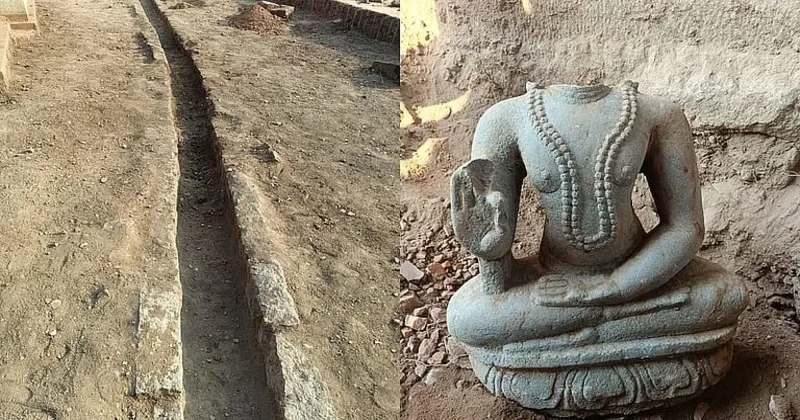
According to ASI officials, the newly discovered drainage structure is believed to be one of the oldest and most sophisticated water management systems developed during the Vijayanagara Empire. Archaeologists said the stone-built channel was likely designed to drain rainwater efficiently during monsoons and may also have been used for ritual purification practices associated with temple worship.
The drainage network, constructed using carefully carved granite stone slabs, reflects the advanced engineering and architectural expertise of Vijayanagara-era builders. Experts believe the structure may have played a dual role in maintaining temple sanitation and facilitating ceremonial water flow from the sanctum to outer portions of the temple complex.
Speaking about the findings, ASI Hampi Circle Superintending Archaeologist K. Ramakrishnan Reddy said the discovery provides important insights into medieval South Indian temple architecture, water circulation methods and ritual systems followed during the Vijayanagara period.
“The newly discovered drainage structure appears to be part of a highly organised water management and religious utility system. It highlights the remarkable engineering capabilities of Vijayanagara architects,” he explained.
The excavation has also led to the discovery of two Alvar sculptures and structural traces of an ancient Jain temple roof, adding to a series of important archaeological findings reported from Hampi in recent weeks.
ASI officials stated that excavation work was intensified around the Jain temple complex after indications emerged that several Vijayanagara-era structures could still be buried beneath layers of soil in the region. During the scientific excavation, archaeologists uncovered the stone roof portion of what is believed to be a centuries-old temple.
According to preliminary assessment, the unearthed roof structure measures approximately 4.35 metres in length and 4.26 metres in width. Archaeologists suspect that the temple’s brick-built sanctum may have suffered severe damage over centuries, leaving only the roof section visible at present.
Experts believe the temple walls and additional architectural components could still remain buried underground. Initial estimates suggest some surviving structural portions may stand nearly 10 feet high beneath the surface.
Further excavation is expected to reveal the complete layout of the temple and associated structures. ASI teams are simultaneously carrying out documentation, mapping and conservation activities to ensure that the fragile remains are preserved without damage during excavation.
Archaeologists and historians say the discoveries are significant because they offer fresh evidence about the religious diversity and cultural landscape that existed in Hampi during the Vijayanagara Empire. The Jain settlement region of Hampi, in particular, is believed to contain several unexplored historical structures beneath the soil.
State Tourist Guides Association secretary Virupakshi V Hampi welcomed the discoveries and said such findings help researchers better understand the coexistence of multiple religious traditions in Vijayanagara-era Hampi.
Already renowned worldwide for its temples, monuments and intricate stone carvings, Hampi continues to reveal new layers of history. Experts believe the latest discoveries will further enrich the historical understanding of the Vijayanagara Empire and strengthen Hampi’s importance as one of India’s most valuable archaeological heritage sites.