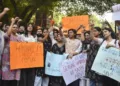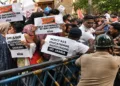
NEW DELHI: As the nationwide protests over the alleged NEET-UG paper leak continue, the Delhi Police has issued a stern warning against the rapid spread of misinformation, revealing that more than 400 Pakistan-based social media accounts have been identified and blocked for allegedly orchestrating a coordinated campaign of fake news, AI-generated content, and deepfake videos linked to the ongoing demonstrations.
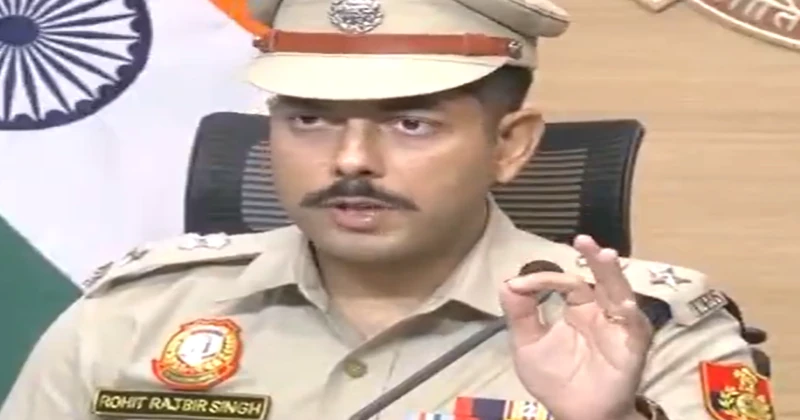
Addressing a press briefing on July 25, DCP Central Rohit Rajbir Singh said that while the Cockroach Janata Party (CJP) has been staging protests at Jantar Mantar for several weeks, the digital ecosystem surrounding the agitation has become increasingly polluted with fabricated content designed to mislead the public.
“Information on social media goes viral very quickly, but not every post, video, or photo is necessarily accurate. It is extremely important to fact-check any information before trusting it or sharing it further,” Singh said, urging citizens to exercise caution before amplifying unverified claims.
#WATCH | Delhi: On the misleading and false information related to Jantar Mantar protest, DCP Central Rohit Rajbir Singh says, "A protest has been going on at Jantar Mantar for the past several weeks by the Cockroach Janata Party… Information on social media goes viral very… pic.twitter.com/eStIyMXa1Y
— ANI (@ANI) July 25, 2026
The senior police officer emphasised that Delhi Police has been actively monitoring social media platforms and regularly issuing alerts regarding fake news, AI-generated videos, deepfakes, manipulated images, and misleading posts through its official channels. The objective, he said, is to help citizens distinguish authentic information from fabricated propaganda in an increasingly complex digital environment.
Making a significant disclosure, the Delhi Police revealed that its investigation has uncovered the involvement of over 400 Pakistan-based social media handles allegedly engaged in spreading misinformation surrounding the protests. According to Singh, several of these accounts had previously surfaced during Operation Sindoor, where they were allegedly involved in disseminating fabricated narratives and digitally manipulated content targeting India.
“Our investigation also revealed that some social media accounts operated from Pakistan are spreading fake content. Delhi Police, in collaboration with the concerned agencies, is continuously working to identify more such accounts,” he said.
The identified accounts have reportedly been blocked after being found responsible for circulating AI-generated videos, deepfake clips, edited photographs, and other misleading material related to the demonstrations. Police further alleged that these networks attempted to distort public perception by manipulating official statements of senior police officers and altering visual content to create false narratives capable of influencing public opinion.
The revelation has once again highlighted the growing role of sophisticated digital disinformation campaigns in amplifying domestic political events and exploiting social unrest through artificial intelligence and advanced image manipulation technologies.
Apart from tackling online misinformation, Delhi Police also announced the formation of a Special Task Force (STF) within the Crime Branch to investigate paper leaks and irregularities in competitive examinations. The move comes in line with the Government of India’s broader commitment to curb examination fraud and strengthen the integrity of recruitment and entrance examinations.
The newly constituted STF will be headed by a Deputy Commissioner of Police (DCP)-level officer and function under the supervision of the **Special Commissioner of Police, ensuring focused investigations into organised paper leak syndicates. The creation of the dedicated unit reflects growing concerns over examination-related crimes that have triggered protests across the country in recent years.
Delhi Police reiterated that misinformation campaigns are no longer limited to edited photographs or misleading captions. With the emergence of AI-powered tools capable of producing highly convincing deepfakes and fabricated videos, authorities warned that digital propaganda poses an increasingly serious challenge to public order.
Officials appealed to citizens to rely only on verified information issued through official government and police platforms and refrain from forwarding sensational posts without verification. The police maintained that coordinated efforts are underway with various agencies to identify additional malicious accounts operating from outside India and to ensure that those attempting to spread false narratives do not succeed in misleading the public or disrupting law and order.