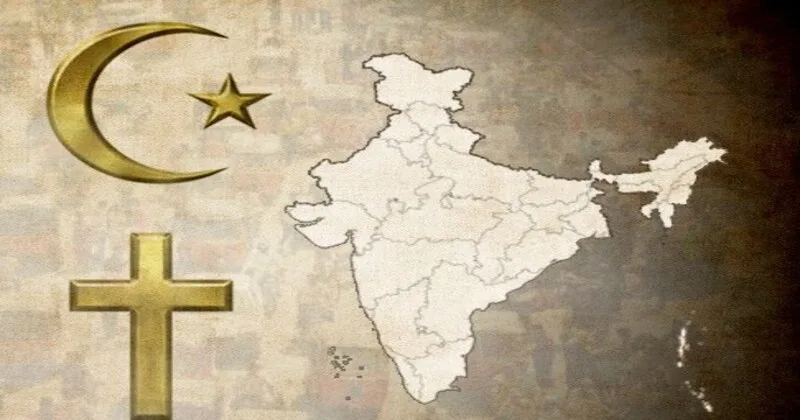
Poor are always the primary target of the conversion racket
July 19, 2026
  • Read Ecopy
  • Circulation
  • Advertise
  • Careers
  • About Us
  • Contact Us
Android AppiPhone AppArattai
Organiser
  • ‌
  • Bharat
    • Assam
    • Bihar
    • Chhattisgarh
    • Jharkhand
    • Maharashtra
    • View All States
  • World
    • Asia
    • Europe
    • North America
    • South America
    • Africa
    • Australia
  • Editorial
  • International
  • Opinion
  • RSS @ 100
  • More
    • Op Sindoor
    • Analysis
    • Sports
    • Defence
    • Politics
    • Business
    • Economy
    • Culture
    • Special Report
    • Sci & Tech
    • Entertainment
    • G20
    • Azadi Ka Amrit Mahotsav
    • Vocal4Local
    • Web Stories
    • Education
    • Employment
    • Books
    • Interviews
    • Travel
    • Law
    • Health
    • Obituary
  • Subscribe
    • Subscribe Print Edition
    • Subscribe Ecopy
    • Read Ecopy
  • ‌
  • Bharat
    • Assam
    • Bihar
    • Chhattisgarh
    • Jharkhand
    • Maharashtra
    • View All States
  • World
    • Asia
    • Europe
    • North America
    • South America
    • Africa
    • Australia
  • Editorial
  • International
  • Opinion
  • RSS @ 100
  • More
    • Op Sindoor
    • Analysis
    • Sports
    • Defence
    • Politics
    • Business
    • Economy
    • Culture
    • Special Report
    • Sci & Tech
    • Entertainment
    • G20
    • Azadi Ka Amrit Mahotsav
    • Vocal4Local
    • Web Stories
    • Education
    • Employment
    • Books
    • Interviews
    • Travel
    • Law
    • Health
    • Obituary
  • Subscribe
    • Subscribe Print Edition
    • Subscribe Ecopy
    • Read Ecopy
Organiser
  • Home
  • Bharat
  • World
  • Operation Sindoor
  • Editorial
  • Analysis
  • Opinion
  • Culture
  • Defence
  • International Edition
  • RSS @ 100
  • Magazine
  • Read Ecopy
Home Bharat

Why are the poor always the primary target of the conversion racket?

The recurring presence of poor and marginalized communities at the center of the conversion debate reveals a larger truth. The issue is not only about religion; it is also about development, social justice and human dignity. Poverty and deprivation create vulnerabilities that can be exploited by different interests, whether religious, political or economic. Therefore, the long-term solution lies not merely in legal regulation but in eliminating the conditions that make vulnerable communities susceptible to undue influence

Dr Manmohan PrakashDr Manmohan Prakash
Jul 19, 2026, 09:30 am IST
in Bharat, Opinion
Follow on Google News
Representative Image

Representative Image

FacebookTwitterWhatsAppTelegramEmail

Religious conversion has long remained a subject of social, political and legal debate in India. While discussions on conversion often focus on religious freedom, constitutional rights or legislative measures, a more fundamental question deserves attention: Why do the poor, tribal communities and other socially marginalized groups consistently become the primary focus of the conversion debate? The answer lies not merely in religion, but in the complex realities of poverty, social exclusion, unequal access to opportunities and the search for dignity.

Nearly eight decades after India’s Independence, millions of people living in remote and underdeveloped regions continue to struggle with poverty, malnutrition, inadequate education, limited healthcare, unemployment, and poor housing. For many families, securing two meals a day, educating their children or arranging treatment for a serious illness remains a daily challenge. In such circumstances, organizations that provide food, education, medical care or humanitarian assistance naturally gain the confidence and goodwill of local communities.

It is in this context that allegations are sometimes made that certain organizations combine charitable work with efforts to expand their religious influence or encourage religious conversion. At the same time, many religious and voluntary organizations reject such allegations, maintaining that their work is motivated solely by humanitarian service without any intention of influencing religious beliefs. Since both claims exist in the public domain, each case must be examined objectively on the basis of credible evidence and applicable law rather than assumptions or generalizations.

Another important dimension is the historical experience of social discrimination. Scheduled Castes, Scheduled Tribes and several other marginalized communities have, for generations, endured varying degrees of exclusion and inequality. Although constitutional safeguards, education, urbanization and social reform movements have substantially improved their condition, challenges relating to social dignity, equal opportunity and acceptance continue to exist in some regions. When individuals feel deprived of respect within their own social environment, they may naturally become more receptive to communities that promise equality, recognition, and a sense of belonging.

The situation of tribal communities presents additional challenges. Most tribal populations live in remote forests and hilly regions where access to quality education, healthcare, government welfare schemes and legal awareness remains limited. Such circumstances may make these communities more vulnerable to the influence of outside organizations. Building trust by learning local languages, living among the people and offering educational and healthcare services has been widely acknowledged as part of the outreach strategies adopted by various organizations working in these regions.

Public discussions have also referred to so-called “healing meetings” or miracle-based religious gatherings in certain areas, where claims are made regarding miraculous cures, relief from financial hardship, or solutions to personal problems through supernatural intervention. If such claims are used to persuade vulnerable individuals to change their religion, they promote superstition and undermine both scientific temper and informed decision-making. Such situations call for vigilance by society as well as appropriate action by public authorities wherever violations of law are established.

Also Read: ICC introduces ‘Super Series’ and ‘Super 7’ format for 2027 ODI World Cup – Read Here

The debate has also periodically included allegations concerning foreign funding, organized networks, and systematic conversion activities. If any religious conversion is carried out through inducement, fraud, coercion or deception, it would be inconsistent with the spirit of anti-conversion laws enacted by several Indian states and with the broader principle that every individual should be free to make an informed and voluntary choice regarding matters of faith. Equally, allegations against any organization or individual must themselves be supported by credible evidence and due legal process.

The recurring presence of poor and marginalized communities at the center of the conversion debate reveals a larger truth. The issue is not only about religion; it is also about development, social justice and human dignity. Poverty and deprivation create vulnerabilities that can be exploited by different interests, whether religious, political or economic. Therefore, the long-term solution lies not merely in legal regulation but in eliminating the conditions that make vulnerable communities susceptible to undue influence.

Inclusive development remains the most effective answer. Government welfare schemes must reach the last person without discrimination. Quality education, accessible healthcare, sustainable livelihood opportunities, and effective implementation of development programmes must become a reality in remote and tribal regions. Equally important is the creation of a social environment where every individual, irrespective of caste, tribe, or economic status, experiences dignity, acceptance, and equal opportunity.

Social, religious, and voluntary organizations also have an important responsibility. Their efforts should strengthen self-respect, social harmony, and community empowerment through genuine and selfless service. When citizens enjoy security, opportunity, and dignity within their own communities, they are far less likely to make life-changing decisions under the influence of poverty, desperation or inducement.

Ultimately, the question is not simply why the poor become the primary focus of the conversion debate, but why poverty and social exclusion continue to persist despite decades of constitutional guarantees and development efforts. Addressing these structural challenges will not only strengthen vulnerable communities but will also contribute to a more just, harmonious and inclusive society in which every individual is truly free to exercise his or her conscience.

Topics: DevelopmentConversionSocial JusticePoor
ShareTweetSendShareSend
✮ Subscribe Organiser YouTube Channel. ✮
✮ Join Organiser's WhatsApp channel for Nationalist views beyond the news. ✮
Previous News

How E20 vision is powering India’s journey towards energy independence

Next News

Maharashtra: Big setback for Uddhav Thackeray as LS speaker recognises merger of 6 (UBT) MPs with Eknath Shinde faction

Related News

Bastar is emerging as a symbol of peace, education and inclusive development, transforming the lives of its tribal communities

Bastar’s Transformation: How education & development are rewriting the story of Chhattisgarh’s tribal heartland

The evangelical system and the conversion conspiracy in India

West Bengal CM Suvendu Adhikari (Left) and Former West Bengal Chief Minister Mamata Banerjee (Right)

West Bengal’s OBC Amendment Bill: How Suvendu government seeks to end Mamata’s Muslim reservation framework

Prime Minister Narendra Modi

BJP’s Victory with Vision: An idea of India that is Indian

India rejects ‘bloc confrontation’ claim by China on QUAD; The group aims for Indo-Pacifc prosperity & development

Representative Image

Tribal identity, colonial conspiracies and the Sanatan continuum

Load More

Latest News

AI Generated Image

Beyond Numbers: Why Australia’s Indian diaspora is the strategic heart of the India–Australia partnership

Bharat was not created by the British; It is a timeless civilisational spirit rooted in cultural unity

AI generated image

Uttar Pradesh showcases textile hub vision at Bharat Tex 2026, highlights handloom reforms and investment policies

Who is Gitanjali Angmo? The Woman Set to Lead March to Parliament for Sonam Wangchuk

Who is Gitanjali Angmo? Sonam Wangchuk’s wife set to lead march to Parliament

Deities Enter Gundicha Temple in ‘Adapa Mandap Bije’ Ritual in Puri 

Rath Yatra 2026: Deities enter Gundicha temple in Adapa Mandap Bije ritual; Devotees flood for darshan

Japan Open 2026: PV Sindhu ends long wait & becomes first Indian to conquer the title; Beats Akane Yamaguchi

Uttar Pradesh Chief Minister Yogi Adityanath with children of the state (Image used for representative purposes)

UP launches statewide drive to create digital records of every student on U-DISE plus

Floods, wage protests and expanding digital surveillance underscore Beijing's efforts to contain social unrest and suppress public dissent

China tightens online surveillance and censorship as floods, economic distress and labour unrest fuel dissent

Amit Shah Reviews Criminal Justice System In West Bengal

West Bengal: Union HM Amit Shah reviews implementation of new criminal laws, calls for higher conviction rate

A representative image

Maharashtra sets up panel to review ST benefits after religious conversion; Policy on converted tribals under review

Load More
  • Privacy
  • Terms
  • Cookie Policy
  • Refund and Cancellation
  • Delivery and Shipping

© Bharat Prakashan (Delhi) Limited.
Tech-enabled by Ananthapuri Technologies

  • Home
  • Search Organiser
  • Bharat
    • Assam
    • Bihar
    • Chhattisgarh
    • Jharkhand
    • Maharashtra
    • View All States
  • World
    • Asia
    • Africa
    • North America
    • South America
    • Europe
    • Australia
  • Editorial
  • Operation Sindoor
  • Opinion
  • Analysis
  • Defence
  • Culture
  • Sports
  • Business
  • RSS @ 100
  • Entertainment
  • More ..
    • Sci & Tech
    • Vocal4Local
    • Special Report
    • Education
    • Employment
    • Books
    • Interviews
    • Travel
    • Health
    • Politics
    • Law
    • Economy
    • Obituary
  • Subscribe Magazine
  • Read Ecopy
  • Advertise
  • Circulation
  • Careers
  • About Us
  • Contact Us
  • Policies & Terms
    • Privacy Policy
    • Cookie Policy
    • Refund and Cancellation
    • Terms of Use

© Bharat Prakashan (Delhi) Limited.
Tech-enabled by Ananthapuri Technologies