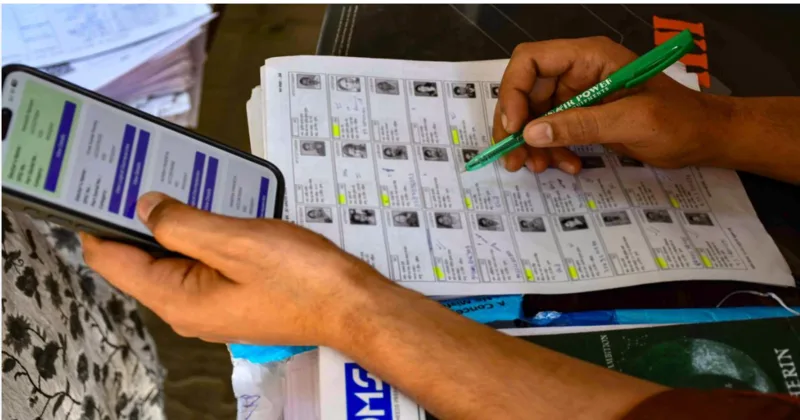
Malegaon, Maharashtra: In a significant development exposing deep vulnerabilities in India’s electoral system, Bharatiya Janata Party leader and former MP Dr Kirit Somaiya has revealed that Special Intensive Revision (SIR) of electoral rolls in Malegaon has flagged 1,26,421 voters with anomalies out of 2,41,450 voters checked so far.
This represents more than 52 per cent of the sampled rolls in one of Maharashtra’s most sensitive constituencies.
SIR Maharashtra
1,26,421 Voters found with ANAMOLIES (suspicious) at Malegaon out of 2,41,450 Voters checked till now
मतदार यादी शुद्धीकरण
मालेगावमध्ये आतापर्यंत तपासलेल्या २,४१,४५० मतदारांपैकी १,२६,४२१ मतदारांमध्ये संदिग्ध (संशयास्पद) आढळून आली आहे @BJP4India @Dev_Fadnavis
— Kirit Somaiya (@KiritSomaiya) July 9, 2026
The findings come as part of a sustained drive by Somaiya, appointed head of the BJP’s Maharashtra SIR panel, to cleanse voter lists of duplicates, bogus entries, and suspected illegal immigrants.
Malegaon, a Muslim-majority town in Nashik district known for its textile industry and history of communal tensions, has long been under scrutiny for demographic shifts potentially influenced by cross-border infiltration and fraudulent documentation.
Scale of the Problem
According to Dr Kirit Somaiya’s updates, the anomalies include duplicate registrations, voters listed in multiple constituencies, and individuals whose documentation raises serious red flags.
Earlier in 2026, the Election Commission reportedly initiated verification of around 22,000 duplicate names in Malegaon, many appearing in both Malegaon and Dhule Vidhan Sabha lists.
Mumbai, Maharashtra: BJP leader Kirit Somaiya says, "I am simply describing the ground reality of Mumbai and Maharashtra. Today, in Malegaon Assembly constituency, 95% of the voters were Muslims… Looking at the situation in Maharashtra, and particularly in Mumbai, I feel that… pic.twitter.com/64VAyXeLOv
— IANS (@ians_india) June 21, 2026
This is not an isolated issue. In February 2026, Somaiya submitted evidence of 3,273 birth certificates issued by the Malegaon Municipal Corporation (MMC) that were later cancelled by the issuing authority after being found fraudulent.
#SIR in Maharashtra
Today at MALEGAON I will submit List & Evidences of 3,273 ilegals, Infiltrators, Bangladeshis…
to Collector, Police, Municipal CorporationBirth Certificates of these 3273 are CANCELLED
But their names are still in Voters Lists
These Names should be… pic.twitter.com/imV2KC0w0U
— Kirit Somaiya (@KiritSomaiya) February 24, 2026
These certificates, often based on forged documents, had enabled many to obtain Aadhaar cards and enrol as voters.
Despite cancellation by civic authorities, many names persisted in electoral rolls until the SIR process.
Official documents shared in campaigns show notices issued under Section 22 of the Representation of the People Act, 1950, proposing deletion of names for non-residency or other discrepancies. Multiple such notices targeted individuals in areas like Ayesha Nagar and Nomani Nagar, highlighting systemic failures in verifying ordinary residency.
Pattern of Fraud: Birth Certificates and Infiltration
The core of the scam traces back to delayed and fraudulent birth certificates. Investigations by Malegaon Municipal Corporation and state authorities revealed a racket where applicants used fake affidavits, forged documents, and even non-existent parents to secure certificates.
BJP leader Kirit Somaiya-
"Malegaon has become a hub for issuing birth certificates to Bangladeshi and Rohingya illegals."
pic.twitter.com/e0zQVpSbJV— News Arena India (@NewsArenaIndia) June 2, 2025
In one tranche, over 3,000 such certificates were cancelled, with FIRs registered. Somaiya has repeatedly pointed out that many beneficiaries lack verifiable Indian origins predating recent influxes.
Malegaon "Rohingya/Bangladeshi infiltrators" thread 🧵
In January, BJP leader Kirit Somaiya claims 4000 Rohingyas & Bangladeshis have infiltrated Malegaon. His accusations, based on ZERO evidence, soon prompt Devendra Fadnavis to set up an SIT.https://t.co/IB9gBgxBgA (1/5)
— Sukanya Shantha (@sukanyashantha) February 21, 2025
Malegaon’s voter base is overwhelmingly concentrated in one religious identity, viz. the Muslim community. Historical data and constituency profiles show Malegaon Central Assembly having a very high percentage of Muslim voters (estimates around 78%+ in analyses), with total electors in the broader area exceeding 3 lakh.
BJP leaders allege this concentration, combined with rapid additions, points to organized “vote jihad”, which is a term used to describe deliberate demographic engineering through illegal immigration and bogus voting to sway outcomes in a deliberate and illegal manner.
Dr Kirit Somaiya has cited cases where birth certificates were mass-issued, enabling suspected Bangladeshi and Rohingya infiltrators to gain legal cover.
In April 2026, he highlighted 20,000 voters registered in both Dhule and Malegaon lists. His February submission to the district collector included evidence against the 3,273 cases, demanding immediate deletion during SIR.
Political and Security Implications
In the past decades, the Congress party has openly and maliciously appeased this section of voters, pandering to their illegitimate demands for the advantage of block voting in their favour.
Such favouritism and blatant abuse of the rights of the majority Hindu that rarely if ever votes as a block votebank ended up allowing the Islamist radicals to run ghettos like their fiefdoms, often trashing the law of the land and imposing their primitive edicts.
Under such circumstances, illegal immigrants from Bangladesh, Pakistan, even Myanmar (Rohingyas) have been able to flash their Islamic identity in these ghettos to the powers that be and acquire forged documents of Indian ethnicity and citizenship.
In a case that explains how this is pulled off, Karnataka High Court on June 1 last year refused to quash a case filed against a man from West Bengal accused of illegally creating Aadhaar cards, PAN cards and rental agreements for Bangladeshi nationals.
You are destroying everything by giving fake Aadhaar cards to persons who come from other countries, the Court told the petitioner, who has been in jail since 2024.
Two Pakistani nationals, Farhanaz and her son Mohammed Fardin, have been arrested within the limits of Bagepalli Police Station in Karnataka.
The disturbing part is that they possessed an Aadhaar card, ration card, voter ID, and even a bank account.This raises serious questions…
— Girish Bharadwaj (@Girishbdwj) July 11, 2026
In another case much earlier than this, officials of Unique Identification Authority of India (UIDAI), with the help of the Bellandur police, arrested seven persons, including six Bangladeshi nationals, who had obtained Aadhaar cards by forging documents to secure jobs in IT firms in and around Whitefield.
This rampant fraud has now made Indian civic systems show the strain at the seams and no city is immune to these frauds. Many of these illegal immigrants mostly from the Islamist neighbouring countries avail of bank loans and all civic schemes meant for Indian nationals, swelling their voter base not just through infiltration but also several marriages and the birth of their children inside India.
Malegaon has seen BJP lag significantly in assembly segments despite broader state trends. In past Lok Sabha-related tallies for Malegaon areas, Congress or other parties secured massive leads (e.g., nearly 2 lakh votes vs. BJP’s low thousands in some segments), raising questions about engineered majorities.
Critics of the clean-up drive have accused Somaiya of targeting minorities, but the evidence of cancelled certificates, duplicate entries, and untraceable individuals (hundreds declared absconding in related probes) points to genuine national security and electoral integrity concerns.
Similar rackets have been reported in other Maharashtra areas and beyond, with fake documents facilitating not just voting but access to welfare schemes and citizenship pathways.
The Election Commission’s SIR process, a de-novo verification exercise linking current rolls to older ones (around 2002-2004 baselines), aims to purge such entries. Somaiya’s panel is pushing for rigorous door-to-door checks, document scrutiny, and deletions.
As of the latest update, over half the checked Malegaon voters show issues – a staggering ratio that demands urgent, transparent action rather than denial.
Broader Context in Maharashtra
Maharashtra’s voter rolls have faced similar challenges elsewhere, but Malegaon stands out due to its scale and the infiltration angle. Somaiya has alleged hawala funding links and organized efforts to inflate voter numbers in key pockets.
Vote Jihad and Maharashtra Elections: BJP leader Kirit Somaiya alleges that ₹800 crore was funneled through hawala transactions to 201 bank accounts and five business firms in Dubai, purportedly linked to Malegaon vote jihad.pic.twitter.com/gYkZ5Pedee
— Delhi Dialogues India (@DelhiDialogues6) December 1, 2024
State BJP leadership, including Chief Minister Devendra Fadnavis, has been tagged in these updates, signaling governmental support for the revision.
India’s electoral democracy rests on “one person, one vote” for genuine citizens.
When over 52 per cent of sampled rolls in a constituency flag anomalies, duplicates, non-residents, or fraudulently documented individuals, it undermines the mandate of every elected representative and erodes public trust. Malegaon’s case exemplifies how unchecked infiltration and document fraud can distort demography and politics in border-states and sensitive districts.
Authorities must accelerate deletions, cross-verify with Aadhaar (where not already cancelled), Census data, and nationality proofs. The Election Commission should publish detailed action-taken reports on Malegaon SIR.
Political parties benefiting from questionable rolls must face scrutiny rather than shield the irregularities under communal pretexts.
As Dr Somaiya’s campaign underscores, cleaning voter lists is not about targeting any faith but safeguarding India’s sovereignty against illegal infiltration.
With future polls in focus, the success of SIR in Malegaon will test the system’s resolve. Failure to act decisively risks turning democratic exercise into a numbers game rigged by ‘ghost voters’, outsiders, and infiltrators.