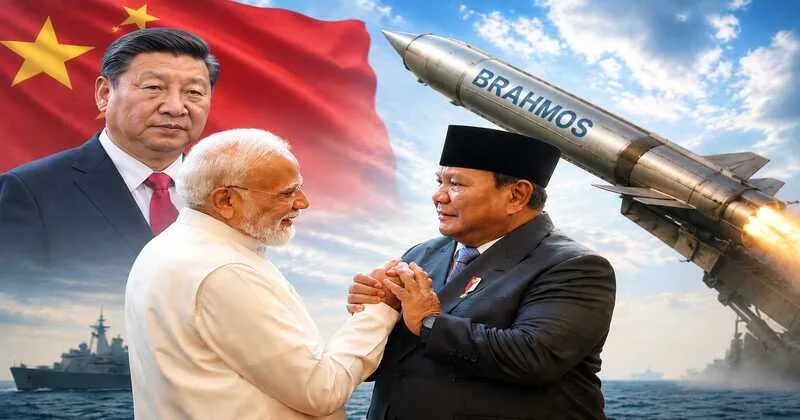
New Delhi: China’s official confirmation of Indonesia’s decision to procure India’s BrahMos supersonic cruise missile and Astra beyond-visual-range air-to-air missile (BVRAAM) has drawn a strong response from Chinese state media and state-affiliated defence commentators, who have interpreted the agreement as a significant strategic development in the Indo-Pacific rather than a routine defence export transaction.
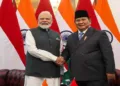
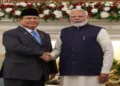
Chinese commentaries have framed the agreement within the broader context of regional geopolitics, arguing that Indonesia’s acquisition reflects India’s expanding security role in Southeast Asia. With Indonesia joining the Philippines as a BrahMos customer and India simultaneously deepening defence engagement with Vietnam, Chinese publications have projected the deal as part of New Delhi’s growing network of strategic partnerships across the region.
The assessments carried by Chinese state-backed media describe India’s defence exports as increasingly linked to its wider Indo-Pacific strategy. According to these commentaries, countries situated along critical maritime routes are strengthening security cooperation with India while modernising their armed forces, giving New Delhi greater strategic influence among ASEAN nations.
China links missile exports to regional competition
A dominant theme across Chinese commentary is the argument that India’s expanding defence exports are intensifying geopolitical competition in Southeast Asia.
Chinese state-backed publications contend that supplying advanced missile systems to countries involved in maritime disputes could alter the regional security environment. They portray India’s growing defence manufacturing capability as a strategic instrument that extends New Delhi’s political and military influence beyond South Asia and into the wider Indo-Pacific.
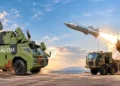
At the same time, Chinese military commentators have sought to downplay the operational significance of the exported missile systems. They have repeatedly pointed out that export variants of the BrahMos missile are restricted to a range of around 290 kilometres in accordance with the Missile Technology Control Regime (MTCR) guidelines that governed earlier exports. According to these analyses, the range limitation makes the export version primarily suitable for coastal defence rather than long-range offensive missions.
Chinese commentators have also maintained that the People’s Liberation Army Navy (PLAN) possesses sophisticated layered air-defence systems capable of countering high-speed cruise missile threats. Particular reference has been made to the air-defence architecture deployed aboard the Type 055 and Type 052D destroyers, with Chinese analysts projecting confidence in these naval platforms. These assessments, however, remain analytical and theoretical evaluations rather than operationally verified conclusions.
Maritime chokepoints and India’s expanding security network
Chinese commentary has also highlighted Indonesia’s strategic geography, describing the country as occupying a pivotal position overlooking the Malacca, Sunda and Lombok Straits, three of the world’s most important maritime corridors linking the Indian and Pacific Oceans.
According to these assessments, the deployment of land-based anti-ship missile batteries in countries controlling such chokepoints could complicate naval operations during any future regional contingency.
Another recurring theme has been the emergence of what Chinese analysts describe as an expanding network of Indian missile partnerships across Southeast Asia. The Philippines, Vietnam and Indonesia are collectively presented as countries that are increasingly strengthening defence cooperation with India in response to evolving regional security dynamics.
Delhi: Defence expert Major General P.K. Sehgal (Retd.) says, "Indonesia's decision to buy BrahMos is very important as far as India's strategy is concerned. Simultaneously, it boosts Atmanirbhar Bharat and Make in India. Before 2014, India's total defence exports were… pic.twitter.com/8NV2HcFwj0
— IANS (@ians_india) July 8, 2026
Despite expressing concern over the growing India-Indonesia defence relationship, Chinese state-backed editorials have adopted a measured approach towards Jakarta. Rather than directly criticising Indonesia, the commentaries emphasise the country’s long-standing foreign policy of strategic autonomy and non-alignment.
The editorials argue that expanding defence cooperation with partners outside the region could introduce additional geopolitical complexities, particularly as China remains Indonesia’s largest trading partner.
For India, however, the agreement marks another major milestone in its effort to emerge as a leading exporter of advanced defence systems. BrahMos has already established itself as India’s flagship missile export, while Astra is expected to become India’s first exported indigenous beyond-visual-range air-to-air missile if the agreement proceeds as anticipated.
Beyond their commercial significance, both missile systems reinforce India’s objective of becoming a dependable defence supplier for countries seeking to diversify military procurement and reduce dependence on traditional arms-exporting nations. The deal also reflects the growing maturity of India’s indigenous missile development ecosystem and strengthens strategic partnerships with friendly maritime nations across the Indo-Pacific.
Indian army veterans call it a strategic response to China’s ‘String of Pearls’
Indian Army veterans have welcomed the India-Indonesia defence agreement, describing it as a significant strategic achievement that counters China’s regional posture.
Defence expert Major General P.K. Sehgal (Retd.) said Indonesia’s decision to acquire BrahMos is highly significant from India’s strategic perspective. He added that the agreement simultaneously strengthens the objectives of Atmanirbhar Bharat and Make in India. Highlighting the growth of India’s defence exports, he noted that before 2014, the country’s total defence exports stood at approximately Rs 1,400 crore. That figure has now increased to nearly Rs 25,000-26,000 crore and could reach around Rs 50,000 crore over the next three to four years.
Major General Sehgal also referred to Operation Sindoor, stating that Pakistan’s eleven airfields were destroyed using the BrahMos missile system. He pointed out that India had already finalised BrahMos export contracts with the Philippines and Vietnam before reaching the agreement with Indonesia.
He further stated that while China has attempted to counter India by supplying weapons to Pakistan and even Bangladesh, Beijing simultaneously faces maritime disputes with Indonesia, the Philippines and Vietnam in the South China Sea and East China Sea. India’s supply of BrahMos missiles to these countries, he said, demonstrates that New Delhi has responded to China in the language it understands.
Apart from BrahMos, he noted that Indonesia has also acquired India’s indigenous air-to-air missile for its Air Force, a capability that would strengthen the country’s coastal and maritime defence.
Major General Sehgal also referred to the broader India-Indonesia agreements, including the Sabang Port deal, saying they collectively send a clear message that India cannot be ignored in the Indo-Pacific region.
BrahMos strengthens India’s strategic partnerships
Major General Sanjay Soi (Retd.) described India’s BrahMos agreements with the Philippines, Vietnam and Indonesia as important developments that would enable India to challenge China’s policy of expansion. He said that while China has sought to surround India through its “String of Pearls” strategy, India is responding through what has been described as a “Necklace of Diamonds” approach by strengthening defence partnerships across the Indo-Pacific.
Major General Soi also referred to Operation Sindoor, saying the operation demonstrated the operational strength and effectiveness of the BrahMos missile system before the international community. Major General Dhruv Katoch (Retd.) described BrahMos as a strategic weapon that has significantly strengthened India’s defence relationships with partner countries.
Delhi: On the India–Indonesia deal on BrahMos and Astra, Major General Dhruv Katoch says, "I think this is a very good deal. In fact, I have always advocated that our systems have achieved great credibility, especially after Operation Sindoor, and the BrahMos has been seen by the… pic.twitter.com/eRudqKSzqB
— IANS (@ians_india) July 7, 2026
Referring to the agreements with the Philippines, Vietnam and Indonesia, he said that countries facing territorial disputes gain an important deterrent capability when equipped with systems such as BrahMos. If another country exerts military pressure and the affected nation lacks an effective response, the pressure remains unchecked.
Possessing such a missile system, however, provides those countries with an option to respond if required. He emphasised that acquiring a strategic weapon does not automatically imply its use, but it substantially enhances deterrence by providing countries with the capability to defend themselves if attacked.
Major General Katoch added that the India-Indonesia defence relationship is expected to deepen further following the BrahMos missile system agreement.
China’s reaction to the India-Indonesia defence partnership underlines the broader strategic significance of the agreement. Beyond the sale of two advanced missile systems, the deal reflects India’s expanding defence industrial capabilities, growing credibility as a reliable military supplier and increasing strategic influence across the Indo-Pacific.
As BrahMos exports continue to expand from the Philippines and Vietnam to Indonesia, and Astra moves towards becoming India’s first exported indigenous BVRAAM, New Delhi’s defence diplomacy is emerging as an increasingly important pillar of its regional strategic outreach.