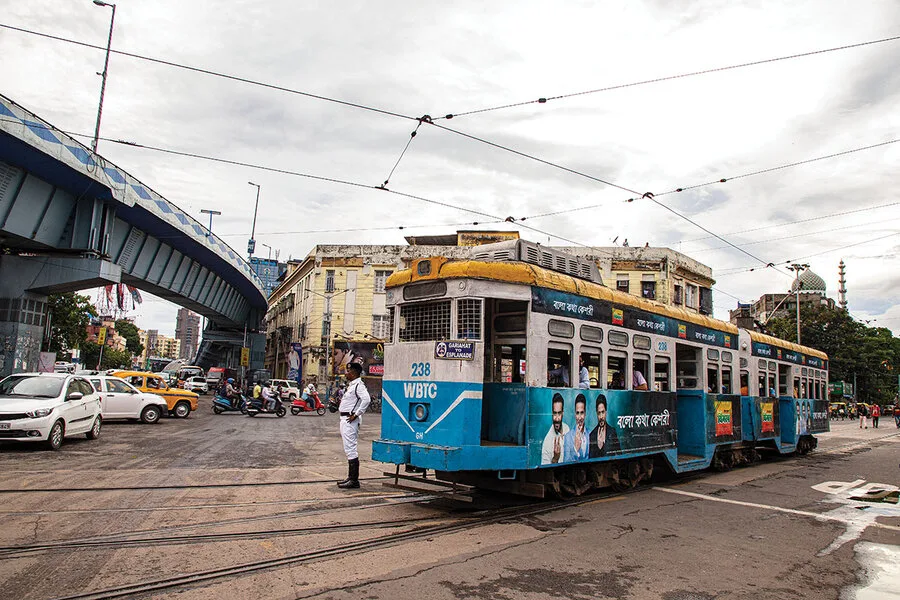
Kolkata’s historic tram network, one of the city’s most enduring symbols and the oldest operating tram system in Asia, is set for a major revival under an ambitious modernisation plan announced by the West Bengal government.
The proposal includes air-conditioned trams, battery-powered operations, expansion into emerging urban centres and the revival of dozens of routes that gradually disappeared over the past several decades.
West Bengal Transport Minister Arjun Singh announced the proposed revival during an interactive session organised by the Merchants’ Chamber of Commerce and Industry (MCCI).
The state government has tasked Rail India Technical and Economic Service (RITES) with conducting a detailed feasibility study and preparing a comprehensive blueprint for the project within 30 days.
According to the minister, the objective is not merely to preserve a heritage asset but to transform Kolkata’s tramways into a modern, environmentally sustainable urban transport system.
The government is aiming to restore the network’s earlier scale by reviving nearly 70 routes that were gradually reduced or discontinued over the years.
AC trams and battery technology planned
A key feature of the revival plan is the introduction of modern air-conditioned trams designed to improve passenger comfort and attract a new generation of commuters.
The government also plans to move away from the traditional overhead electric wire system that has long characterised Kolkata’s tramways.
Instead, the proposed network will use battery-powered technology, which officials believe will improve operational efficiency, reduce visual clutter and minimise risks associated with overhead infrastructure.
The shift is also expected to strengthen Kolkata’s green mobility ecosystem as the city seeks cleaner and more sustainable public transport options.
New track design to reduce traffic congestion
One of the major criticisms of Kolkata’s tram system has been its impact on road traffic, particularly where tracks occupy the middle of busy roads.
To address this issue, the government is considering a redesigned track layout under which tram lines would be placed along the left side of roads rather than at the centre.
Officials believe this change could help reduce congestion while allowing trams and other vehicles to coexist more efficiently within the city’s transportation network.
The revival project also includes plans to expand tram services beyond traditional routes and connect Kolkata’s rapidly growing urban centres.
New Town and Salt Lake, two of the city’s major residential, commercial and IT hubs, are among the areas being considered for new tram corridors.
The proposed expansion aims to integrate heritage transport with modern urban development, providing an alternative mode of travel for thousands of daily commuters.
Temple corridor route under consideration
Among the most ambitious proposals is a tram route connecting two of Kolkata’s most significant religious landmarks, Dakshineswar Kali Temple and Kalighat Kali Temple.
The corridor would link major pilgrimage centres located on opposite ends of the city and could emerge as a unique heritage and tourism route.
Officials believe the project could boost religious tourism while offering visitors a distinctly Kolkata travel experience.
The transport department is also examining plans to transform parts of College Street into a pedestrian-friendly zone.
Under the proposal, access would be limited to trams, bicycles and battery-operated vehicles, reducing congestion and improving mobility in one of Kolkata’s most iconic educational and cultural districts.
The move is aimed at creating safer and cleaner public spaces while preserving the unique character of the area.
Trams positioned as clean mobility solution
The government is presenting trams not merely as a heritage attraction but as a critical component of Kolkata’s future transport strategy.
Officials have described trams as the city’s “original electric vehicles”, highlighting their low-emission profile and ability to carry large numbers of passengers efficiently.
The system is also seen as particularly beneficial for senior citizens and daily commuters because of its accessibility and affordability.
To support long-term operations and reduce the financial burden on the state, the government plans to explore Public-Private Partnership (PPP) models.
Under the proposed framework, private firms could receive advertising rights on tram coaches and transit depots in exchange for payments to the government.
Officials believe the model could help generate sustainable revenue while supporting the maintenance and expansion of the tram network.
Part of wider transport modernisation drive
The tram revival is part of a broader push by the West Bengal government to modernise public transport infrastructure.
The state plans to induct 470 electric and CNG buses into the transport fleet before Durga Puja. It is also investing in inland waterway transportation along the Ganga as part of a multimodal mobility strategy.
If implemented, the tram revival project could mark the most significant transformation of Kolkata’s iconic streetcar network in decades, blending heritage preservation with modern urban mobility and environmental sustainability.