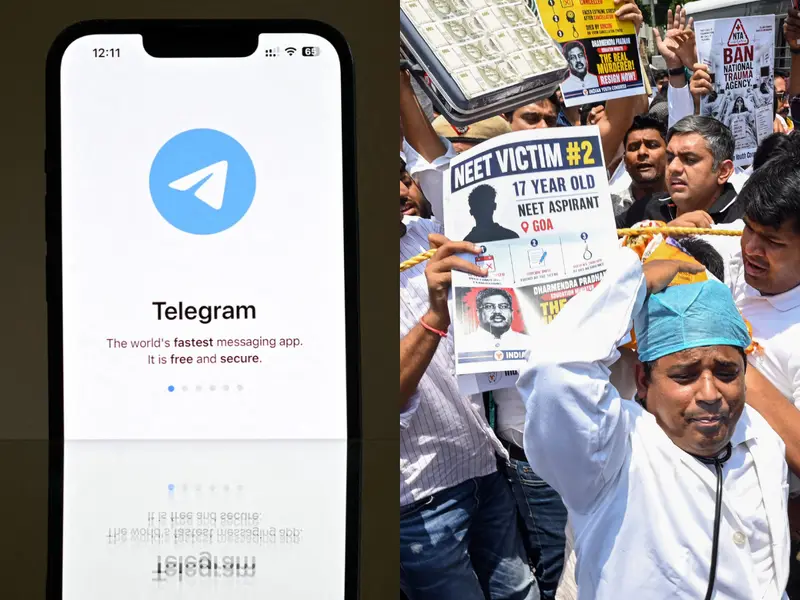
In a significant development amid the controversy surrounding the NEET-UG 2026 re-examination, the Delhi High Court refused to provide immediate relief to messaging platform Telegram against the Centre’s decision to temporarily restrict access to its services.
The matter was mentioned before a vacation bench of Justice Tejas Karia, which agreed to hear the petition on an urgent basis. However, after hearing preliminary submissions from both sides, the court did not pass any interim order in Telegram’s favour and allowed the Centre time to file its response. The matter is now scheduled for further hearing on Thursday afternoon.
The case has assumed considerable importance as it comes just days before the June 21 NEET-UG re-examination, with the government citing concerns over the alleged misuse of online platforms for circulating examination-related material and other content.
Appearing on behalf of Telegram, the platform’s counsel argued that the government’s action had affected more than 150 million users across India.
The company contended that the blocking order was arbitrary and disproportionate, claiming that the restrictions had been imposed without adequate justification. During the hearing, Telegram’s legal team argued that the decision violated principles of equality and fairness guaranteed under the Constitution.
“There are 150 million users in the country. You block everything. Article 14 is completely violated,” Telegram’s counsel submitted before the court.
The platform further maintained that it had already taken corrective measures by blocking channels and accounts that had been identified as problematic by authorities.
The Centre strongly opposed Telegram’s petition and defended the restrictions imposed on the platform.
Solicitor General Tushar Mehta, appearing for the Union government, informed the court that sufficient material had been gathered against Telegram and that the government’s concerns were not recent.
“We have been dealing with them since May. We’ve not said anything yet,” Mehta told the court, indicating that authorities had been examining issues related to the platform for several weeks before taking action.
The government argued that repeated violations and material collected during its assessment justified the temporary restrictions imposed on the messaging application.
Telegram also questioned whether the statutory procedure prescribed under information technology regulations had been properly followed before the restrictions were imposed.
According to the company’s counsel, the designated officer under the applicable rules is required to examine the material submitted by the National Testing Agency (NTA), independently assess the evidence and make recommendations before any action is taken.
The counsel further argued that the Secretary of the Ministry of Electronics and Information Technology (MeitY) must independently evaluate both the recommendations and the underlying material before arriving at a final decision.
Telegram claimed that it had cooperated with authorities and had proactively acted against channels and accounts flagged by government agencies.
The legal battle comes against the backdrop of heightened scrutiny of digital platforms ahead of the NEET-UG 2026 re-examination scheduled for June 21.
Government agencies have expressed concerns over the alleged misuse of online platforms for sharing examination-related content, including leaked material, answer keys and misinformation. Telegram, with its large channels, group features and file-sharing capabilities, has been at the centre of the controversy.
The Centre has maintained that the restrictions are necessary to safeguard the integrity of the examination process and prevent any misuse of digital platforms that could compromise the conduct of the re-examination.
With the High Court declining immediate relief and the Centre standing firm on its position, the matter is expected to witness further legal arguments when it comes up for hearing on June 18.