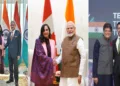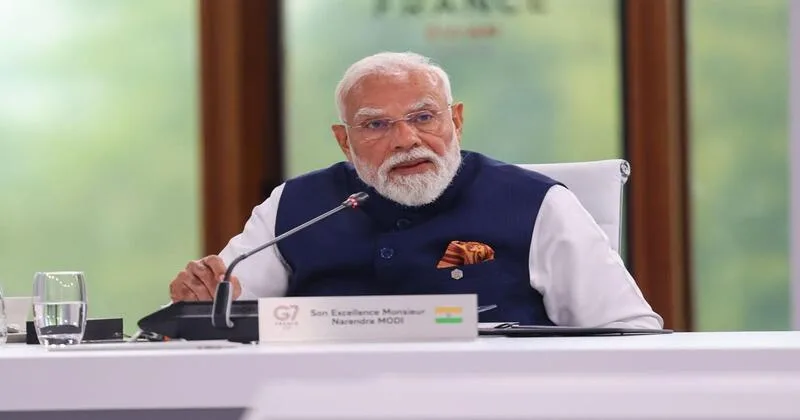
Evian (France): Prime Minister Narendra Modi on Wednesday urged G7 leaders, including US President Donald Trump, to recognise the prolonged impact that the conflict in West Asia is likely to have on developing nations. Stressing that disruptions in fuel, fertiliser and food supply chains would continue to affect the Global South for a significant period, Modi said vulnerable countries should not be left alone to bear the consequences of the crisis. He called on international financial institutions to create mechanisms that would help affected nations withstand these economic shocks.
The conflict in West Asia has already had adverse economic consequences for India and many developing countries across Asia, Africa and Latin America. The near-closure of the Strait of Hormuz has disrupted supplies of LPG, LNG, diesel, petrol and fertilisers, leading to higher fuel prices and triggering wider economic pressures. The resulting increase in costs has created hardships across several sectors and economies dependent on imported energy and fertiliser supplies.
Modi made these remarks while addressing the outreach session on “Reviving a Balanced, Shared and Sustainable Economic Growth for All” at the G7 Summit in Evian-les-Bains in eastern France. Referring to the continuing effects of the crisis, he said that interruptions in fuel, fertiliser and food supply chains caused by developments in West Asia would continue to impact countries of the Global South for a considerable time.
Had a productive round of meetings and interactions at the G7 Summit in Evian. I had the opportunity to put forward India’s views and efforts on key areas of governance and policy-making. Also had the opportunity to put forward the need to work closely with the Global South as…
— Narendra Modi (@narendramodi) June 17, 2026
He stated that if the international community genuinely wished to strengthen global solidarity, then the most vulnerable nations should not be made to shoulder these burdens by themselves. According to Modi, international financial institutions must establish support frameworks that would enable developing economies to absorb external shocks and preserve their economic resilience.
The Prime Minister’s remarks reflected concerns frequently voiced by countries of the Global South. A day earlier, he had noted that these nations had high expectations from the international community and were seeking not merely assistance but genuine partnership.
Focus on inclusive development
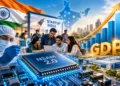
Acknowledging that the French G7 Presidency had placed importance on the issue, Modi said discussions on economic growth should move beyond conventional indicators such as GDP and trade volumes. He argued that the more important questions were who benefits from growth, who participates in it and what direction it takes.
Drawing from India’s experience, Modi said the country had demonstrated how inclusive development could transform aspirations into reality. He described India’s development trajectory as one rooted in inclusion, scale and democratic empowerment.
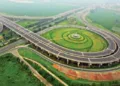
According to him, this approach is guided by the principle of “Sabka Saath, Sabka Vikas, Sabka Vishwas, Sabka Prayas” (Together with all, development for all, trust of all, efforts by all). He said the same spirit had been reflected in several initiatives undertaken by India, including its G20 Presidency and the launch of the India-Middle East-Europe Economic Corridor (IMEC).
India unveiled the IMEC initiative in September 2023, one month before the outbreak of the Gaza conflict that followed the October 7 terror attacks on Israel by Hamas.
New proposals for connectivity and skill
Building on the vision behind IMEC, Modi suggested exploring similar connectivity initiatives involving countries in Africa, Latin America and the Pacific Islands. He proposed combining G7 capital, India’s talent and the ownership of Global South countries to create an “International Mobilisation Partnership for Accelerating Connectivity and Trade” (IMPACT).
Glad to have met President William Ruto of Kenya.
India and Kenya share a longstanding partnership anchored in the aspirations of the Global South. We remain committed to working together for the well-being of our people.@WilliamsRuto @G7 pic.twitter.com/sNnj4fsUkp
— Narendra Modi (@narendramodi) June 16, 2026
The summit was also attended by G7 partner nations Brazil, Egypt, South Korea and Kenya. In addition, Ukraine, Qatar and the United Arab Emirates were invited to participate.
Turning to demographic trends, Modi observed that many developed societies were becoming ageing societies, while India and several Global South countries possessed large pools of young talent, entrepreneurial energy and skills. He said this natural complementarity could be harnessed through the creation of a Global Skills Partnership.
Such a framework, he suggested, could focus on skill mapping and facilitate trusted mobility for skilled workers. The proposal aligns with India’s existing mobility agreements with several developed countries, under which skilled and semi-skilled Indian professionals are able to travel and work abroad through legal migration pathways.