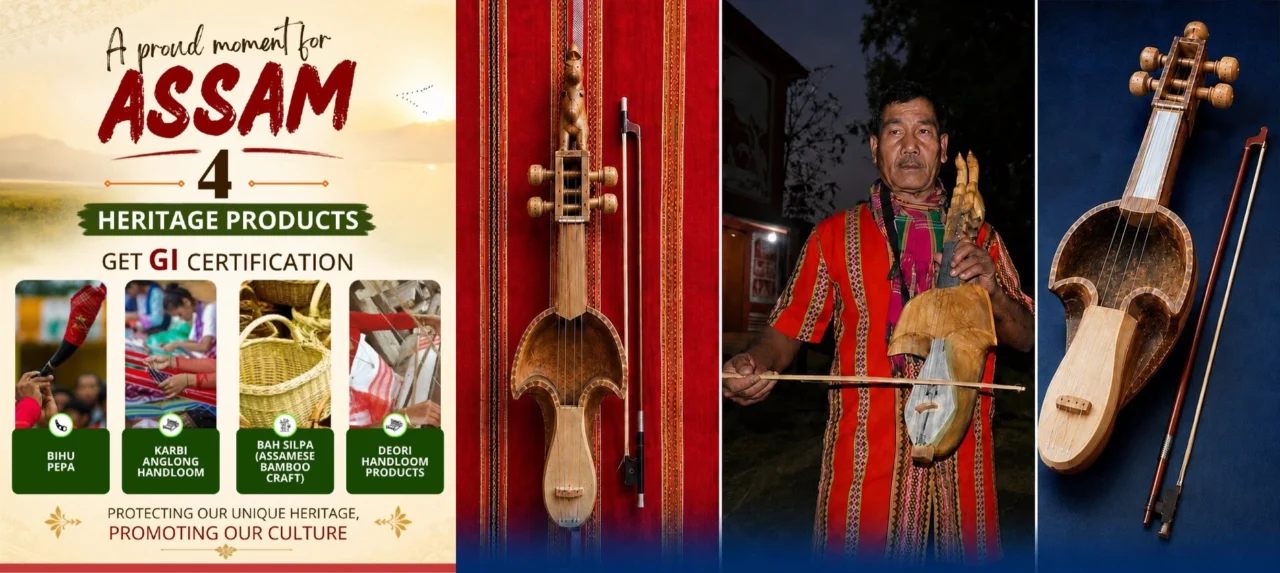
Guwahati: Assam has added four more products to its list of Geographical Indication (GI) tagged items. The newly tagged products are Karbi Anglong handloom products, Bihu Pepa, Assamese bamboo craft, and Deuri handloom products.
A GI tag is given to a product that has a special quality or reputation linked to the place it comes from. Once a product gets this tag, only goods made in that region, using the traditional method, can be sold under that name. This stops others from copying the product or selling fake versions under the same name.
Reacting on the milestone Assam CM Himanta Biswa Sarma said, ‘A proud moment for Assam! Our efforts to conserve and promote our rich heritage gets another shot in the arm. Four items from Assam have received the prestigious GI tag- Bihu Pepa, Karbi Anglong Handloom, Bah Silpa, Deori Handloom products.’
The National Bank for Agriculture and Rural Development (NABARD) helped artisan groups complete the paperwork and process needed for the registration. NABARD’s Assam chief general manager, Loken Das, said the tag would give these products a stronger identity and help them reach more buyers, both in India and abroad.
Each of the four products tells its own story. Karbi Anglong handloom carries forward the weaving style of the Karbi community, one of the oldest hill tribal communities in Assam. Deuri handloom reflects the textile traditions of the Deori tribe. Bihu Pepa is the horn instrument played during Bihu celebrations, made from buffalo horn. Bamboo craft, also called Bah Silpa, shows the skill of artisans who shape bamboo into household items and decorative pieces.
With this addition, Assam’s tally of GI tagged products keeps growing. The state already holds tags for items such as Assam Orthodox Tea, Karbi Anglong Ginger, Tezpur Litchi, Kaji Nemu, Muga Silk, Assam Jaapi, Bihu Dhol, Sarthebari Bell Metal Craft, Asharikandi Terracotta Craft, and Pani Mateka craft made from water hyacinth.
Officials say the new tags should help rural households that depend on handloom weaving and craft work for income. Better prices and wider market access, they hope, will also encourage young people in these communities to keep practising these traditional skills instead of giving them up.
Tripura’s Sarinda gets GI Tag
In Tripura, the traditional string instrument called Sarinda has also received the GI tag. The instrument is closely tied to the state’s indigenous communities and is valued for its distinct craftsmanship.
Tripura Chief Minister Manik Saha shared the news on social media and said, ‘The Traditional Sarinda, a unique indigenous string musical instrument has received Geographical Identification (GI) recognition. The “Tripura Sarinda” will mark a significant step towards preserving and promoting the treasured folk tradition which will also strengthen the rich cultural heritage of the State. With this achievement, Tripura now has its 4th GI tagged product. My heartiest congratulation to all the artisans/ musicians involved in this creation.’
With the addition of Sarinda’s addition, Tripura now has four GI tagged products in all. The other three are Tripura Queen Pineapple, Risa-Pachra, which is also known as Rignai, and Matabari Peda.
The Sarinda is a bowed instrument, made by hand from wood and other natural materials found locally. Artisans who craft it pass the skill down through generations. The GI tag is expected to protect this craftsmanship from being copied elsewhere and create better income opportunities for the artisans and musicians who keep the tradition alive.