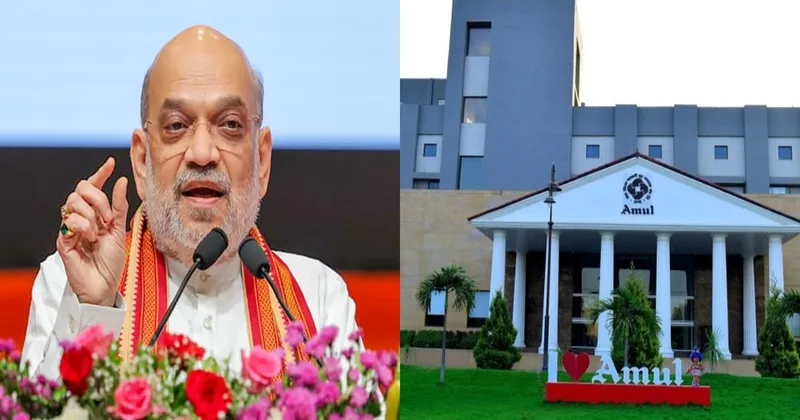
Kolkata: Amul has announced a major investment of approximately Rs 700 crore (US$74.8 million) for the establishment of a new dairy plant in West Bengal. The foundation stone for the facility is scheduled to be laid on June 14, and the event is expected to be attended by Union Home Minister Amit Shah. The plant, to be located in Howrah, will have the capacity to process up to 15 lakh litres of milk daily and produce 10 lakh kg of curd, mishti doi, yogurt, lassi, and buttermilk every day. The project highlights Amul’s commitment to expanding its processing network across India while supporting the growth of the dairy sector in eastern India. The investment is expected to strengthen dairy infrastructure and contribute to the state’s industrial development agenda.
🚨 HUGE! Amul to lay foundation stone of a ₹700 crore plant in West Bengal on June 14 💥
— HM Amit Shah will be present.The plant in Howrah will have capacity to produce 10 lakh kg of curd, mishti doi, yogurt, lassi & buttermilk EVERY DAY & process up to 15 lakh litres of milk… pic.twitter.com/y9yMkngAhU
— The Analyzer (News Updates🗞️) (@Indian_Analyzer) June 11, 2026
The proposed dairy plant forms part of Amul’s broader strategy to increase its presence in eastern India and cater to growing demand for dairy products. By establishing a modern processing facility in West Bengal, the cooperative aims to enhance milk procurement, processing efficiency, and the production of value-added dairy products. The project is expected to strengthen the state’s dairy ecosystem by providing better infrastructure and creating stronger market linkages for dairy producers.
Economic and Employment Impact
The investment is likely to generate significant economic activity in the region through both direct and indirect employment opportunities. Construction and operation of the facility are expected to create jobs across multiple sectors, including manufacturing, logistics, transportation, and allied services. The project could also benefit dairy farmers by providing improved access to organised procurement systems and stable market opportunities. As a result, the initiative is expected to contribute to rural development and strengthen local economies.
Amul’s investment aligns with ongoing efforts to modernise India’s dairy sector through enhanced infrastructure and value addition. The new facility is expected to improve processing capacity and help reduce inefficiencies across the dairy supply chain. By expanding organised dairy operations, the project can support better product quality, improved distribution networks, and greater competitiveness within the industry. It also reflects the growing importance of agro-processing investments in driving agricultural and rural growth.
Digital Innovation: Introduction of AI Assistant ‘Sarlaben’
Alongside its infrastructure expansion, Amul has launched an artificial intelligence-powered assistant named “Sarlaben” to support dairy farmers in Gujarat. The digital platform has been designed to provide farmers with timely information on livestock management, nutrition, vaccinations, animal health, and various government welfare schemes. By leveraging AI technology, Amul aims to make expert guidance more accessible to farmers and improve decision-making at the grassroots level.
The AI assistant is expected to benefit more than 36 lakh milk producers across Gujarat, with a large proportion of beneficiaries being women. Farmers can access personalised advice in local languages through digital channels, reducing dependence on physical extension services and enabling quicker access to information. The platform is expected to promote best farming practices, improve animal health outcomes, increase milk productivity, and minimise avoidable losses, thereby enhancing farmer incomes over time.
The launch of Sarlaben comes at a time when dairy farmers are facing several challenges, including rising feed costs, climate-related pressures, and increasing risks associated with animal diseases. Smallholder farmers, who form the backbone of India’s dairy industry, often have limited access to timely technical support and veterinary services. In this context, digital solutions such as AI-based advisory platforms are increasingly being viewed as effective tools for improving resilience, productivity, and sustainability in the sector.
Amul’s twin initiatives, investing Rs 700 crore in a new dairy plant in West Bengal and deploying AI-driven support systems for farmers, demonstrate its focus on combining infrastructure development with technological innovation. While the new plant is expected to strengthen dairy processing capabilities and create economic opportunities, the AI assistant aims to empower farmers with accessible and timely information. Together, these efforts are expected to contribute to the long-term growth, efficiency, and sustainability of India’s dairy sector.