LUCKNOW: For many families displaced from Pakistan and settled across northern India, the search for security did not end when they crossed the border. While they found refuge and built lives in their adopted homeland, thousands continued to live without formal ownership of the land on which they resided. The absence of legal rights often meant uncertainty over their future, limited access to institutional finance and challenges in fully integrating into the economic mainstream.
True leadership is about empowering the weakest first.
CM yogi is showing exactly that.
Today 1,645 families displaced from Pakistan will get land pattas in Bijnor with full legal rights.
Beneficiaries of PM Awas Yojana will receive allocation letters, youth entrepreneurs will… pic.twitter.com/FQ0iP8uvDL
— Megh Updates 🚨™ (@MeghUpdates) June 1, 2026
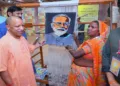
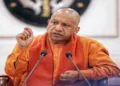
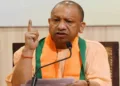
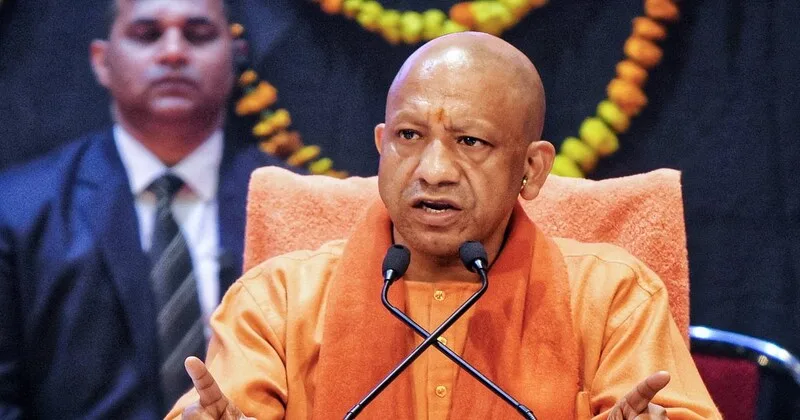
In a significant rehabilitation initiative, Uttar Pradesh Chief Minister Yogi Adityanath has handed over land ownership certificates (bhoomidari pattas) to 1,645 families displaced from Pakistan in Bijnor district. The move grants these families legal ownership rights over the land they occupy, providing them with long-awaited recognition and security.
The programme is part of a broader effort that combines rehabilitation with social and economic empowerment. Alongside land ownership rights, beneficiaries are receiving housing support under the Pradhan Mantri Awas Yojana (PMAY), financial assistance for entrepreneurship and opportunities linked to women-led self-help groups.
The initiative represents one of the most comprehensive attempts in recent years to address the long-standing concerns of displaced families through a package that combines legal, social and economic support.
The Historical Context
The story of many Pakistan-displaced families stretches back decades. Some migrated during and after Partition, while others arrived in subsequent years due to religious persecution, insecurity or socio-political instability in neighbouring regions.
Though many settled in various parts of India and contributed to local economies through agriculture, trade and labour, questions surrounding land ownership often remained unresolved. Families lived on government-allotted land or occupied plots without complete ownership documentation, leaving them vulnerable to legal complications and limiting their access to formal welfare mechanisms.
Without legal title, residents often faced difficulties in:
* Accessing bank loans
* Using property as collateral
* Securing inheritance rights
* Availing certain government benefits
* Making long-term investments in housing and businesses
The distribution of land pattas seeks to address these concerns by transforming long-term occupants into legally recognised landowners.
Land ownership is far more than a legal formality; it is a key driver of economic and social empowerment. For displaced families, a legal land title provides financial inclusion by enabling access to bank loans and institutional credit, which can be used for agriculture, small businesses, education and home improvements.
Ownership also brings security and stability, reducing fears of eviction or future disputes and encouraging families to invest confidently in their homes and communities. In addition, property rights can be passed on to future generations, ensuring long-term economic security for children and grandchildren. Land ownership documents also make it easier for beneficiaries to access various government welfare schemes related to housing, infrastructure and rural development. For the 1,645 families receiving land pattas in Bijnor, these certificates represent not only legal recognition but also a foundation for greater financial security, social inclusion and future prosperity.
The programme launched in Bijnor illustrates a broader vision of rehabilitation—one that moves beyond relief and towards empowerment. By combining land rights, housing assistance, entrepreneurship support and women’s economic participation, the initiative seeks to create a pathway from displacement to stability and opportunity.
For the 1,645 families receiving land ownership rights, the pattas are more than pieces of paper. They are symbols of legal recognition, economic possibility and a future built on certainty rather than uncertainty.