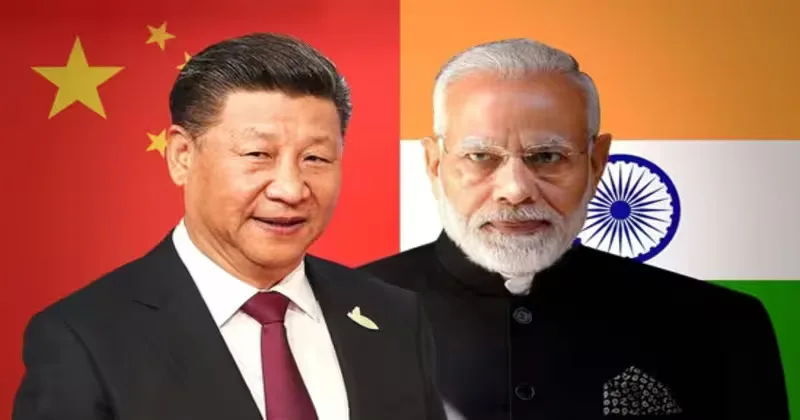
Some U.S. officials have, at times, expressed concern about India’s rise, drawing parallels with China’s earlier ascent and the challenge it posed to American primacy in the global order. This sentiment was reflected at the Raisina Dialogue earlier this year when U.S. Deputy Secretary of State Christopher Landau remarked that Washington would “not make the same mistakes with India that it made with China”.
While such caution is understandable from the US perspective, it reflects a flawed comparison that overlooks the fundamentally different historical trajectories, political systems, civilisational outlooks and strategic cultures of India and China.
The contrast becomes particularly clear when viewed against President Xi Jinping’s invocation of the “Thucydides Trap” — the theory that structural conflict often emerges when a rising power seeks to displace an established hegemon.
When Xi asked President Donald Trump, “Can China and the United States overcome the so-called ‘Thucydides Trap’ and create a new paradigm of major-country relations?” he was doing far more than offering a diplomatic pleasantry. It was a carefully calibrated strategic signal that Beijing sees itself as a civilisational power returning to what it views as its historic place at the centre of global affairs.
His decision to host Trump amid the symbolism of imperial grandeur reinforced this message of historical continuity and revived confidence, much as Vladimir Putin invokes Russia’s imperial legacy to frame Moscow’s geopolitical ambitions.
Xi’s further observation that these were “questions of history” and “the answers of our era that you and I must write together” carried both invitation and warning: an invitation to accommodate China’s rise through coexistence and a warning that resistance to this structural shift risks intensifying great-power rivalry.
India is an inclusive democracy rooted in civilisational values
India presents no such revisionist challenge. To conflate India’s rise with China’s is to misunderstand the nature of both. India attained independence in 1947 through a anti-colonial freedom movement and
despite initially pursuing a state-led socialist model, remained committed to constitutionalism, pluralism and democratic freedoms. China, by contrast, emerged through communist revolution into a rigid one-party state where political authority remains inseparable from military power.
India’s economic liberalisation, launched in 1991, unfolded through democratic institutions, market reforms, private-sector dynamism and integration with the global economy. China’s economic opening, though transformative, remains fundamentally state-directed, with tight control over capital, information and enterprise. The social and cultural distinctions are equally profound.
India is a diverse, secular and inclusive democracy where multiple religions, languages and ethnicities coexist within a constitutional framework. It remains open to global ideas and influences, with English serving as a bridge to international engagement. China remains comparatively insular, with the state tightly controlling the flow of ideas, information and external engagement.
Unlike China’s export-dependent model, India remains a predominantly domestically driven economy powered by a vast and growing middle class.
India’s rise under PM Modi: Not revisionist or hegemonic, but developmental & democratic
India’s rise has also accelerated dramatically under the leadership of Prime Minister Narendra Modi. Over the past decade, India has undertaken one of the most ambitious programs of economic modernisation, infrastructure development, digital transformation and governance reform in its post-independence history. Massive investments in roads, railways, ports, airports, logistics corridors, energy connectivity and manufacturing ecosystems have strengthened India’s economic foundations.
At the same time, India’s digital public infrastructure revolution, spanning Aadhaar-enabled financial inclusion, digital payments and direct benefit transfer systems-has created a globally studied model of scale, efficiency and inclusion.
India’s manufacturing push, ease-of-doing-business reforms and expanding innovation ecosystem have positioned it as one of the world’s most dynamic growth engines. Equally significant has been the revival of India’s civilisational confidence and its emergence as a leading voice of the Global South.
Under Prime Minister Modi, India has engaged its neighbourhood and the wider world with greater strategic clarity — from the Indo-Pacific and the Middle East to Africa, Central Asia and Europe.
Its successful stewardship of the G20 presidency and support for the African Union’s inclusion reflected India’s ability to bridge developed and developing worlds while advancing a more inclusive international order. This leadership reinforces a central point: India’s rise is not revisionist or hegemonic. It is developmental, democratic and stabilising.
Unlike China’s rise, often accompanied by coercive diplomacy and demands for strategic accommodation, India’s ascent has been rooted in institution-building, partnership creation and cooperative multipolarity.
This vision draws deeply from India’s civilisational ethos of Vasudhaiva Kutumbakam — “the world is one family”.
This is precisely why India should not be viewed through the same strategic lens as China. India’s rise under PM Modi represents not a challenge to the democratic order, but an opportunity to strengthen and rebalance it.
Indian Diaspora: Contribution to American economy
This distinction is most visible in the extraordinary success of the Indian diaspora, particularly in the United States. The approximately 5.2 million-strong Indian-American community has made outsized contributions to the U.S. economy through entrepreneurship, technology leadership, healthcare, academia, finance and innovation.
Indian-origin professionals have led some of America’s most consequential corporations and have played transformative roles in Silicon Valley, medicine, venture capital, advanced research and higher education.
Indian-founded companies have generated substantial employment, investment and innovation across the United States. Indian-Americans are among the highestcontributing immigrant communities in income generation, educational attainment, tax contribution and professional excellence.
Their success reflects the compatibility of Indian social capital, democratic values, educational emphasis and entrepreneurial spirit with the American economic system. This stands in sharp contrast to the strategic suspicion often attached to Chinese economic engagement.
The Indian diaspora is not merely a bridge between two nations; it is living proof that India’s rise strengthens rather than threatens American prosperity. On the contrary, India and the United States, the world’s largest and oldest democracies, share foundational values of liberty, pluralism, constitutionalism,
entrepreneurship and rule of law.
Recent visit by U.S Secretary of State Marco Rubio to India, on the heels of President Trump’s visit to Beijing, reflects Washington’s recognition that strategic equilibrium in Asia depends not on constraining India’s rise but on enabling it as a trusted democratic partner.
India must continue to protect and accelerate its rise as it advances toward becoming the world’s third-largest economy. This is essential not only for India’s own prosperity, but also for maintaining strategic
balance in Asia. India faces a long-standing unresolved border dispute with China while confronting
Beijing’s deepening strategic alignment with Pakistan, China’s so-called “iron brother”. This makes India and the United States natural strategic partners in balancing Chinese influence across South Asia, Central Asia and the Indo-Pacific.
The United States would weaken itself by pursuing isolationism, weaponising trade or alienating democratic partners such as India at precisely the moment when the global economic centre of gravity is shifting decisively toward Asia. Equating India’s rise with China’s is therefore a profound category error.
China’s rise under Xi is framed within the logic of strategic displacement.
India’s rise is fundamentally different. India does not seek to supplant, coerce or dominate. It seeks to partner, balance and help shape a more democratic, inclusive and stable global order, one aligned with its enduring belief that the world is indeed one family.