Bhubaneswar: Union Minister for Agriculture and Farmers Welfare Shivraj Singh Chouhan on May 19 said that Eastern India possesses immense potential to lead the next phase of India’s agricultural transformation and can emerge as the “growth engine” of the country’s agricultural development. He emphasised that the region’s fertile land, abundant water resources, diverse climatic conditions and hardworking farming communities provide a strong foundation for rapid agricultural expansion and sustainable rural prosperity.
Addressing the “Purvanchal Regional Agriculture Conference-2026” held in Bhubaneswar, Chouhan said that with planned interventions, scientific farming methods, technological innovation and crop diversification, Eastern India could not only strengthen India’s food security but also significantly increase farmers’ incomes in the coming years.
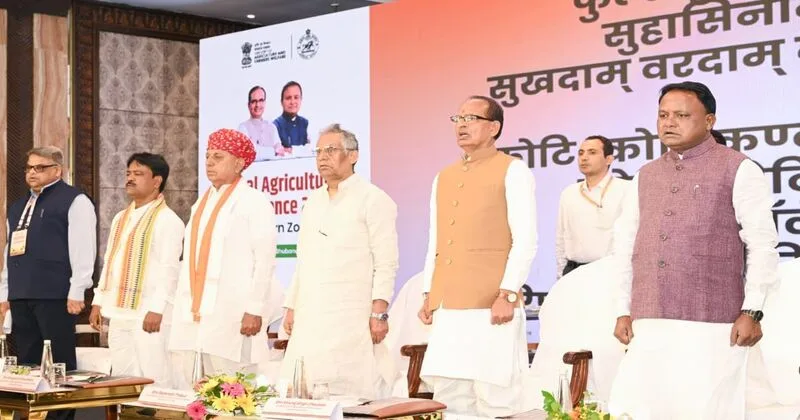
The high-level conference brought together representatives from five eastern states — Odisha, Bihar, Jharkhand, Chhattisgarh and West Bengal — to deliberate on a comprehensive agricultural roadmap for the region. The event was attended by Odisha Chief Minister Mohan Charan Majhi, state agriculture ministers, senior government officials, scientists from agricultural institutions, representatives of farmer organisations, FPOs, NABARD, banks, agri-startups and agricultural experts.
Conference Aimed at Reshaping Eastern India’s Agricultural Future
Describing the conference as more than a ceremonial gathering, Union Minister Shivraj Singh Chouhan said the event represented a serious and collective effort to redefine agricultural growth strategies for Eastern India. Referring to the gathering as “Team Agriculture,” he said the conference was intended to formulate practical and long-term solutions to improve productivity, sustainability and profitability in the agricultural sector.
आज भगवान जगन्नाथ महाप्रभु की पावन धरा, भुवनेश्वर में आयोजित पूर्वी क्षेत्र की खरीफ रीजनल एग्रीकल्चर कॉन्फ्रेंस में उड़ीसा, बिहार, पश्चिम बंगाल, झारखंड एवं छत्तीसगढ़ के कृषि मंत्रियों, जनप्रतिनिधियों और वरिष्ठ अधिकारियों के साथ कृषि एवं किसान कल्याण से जुड़े विभिन्न विषयों पर… pic.twitter.com/39EnMwYs3k
— Shivraj Singh Chouhan (@ChouhanShivraj) May 19, 2026
He said that holding the conference on the sacred land of Lord Jagannath carried symbolic importance and reflected a shared commitment towards farmer welfare and rural development. According to Chouhan, the eastern region possesses all the natural advantages required for agricultural leadership, but these strengths need to be supported with modern policies, technology-driven farming and better market linkages.
The Union Minister also reiterated that under the leadership of Prime Minister Narendra Modi, India is moving towards becoming a developed and self-reliant nation, and agriculture remains the backbone of that transformation.
Three Major Priorities Before Indian Agriculture
Highlighting the key priorities before the agricultural sector, Chouhan outlined three major objectives that must guide policy planning in the coming years.
The first priority, he said, is ensuring food security for India’s population of 1.4 billion people. The second is guaranteeing access to nutritious and quality food for citizens. The third and most critical objective is improving the livelihood and income of farmers. He stated that merely increasing production would not be sufficient to achieve these goals. Policymakers and states, he said, must focus simultaneously on reducing cultivation costs, ensuring remunerative prices for agricultural produce, providing compensation for crop losses and promoting diversification in agriculture.
The minister stressed that Indian agriculture can no longer remain dependent solely on paddy and wheat cultivation. Eastern India, he noted, holds enormous potential in pulses, oilseeds, fruits, vegetables and other high-value crops, which could create new income opportunities for farmers.
Integrated Farming Essential for Small Landholders
A major focus of the conference was the issue of small and fragmented landholdings, which remain a defining reality across Eastern India. Chouhan said that integrated farming must move beyond policy discussions and become a practical model implemented at the grassroots level. He explained that farming should not remain limited to grain production alone. By integrating allied sectors such as animal husbandry, fisheries, beekeeping, agroforestry and horticulture with traditional agriculture, farmers can create multiple sources of income and reduce economic risks.
The Union Minister urged the Indian Council of Agricultural Research (ICAR), Krishi Vigyan Kendras (KVKs) and state agriculture departments to actively promote successful integrated farming models among farmers. He emphasised that these models should be practical, affordable and tailored for small and marginal farmers.
Focus on Soil Health and Natural Farming
Shivraj Singh Chouhan underlined the importance of soil health in achieving sustainable agricultural growth. He warned that excessive and unscientific use of chemical fertilisers was damaging soil quality while simultaneously increasing cultivation costs for farmers.
The minister appealed to farmers to adopt balanced fertiliser usage based on soil testing. He also emphasised the need to encourage natural farming practices and said that promoting natural and organic farming remains one of the key focus areas of the central government.
According to him, farmers should begin by dedicating a portion of their land to natural farming practices so that they can gradually understand its long-term economic and environmental benefits.
“Save Farmland Campaign” to Begin from June 1
During the conference, Chouhan announced that the government would launch a nationwide “Khet Bachao Abhiyan” (Save Farmland Campaign) from June 1. The campaign aims to create awareness among farmers about balanced fertiliser use, soil conservation, modern farming technologies and various government welfare schemes.
The Union Minister also raised concerns over the diversion and misuse of subsidised fertilisers. He said strict measures would be taken to ensure that subsidised fertilisers are used exclusively for farming purposes.
In a strong statement against agricultural fraud, Chouhan termed fake fertilisers, substandard seeds and counterfeit pesticides as “serious crimes against farmers.” He called upon state governments to launch stringent crackdowns against such practices and implement stricter laws to protect farmers from financial losses and exploitation.
Eastern India Holds Key to Pulse and Oilseed Self-Reliance
The conference also focused heavily on increasing the production of pulses and oilseeds. Chouhan said Eastern India has the potential to make the country self-reliant in these critical agricultural commodities. However, he noted that farmers would cultivate pulses and oilseeds on a larger scale only when they are assured of procurement and fair prices. Therefore, he emphasised strengthening procurement mechanisms under schemes such as PM-AASHA and improving the role of agencies like NAFED, NCCF and state procurement bodies. He added that increasing domestic production of pulses and edible oils would reduce import dependence and strengthen India’s agricultural economy.
Scientific Research Must Reach Farmers
The Union Agriculture Minister stressed the importance of transferring scientific research and agricultural innovation directly to farmers. He said technologies developed in research institutions and agricultural universities should not remain confined to laboratories. He called upon ICAR, KVKs and scientific institutions to intensify field-level outreach programmes and ensure that modern techniques, climate-resilient agricultural practices and government schemes reach farmers in a timely manner.
According to him, effective dissemination of research and technology would play a decisive role in transforming Indian agriculture into a more productive and resilient sector.
Farmer ID to Improve Transparency and Access
Speaking about digital reforms in agriculture, Chouhan described the Farmer ID initiative as an important tool to improve transparency and efficiency in agricultural governance. He said the Farmer ID system would integrate information related to a farmer’s landholding, family details and eligibility for government schemes on a single platform. This, he added, would simplify access to agricultural loans, fertiliser distribution and welfare benefits while reducing delays and bureaucratic hurdles. The minister urged state governments to expedite the implementation of the Farmer ID programme.
Horticulture and Export-Oriented Farming Discussed
The conference also explored opportunities in horticulture and export-oriented agriculture. Chouhan highlighted the significant potential of Eastern India in fruit and vegetable production and said the region could emerge as a major contributor to agricultural exports. He emphasised the importance of quality planting material, modern nursery systems and market-oriented farming practices. According to him, promoting high-value crops such as mangoes and horticultural produce could substantially improve farmers’ earnings.
Odisha Government Highlights Farmer-Centric Initiatives
Odisha Chief Minister Mohan Charan Majhi said the conference provided a valuable opportunity for eastern states to jointly shape the future of agriculture in the region. He thanked Union Agriculture Minister Shivraj Singh Chouhan for organising the event and said it would strengthen the vision of “Purvodaya” through agricultural development.
Majhi stated that Odisha is fundamentally an agrarian state where agriculture forms the backbone of livelihood, food security and socio-economic growth. He said the state government is committed to making agriculture more inclusive, climate-resilient and farmer-centric.
ଭୁବନେଶ୍ୱରଠାରେ ଆୟୋଜିତ ପୂର୍ବ କ୍ଷେତ୍ରୀୟ କୃଷି ସମ୍ମେଳନରେ ମାନ୍ୟବର କେନ୍ଦ୍ର କୃଷି ମନ୍ତ୍ରୀ ଶ୍ରୀଯୁକ୍ତ ଶିବରାଜ ସିଂହ ଚୌହାନ ଜୀ ଏବଂ ପୂର୍ବ ଭାରତର ମାନ୍ୟବର କୃଷିମନ୍ତ୍ରୀଗଣ, କୃଷି ବୈଜ୍ଞାନିକ ଓ ପ୍ରତିନିଧିମାନଙ୍କ ସହ ସାମିଲ ହୋଇ ମୁଁ ଅତ୍ୟନ୍ତ ଆନନ୍ଦିତ । ପୂର୍ବ ଭାରତର କୃଷି ଅଭିବୃଦ୍ଧି ଓ ଉତ୍ପାଦକତା ବୃଦ୍ଧି ପାଇଁ ଏହି… pic.twitter.com/toZVsEsm5x
— Mohan Charan Majhi (@MohanMOdisha) May 19, 2026
The Chief Minister informed the gathering that Odisha is working actively towards increasing pulse production, achieving self-reliance in edible oils, promoting crop diversification and expanding agricultural activities. He also pointed out that with the rise in paddy procurement and production, the state faces challenges related to storage, transportation and marketing. Therefore, he said equal attention must be paid to value addition, supply chain management and market infrastructure.
Millet Promotion and Organic Agriculture
Chief Minister Majhi described millets as a “superfood” and emphasised their importance, particularly for tribal and drought-prone regions. He said millets require less water and fewer chemical inputs, making them suitable for sustainable agriculture. He also stressed the need to promote organic farming, preserve traditional crop varieties and revive biodiversity. According to him, agricultural scientists and research institutions should devote greater attention to these areas in the coming years.
Ministers, Scientists and Agricultural Stakeholders Attend Conference
The conference was attended by Union Ministers of State for Agriculture Bhagirath Choudhary and Ramnath Thakur, Odisha Deputy Chief Minister and Agriculture Minister Kanak Vardhan Singh Deo, Bihar Agriculture Minister Vijay Kumar Sinha, Chhattisgarh Agriculture Minister Ramvichar Netam, West Bengal representative minister Ashok Kirtania, Agriculture Secretary Atish Chandra and ICAR Director General Mangi Lal Jat. Senior officials from the central and state governments, agricultural scientists, representatives of KVKs, farmer organisations, startups, NABARD and banking institutions also participated in the discussions.