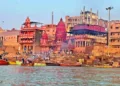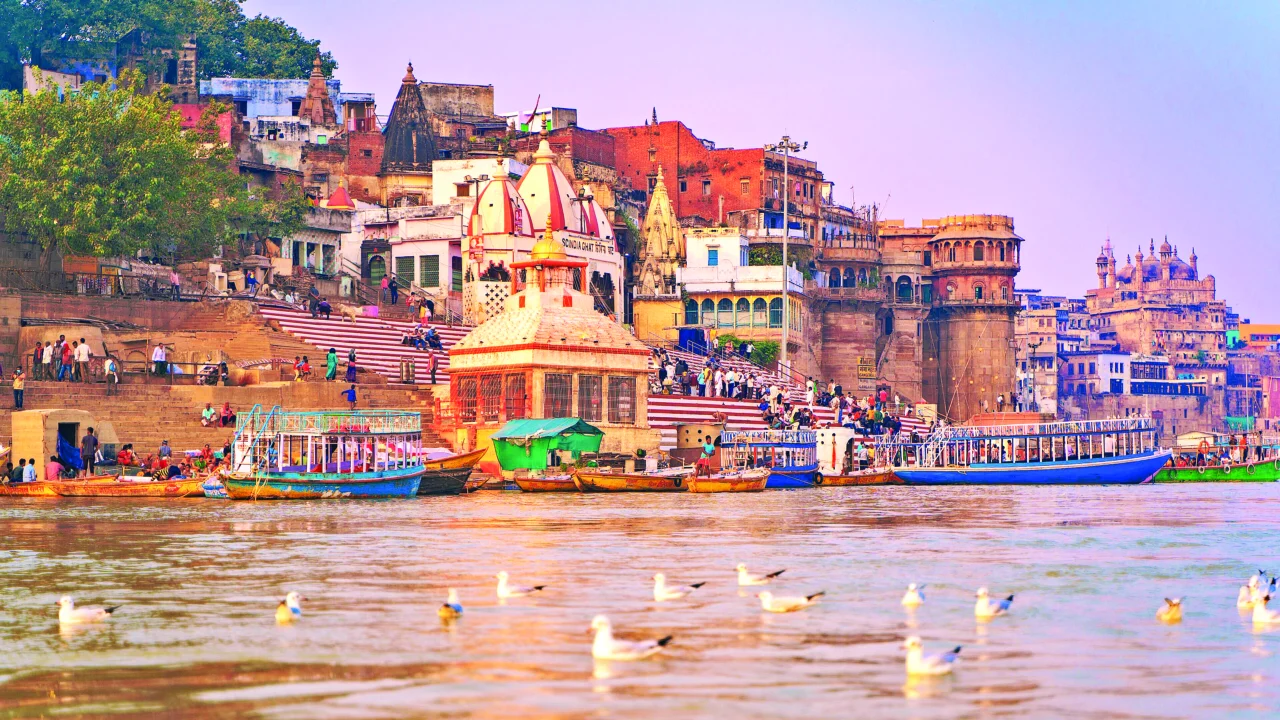
Assi Ghat is another famous ghat of Varanasi located at the southern part at the confluence of river Assi and Ma Ganga. It is believed that after Ma Durga killed Shumbh and Nishumbha, She threw her sword in the Assi River. This ghat has been mentioned in ancient scriptures and is considered to be very sacred. The ghat is known for its Subah-e-Banaras programme, which takes place at sunrise. Vedic hymns, Yoga sessions, classical music by renowned musicians, prayers to rising sun and Ganga aarti and many other innovative programmes not only make this ghat vibrant but are the reservoirs of cultural treasures. Continuity of culture, beliefs and thought processes need a strong architectural platform. Assi Ghat performs this duty with full dedication.
There are many cafés, ashrams, and guesthouses, along with this Ghat merging devoutness with the rhythm of local life. It is a place where one can witness the true heart of Varanasi, meditation at dawn, rituals throughout the day, and a lively atmosphere by night.
In sync with NEP
Apart from its religious implication, Assi Ghat is also a cultural centre. It attracts scholars, students, and travellers from all over the world because of the Banaras Hindu University (BHU) located in the city. National Education Policy emphasises ‘On Field’ learning and ‘On Job Training’. Policy also talks about innovation in pedagogy. Assi Ghat is like an open study room for learners. Whether for a degree or for life.
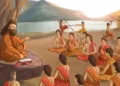
Departure from four walls of classrooms for learning is the need of the day. The ancient Gurukul system, at least by the spirit and essence, can be adapted by acknowledging the fact that innovation in learning prevailed in our ancient systems as well. Tools and techniques could be contemporary. However, such ideal places can be identified by educationists and transform them into learning spaces to capture the essence of the Indian Knowledge System mentioned in National Education Policy 2020.