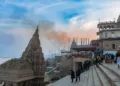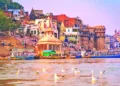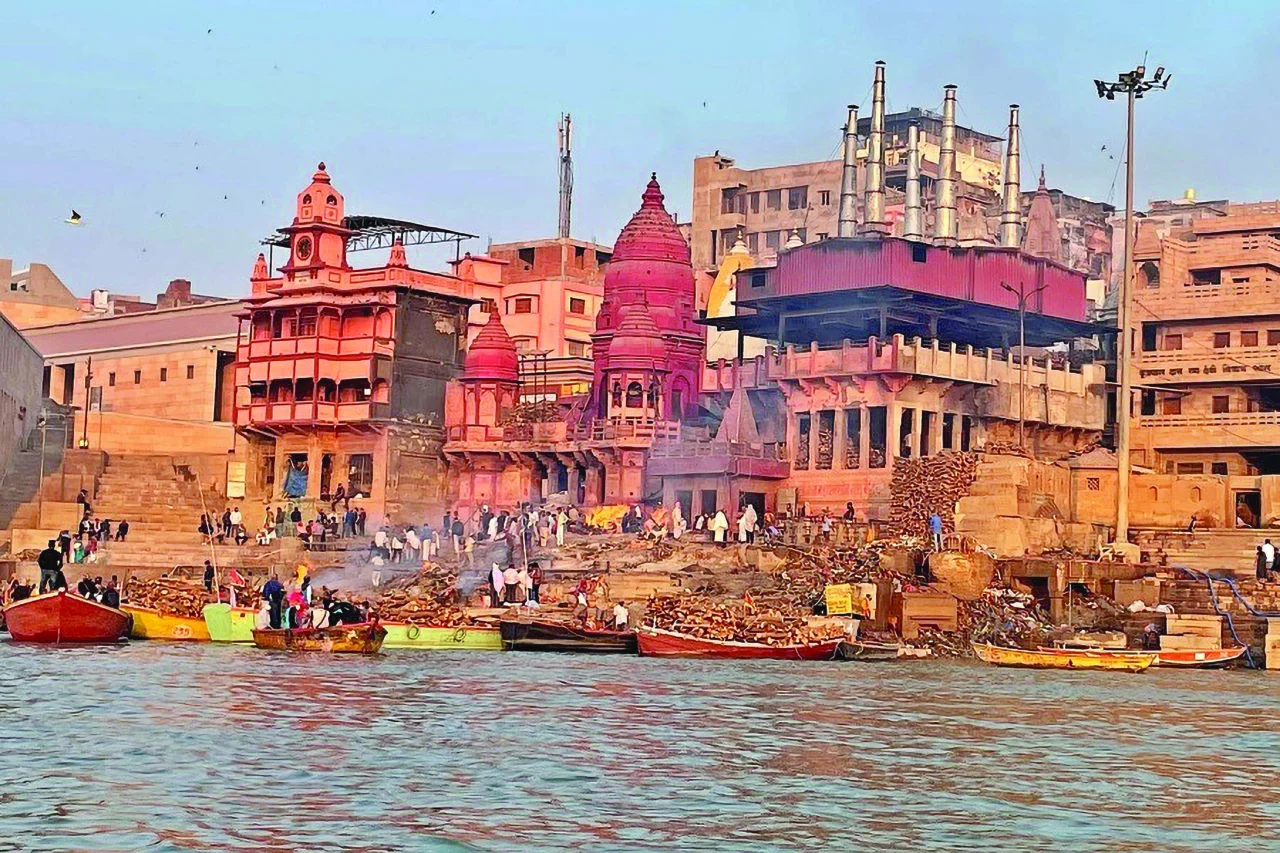
Amongst all the Teerthas on the bank of Ma Ganga, Manakarnika Ghat is the best, where one gets salvation. Says Adi Shankaracharya in Manikarnika Ashtakam composed by him in 3rd BCE. Manikarnika Ashatakam is an eight-stanza hymn composed by Shankaracharya, praising the sacred Manikarnika Ghat.
He travelled extensively across Bharat and visited holy sites including Varanasi. He integrated various sects prevailing at that time into one and also established four Mathas in four parts of Bharat, (Char Dham). Advait Sidhanta propagated by him also was realised by him when he was here. A famous dialogue between Chandal and Shankaracharya leading to Advaita Vedanta happened near Manikarnika Ghat. Realising oneness of the universe is the ultimate truth and attaining it is salvation (mukti); is what Advaita Sidhanta is about.
In his works and traditional interpretations, Shankaracharya reinforces that the cremation rituals at Manikarnika (or burning ghat) directly lead to Shiva’s grace. (understanding these would require holistic study of Advaita Vedanta)
Manisha Panchakam and many other compositions by him have not only been inspired by this Ghat but the place is the warehouse of the intellect of those times and foundation for today’s Bharatiyatva.
Architecture of Bharat is a profound reflection of her cultural identity. The external expression has always been of lesser importance than in depth meaning of one’s existence for Bharatiya. So true for the architecture of these places. Assessing these places by contemporary aesthetical parameters would mean losing the opportunity of experiencing the real vibrations of the place. The memories stored and the history told is way beyond the external (superficial).