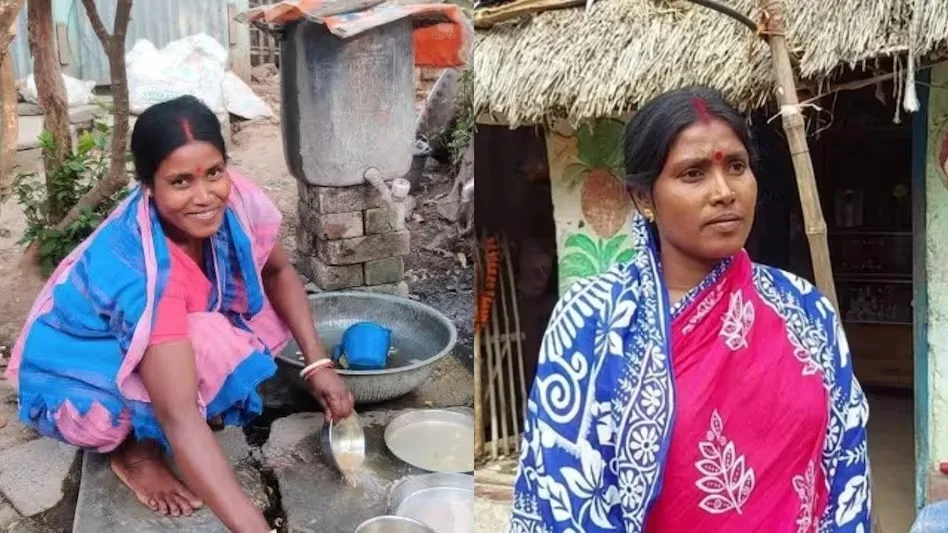
In what is being seen as one of the most striking stories of the 2026 West Bengal Assembly elections, Kalita Majhi, a 37-year-old domestic worker, has defeated an established political candidate to secure a decisive victory on a BJP ticket from the Ausgram constituency.
Majhi’s win is not just an electoral result but a narrative of transformation, one that reflects the changing face of Indian democracy, where individuals from the margins are stepping into positions of power.
In the weeks leading up to the elections, an unusual conversation had begun circulating in metropolitan cities such as Delhi and Mumbai. Many households reported that their domestic workers from Bengal had returned to their native places, leading to inconvenience and casual complaints.
What initially appeared as a mundane urban concern soon evolved into a broader social commentary. The phrase “missing maid” became symbolic of a workforce often overlooked, reduced to stereotypes, and rarely acknowledged as active political participants.
However, as polling progressed, this narrative underwent a significant transformation. The same individuals who were once seen merely as domestic help began to be recognised as voters, campaigners, and even candidates actively shaping the democratic process.
Kalita Majhi had a life rooted in struggle
Kalita Majhi’s story embodies this shift. For over two decades, she worked as a domestic help, earning a modest monthly income. Her husband, Subrata Majhi, is a daily-wage labourer, and the family has lived a life marked by financial constraints and routine hardships.
Despite these challenges, Majhi had previously entered the political arena in 2021. Contesting the Assembly elections then, she lost to Trinamool Congress candidate Abhedananda Thander by a margin of 11,815 votes.
Undeterred by the defeat, she remained connected with her constituency and was renominated by the BJP in 2026, this time stepping fully into the political arena.
Unlike conventional election campaigns driven by financial muscle and organisational networks, Majhi’s campaign relied heavily on personal connections and grassroots engagement.
She went door-to-door, interacting directly with voters, speaking about issues she had experienced firsthand, rising costs, daily struggles, and the realities of working-class life. Her campaign lacked the spectacle of large rallies or high-profile endorsements but compensated with authenticity and familiarity.
Families for whom she had worked for years recalled her dedication, often describing her as “like family.” Her absence during the campaign itself became a talking point, underlining the depth of her personal connections.
A decisive mandate
The results reflected the effectiveness of this approach. Majhi secured over one lakh votes and won the seat by a margin exceeding 12,000 votes, defeating Trinamool Congress candidate Shyama Prasanna Lohar.
Her victory is being viewed as a clear upset against an established political structure, signalling a willingness among voters to back candidates with lived experience over traditional political pedigrees.
Recalling her journey, Majhi had earlier shared insights into her daily routine. She would wake up at 5 am to begin work in multiple households, balancing professional responsibilities with family duties.
Her campaign was supported by her family, particularly her son Partha, who contributed despite preparing for his Higher Secondary examinations. Her election agent, Chandranath Bandyopadhyay, also played a crucial role in managing campaign logistics.
Interestingly, her employers extended support as well, assuring her continued salary during the campaign period despite her absence from work.
A broader political message
Majhi’s victory is not an isolated incident but part of a broader trend observed in the 2026 elections. Analysts note that voters, amid growing anti-incumbency sentiments, appear increasingly open to candidates who represent real-life struggles rather than political lineage.
Her win highlights a shift in voter expectations, towards relatability, accessibility, and lived experience.
Beyond party lines, Kalita Majhi’s journey shows the depth of democratic participation in India. It reflects how individuals from economically and socially marginalised backgrounds are not only engaging with the political process but also reshaping it.
From being a subject of urban stereotypes to becoming an elected representative, her story marks a powerful transition, one that challenges preconceived notions about class, representation, and political leadership.