
The Assembly election results in Kerala have exposed several significant trends, most notably the massive defeat suffered by ministers of the LDF, the CPM-led Left Democratic Front. Out of the 21 LDF ministers, including Chief Minister Pinarayi Vijayan, who contested the elections, 14 were defeated. The only prominent survivors were Pinarayi Vijayan, his son-in-law Mohammed Riaz, K.N. Balagopal, Saji Cheriyan (all CPM), and G.R. Anil, P. Prasad, and K. Rajan (all CPI).
Another major talking point has been the victories of CPM rebels G. Sudhakaran from Ambalappuzha in Alappuzha district, V. Kunjikrishnan from Payyannoor in Kannur district, and T.K. Govindan from Talipparambu in Kannur district — all veteran CPM leaders. Though they won with the support of the Congress-led United Democratic Front (UDF), their victories have come as major setbacks to the CPM and LDF leadership.
Here are the voting data of the above three CPM rebel leaders:
Amabalappuzha
G. Sudhakaran (CPM rebel/UDF) : 75,184
H. Salam (CPM/LDF) : 47,249
Arun Anirudhan (BJP/NDA) : 16,348
Winner’s margin : 27,935
Payyannoor
V. Kunjukrishnan (CPM rebel/UDF) : 76,740
T.I. Madhusoodanan (CPM/LDF) : 69,153
M.P. Gangadharan (BJP/NDA) : 8,432
Winner’s margin : 7,487
Talipparambu
T.K. Govindan (CPM rebel/UDF) : 91,339
P.K. Shyamala (CPM/LDF) : 78,788
N. Haridas (BJP/(NDA) : 16,089
Winner’s margin : 12,551
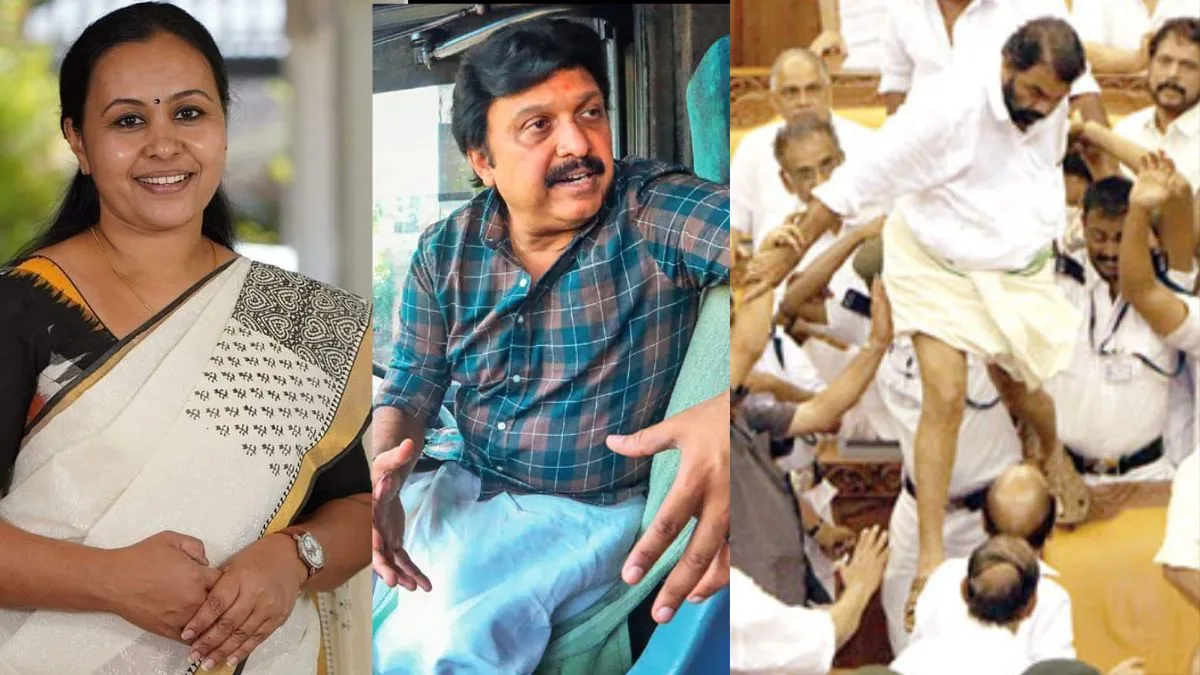
The defeats of controversial ministers such as K.B. Ganeshkumar (Transport) and Veena George (Health) have also drawn considerable public attention. Discussions among the public suggest that these defeats are being viewed as more than isolated electoral setbacks. Ganeshkumar had long faced allegations related to domestic disputes and infidelity. His dispute with his first wife made headlines in 2013, following which he was forced to resign as Minister for Forests, Sports and Cinema in the then UDF government after allegations of domestic violence and infidelity surfaced against him. Despite this controversy, the LDF later accepted his Kerala Congress (B) as a coalition partner.
Veena George, meanwhile, had increasingly come under criticism over the functioning of the state’s health sector. In February 2026, workers of the Congress student wing KSU staged a black-flag protest against her at Kannur Railway Station. Following the incident, the Health Minister was hospitalised, with authorities initially treating the episode as a serious attack. Five KSU workers were booked under Section 307 of the IPC/corresponding Bharatiya Nyaya Sanhita provisions relating to attempt to murder. Congress leaders, however, dismissed the episode as “political theatre”.
Veena George and the Controversies
The controversy deepened after photographs and selfies of the minister smiling with nursing staff from the hospital went viral on social media. The following day, she travelled by car from the hospital in Kannur to Thiruvananthapuram despite reports suggesting she had been admitted to the ICU. Later, in April 2026, Veena George herself stated that she had not been intentionally assaulted or targeted with a weapon during the protest at Kannur Railway Station, leading critics to question the severity of the charges filed against the KSU workers.
Further controversies surrounded the Health Ministry in 2024 when a criminal probe was initiated against a political appointee in Veena George’s office over allegations of accepting bribes for temporary appointments under the National Ayush Mission. The minister also faced criticism over the transfer of a staff nurse at Kozhikode Medical College who had testified about the alleged assault of a woman inside the ICU.
Questions were also raised when the Ministry of External Affairs reportedly denied Veena George permission to visit Kuwait after 46 Keralites were killed in a fire accident in the Gulf nation, a development critics described as a diplomatic embarrassment for the state government.
Within the CPM itself, sections of the party cadre in Pathanamthitta district reportedly expressed dissatisfaction over the minister’s lack of connection with grassroots workers. Veena George, who represents the district in the Assembly, also faced criticism over repeated allegations of medical negligence in government hospitals during her tenure. Opposition parties and sections of the public repeatedly targeted the Health Department over such incidents, including the widely discussed case in which forceps were allegedly left inside a patient’s abdomen during surgery at Alappuzha Medical College in 2021. Allegations of wrong-site surgeries also surfaced during this period.
Kerala’s healthcare sector increasingly came under scrutiny amid reports of medical negligence, treatment errors and lapses in hospital management. Several incidents, including surgical instruments allegedly being left inside patients after operations, sparked public outrage. In one such case, the incident reportedly came to light years after the surgery. The enquiry report in the matter later exonerated the doctor while fixing responsibility on a nurse, leading to protests from the Kerala Government Nurses’ Association (KGNA), which termed the findings unjust. The association argued that the responsibility for ensuring that surgical equipment had been removed from a patient primarily rested with doctors. The controversy threatened to widen tensions between doctors and nurses in the state health sector.
Another high-profile controversy involved Dr. Bindu Sundar, who came under suspension after a caesarean procedure at Nedumangad Government Hospital allegedly resulted in the death of a baby despite serious health complications faced by both mother and child. In protest against the suspension and related developments, medical college doctors later boycotted outpatient services and surgeries. Doctors also resolved to boycott duties linked to the Attukal Pongala festival in Thiruvananthapuram, often referred to as the “Women’s Sabarimala”, which attracts millions of women devotees annually.
The nurses’ association simultaneously intensified its criticism of the enquiry mechanisms within the health sector, warning of protests if nurses were made scapegoats to shield doctors in medical negligence cases.
These controversies assumed significance against the backdrop of repeated claims by the Pinarayi Vijayan government that Kerala’s healthcare system ranked among the best in the country and was comparable to international standards. Critics argued that government medical colleges remained the only option for poor and middle-class families unable to afford treatment at expensive private multi-speciality hospitals. Despite recurring controversies, both Chief Minister Pinarayi Vijayan and Health Minister Veena George often maintained that such incidents were merely “isolated cases”.
Fresh controversy also emerged around the Kerala Health Research and Welfare Society (KHRWS), a cooperative body functioning under the Health Department and tasked with improving hospital infrastructure. The State Audit Department reportedly found that several purchases had been made without tenders, quotations or approval from the Finance Ministry. Expenditure amounting to Rs 4.42 crore was reportedly halted due to lack of supporting documents and failure to provide records sought repeatedly by auditors.
Audit Flags Financial Irregularities, Missing Documents and Unexplained Expenditure in Health Society Operations
Audit findings further stated that purchases worth Rs 40.23 lakh for facilities in pay wards and laboratories during the financial years 2022-23 and 2023-24 lacked documentary backing. Records also indicated that Rs 58.3 lakh had been spent on salaries for temporary employees over two years. According to reports, officials failed to provide documents related to appointments, contracts and details of employee postings despite repeated demands from auditors. Questions were also raised over advertisements published in Tamil Nadu newspapers promoting the society’s services, with auditors reportedly receiving no explanation for the expenditure.
Additionally, equipment and materials worth nearly Rs 3 crore were allegedly procured for laboratories and hospitals without tender documentation. The audit also flagged the purchase of two electric scooters worth Rs 1.81 lakh outside the Government e-Marketplace (GeM) system and without Finance Ministry approval.
Critics argued that such developments reflected deeper administrative issues within Kerala’s Health Department. Reports of medical negligence, treatment lapses and controversies involving government hospitals continued to dominate public discourse. Yet, for economically weaker sections, government hospitals remained the only viable option for treatment, as private healthcare remained beyond their reach.
Veena George herself often came under criticism for her public remarks and political style. Critics frequently accused her of being combative and confrontational. In May 2023, after junior doctor Dr. Vandana Das was stabbed to death inside a government hospital by an accused brought for treatment, Veena George faced backlash for reportedly attributing the tragedy to the young doctor’s “inexperience”.
The rebellion by veteran CPM leaders also reflected growing discontent within the party. G. Sudhakaran reportedly refused to renew his party membership after years of dissatisfaction over what he viewed as systematic sidelining and humiliation by sections of the leadership.
V. Kunjikrishnan was expelled from the CPM in January 2026 after publicly alleging financial irregularities involving party leaders, particularly concerning the “martyrs’ fund”. A senior cooperative sector leader, he later claimed to have faced threats after publishing a book critical of the party. He also reportedly struggled to secure space for his election office after filing nomination papers.
On March 17, 2026, senior CPM leader and three-time MLA T.K. Govindan was expelled from the party after making public allegations of nepotism, authoritarianism and ideological decline within the CPM in Kerala. He openly criticised the leadership, particularly state secretary M.V. Govindan, accusing the party of sidelining senior leaders and abandoning inner-party democracy. He also criticised the decision to field Shyamala, wife of M.V. Govindan, from Talipparambu — a constituency where she was eventually defeated by T.K. Govindan himself.
The election outcome has now left Kerala’s political landscape in a state of churn, with many keenly watching how the CPM leadership responds to the internal rebellion, electoral setbacks and mounting criticism. The results also carry historic significance as the CPM no longer heads a government anywhere in the country for the first time since 1977.