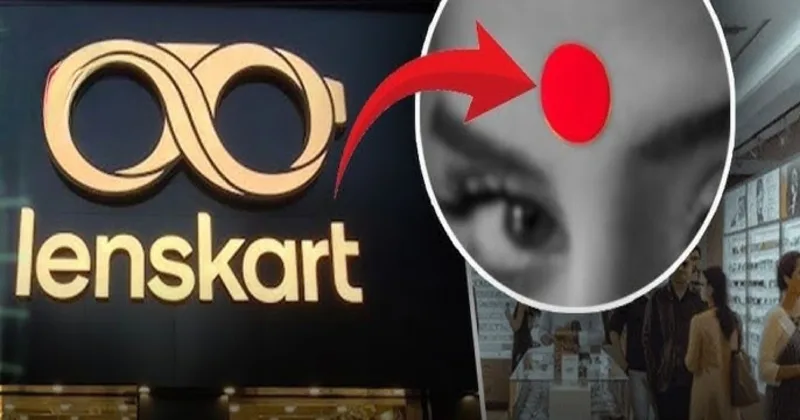
A company can sell to Bharat and still be answerable to someone else. This is not merely about a bindi. It is not only about Lenskart. It is about a larger question staring at India’s new economy: When Indian unicorns are built with foreign capital, foreign frameworks and foreign compliance systems, how Indian do they remain in spirit?
Lenskart says it is “proudly built in Bharat, for Indians”. It is a beautiful line. But beautiful lines must survive hard questions. Because Bharat is not just a market. Bharat is a civilisation. And a civilisation is carried not only through history books, temples and festivals, but through daily symbols – a bindi on the forehead, a kalawa on the wrist, a kada on the hand, a tilak after prayer. These are not cosmetic details. They are civilisational memory. So when any modern Indian company appears uncomfortable with these symbols, Indians are right to ask: Who is this company really trying to please – its customers, its culture or its capital?
The Bindi is an expression
To some people, a bindi may look like a dot. But in Bharat, it is identity. It is feminine grace. It is spiritual confidence. It is rootedness. For millions of Indian women, it is not a “fashion accessory” waiting for corporate approval. It is part of how they show up in the world. The problem begins when Indian symbols are judged through imported corporate language.
In global HR manuals, identity is often processed through compliance, neutrality, optics and investor comfort. Culture becomes a risk category. Faith becomes a grooming issue. Tradition becomes something that must be “managed”. That is where India gets misunderstood.
A hijab is often recognised as minority expression. A turban is recognised as religious identity. But a bindi or tilak can be wrongly reduced to a “majority marker”. This is the blind spot. India’s majority culture is not merely a demographic block. It is the civilisational soil of this country. It is the everyday grammar of Bharat. When corporate policies fail to understand this, they do not become neutral. They become culturally ignorant.
Follow the money
Lenskart’s founders may be Indian. Its customers may be Indian. Its advertising may speak to Indian aspiration. But ownership, valuation and governance tell a more complex story. A company preparing for a major IPO is not only speaking to customers. It is speaking to investors, bankers, regulators, ESG evaluators and global institutions that influence valuation.
That is the uncomfortable truth of today’s unicorn economy. The first customer is not always the person buying a pair of glasses. Sometimes the first customer is the investor writing the next large cheque. And once that happens, cultural courage becomes expensive. A bindi does not improve valuation. A kalawa does not impress an ESG dashboard. A tilak does not unlock global capital.
But appearing globally compliant does. This is why the Lenskart moment matters. It exposes the gap between Bharat-facing branding and global-facing governance.
ESG, DEI and Bharat’s cultural blind spot
Let us be clear. ESG and DEI are not automatically bad. Environmental responsibility, workplace fairness and ethical governance are important. But the problem begins when these frameworks are imported without Indian context.
DEI was shaped by Western histories – race conflict, gender politics, minority rights and social structures very different from India’s. When the same template is applied mechanically to Bharat, it often fails to recognise the dignity of India’s civilisational majority.
This is not inclusion. This is cultural translation failure. A framework that protects one identity while making another invisible is not diversity. It is selective sensitivity. India does not need to reject global governance standards. India needs to Indianise them. Because inclusion in India cannot be copy-pasted from New York, Amsterdam or London. It must be rooted in India’s own civilisational understanding, constitutional values and social reality.
“Built in Bharat” cannot be only a marketing line
This is where companies must be challenged. Do not use Bharat only in advertising. Do not use Indian festivals only for campaigns. Do not use mothers, temples, colours, rituals and emotions only to sell products. If you sell to Bharat, respect Bharat.
Respect the woman who walks into your store with a bindi. Respect the employee who wears a kalawa. Respect the professional who applies tilak before work. Respect the Sikh with a turban, the Hindu with a kada, the Jain with a symbol of faith, the tribal with traditional markers, and every Indian who carries identity with dignity.
That is real inclusion.Not the imported version. The Indian version.
This is bigger than Lenskart
The deeper issue is not one company. It is the operating model of many Indian unicorns. They want Indian consumers, Indian emotion, Indian festivals, Indian spending power and Indian loyalty. But when it comes to governance, culture and compliance, they often look Westward.
They speak Bharat in advertisements. They speak Wall Street in boardrooms. That contradiction cannot continue forever. India’s startup ecosystem must decide whether it wants to become merely a marketplace for global capital or a genuine expression of India’s confidence. A nation cannot become Vishwaguru by building companies that are embarrassed by its own symbols.
The government has a role too
India wants IPOs. India wants investment. India wants unicorns. India wants global confidence. We should want all of that. But India must also build cultural guardrails.
If corporate India can have policies on gender sensitivity, workplace respect, disability inclusion and anti-harassment, it can also have clear policies protecting civilisational and religious expression – including bindi, tilak, kalawa, kada, turbans and other Indian markers of identity. This is not communal. This is constitutional dignity.
No employee should be humiliated or penalised for wearing a symbol that belongs to their faith, tradition or culture, unless there is a clear safety or operational reason. That should be the baseline.
Bharat is not just a consumer base
The Lenskart controversy is not just a social media episode. It is a warning signal. It tells us that India’s economic rise will remain incomplete if cultural confidence does not rise with it. A country can build unicorns and still lose its voice. A company can scale globally and still become culturally hollow. A brand can say “Bharat” and still fail to understand Bharat. The question is no longer whether Indian companies can raise foreign capital. They can.
The real question is: Can they raise foreign capital without lowering their civilisational spine?
Bharat is not a discount market. Bharat is not an IPO story. Bharat is not a festive campaign calendar. Bharat is a living civilisation. And if a company wants Bharat’s money, Bharat’s trust and Bharat’s emotional loyalty, it must respect Bharat’s symbols too. Because the bindi is not the problem. The problem is a billion-dollar economy that wants Bharat’s wallet, but hesitates to embrace its cultural ethos and traditions.