The 2026 Assembly elections in West Bengal mark a departure from the state’s traditional political patterns. For over a decade, the dominance of the All India Trinamool Congress existed in a carefully constructed regional stronghold strategy, overwhelming margins in select districts compensating for competitive zones elsewhere.
However, this model now appears to be under strain. The electoral battlefield is no longer confined to isolated pockets but has expanded into a statewide contest marked by micro-level swings, razor-thin margins, and visible voter dissatisfaction.
At the heart of this shift lies a deeper question: has governance under Mamata Banerjee reached a point of fatigue where administrative control is no longer translating into electoral certainty?
Diamond Harbour: Cracks in the fortress
For years, the Diamond Harbour region in South 24 Parganas has served as the TMC’s most reliable electoral fortress. Massive victory margins from this belt have historically insulated the party from losses elsewhere.
But the 2026 elections have placed this stronghold under unprecedented scrutiny. The deployment of heightened security, including central observers and specialised units, shows not confidence but concern. Reports of crude bomb recoveries and disciplinary action against local officials have further exposed cracks in what was once projected as an unassailable bastion.
This raises uncomfortable questions about governance. If a ruling party’s strongest region requires such intense oversight to ensure a fair electoral process, it signals not strength but systemic erosion.
Reports argue that the so-called “Diamond Harbour model” has long relied on administrative dominance rather than genuine grassroots support. The 2026 election, with its tighter monitoring, may finally test whether that dominance can survive under scrutiny.
Governance under pressure: Law and order concerns
Beyond electoral arithmetic, one of the most persistent criticisms of Mamata Banerjee’s tenure has been the perceived decline in law and order.
Incidents involving political violence, allegations of voter intimidation, and administrative bias have repeatedly surfaced, especially during election cycles. While the state government has consistently denied such claims, the need for heavy central intervention during polls suggests a trust deficit that cannot be ignored.
The presence of security forces and observers across sensitive regions is not just a procedural necessity—it is a commentary on governance. It reflects a system where neutrality is questioned and where institutions are perceived as being under political pressure.
In such an environment, voter behaviour often shifts subtly but decisively, especially among the “silent electorate” that prefers to express dissent through ballots rather than public protests.
North Bengal: The rise of a counter-narrative
While the southern belt shows signs of strain, North Bengal continues to emerge as a counterweight to TMC dominance. The Bharatiya Janata Party has consolidated its presence in this region by focusing on tribal outreach, tea garden workers, and regional identity issues.
Unlike the high-decibel campaigns seen elsewhere, North Bengal’s electoral dynamics have been shaped by quieter but more consistent engagement. Development narratives, infrastructure promises, and welfare delivery have found traction among voters who have historically felt neglected by Kolkata-centric governance.
The relatively stable voter turnout in this region suggests a more settled political preference, one that may not swing dramatically but remains firmly aligned against the ruling establishment.
Jangalmahal: From loyalty to volatility
The western belt of Jangalmahal, comprising districts like Purulia, Bankura, and parts of Paschim Medinipur, has transformed into one of the most critical swing zones in 2026.
Once reclaimed by the TMC in 2021 after a period of opposition dominance, the region now appears to be slipping back into uncertainty. Economic stagnation, lack of industrial growth, and inadequate responses to local crises such as heatwaves have created a sense of disillusionment among voters.
What makes Jangalmahal particularly significant is its demographic composition. Tribal and OBC voters, who play a decisive role here, are increasingly being courted by multiple political narratives.
The opposition’s focus on economic revival and governance accountability has resonated in pockets where welfare schemes alone are no longer sufficient to secure loyalty. This shift indicates a deeper transformation—from identity-based voting to performance-based evaluation.
The urban battleground: Kolkata’s marginal seats
If rural and semi-urban Bengal reflects structural shifts, urban Bengal represents volatility at its peak.
Approximately 21 seats across the suburban fringes of Kolkata and industrial belts like Hooghly and Howrah have emerged as the deciding battlegrounds of 2026. These constituencies are projected to witness victory margins of less than two per cent, making them highly unpredictable.
Here, the TMC’s narrative of urban development and infrastructure expansion is being directly challenged by concerns over unemployment, civic mismanagement, and allegations of corruption.
Urban voters, unlike their rural counterparts, tend to be more responsive to governance outcomes than political loyalty. The growing dissatisfaction among this segment could prove decisive in a tightly contested election.
The 148 mark: A fragile equation
In a 294-seat Assembly, the majority mark of 148 has become more elusive than ever.
For the TMC, the path to victory depends on retaining its traditional strongholds while limiting losses in swing regions. For the opposition, the strategy revolves around breaching these strongholds and capitalising on marginal gains across multiple regions.
What makes the 2026 election particularly significant is the scale of voter participation. With turnout crossing 93 per cent, even minor swings in voter preference could lead to disproportionate changes in seat distribution.
This creates a scenario where no single region can guarantee victory, every constituency matters, and every vote carries amplified significance.
Mamata Banerjee’s leadership under scrutiny
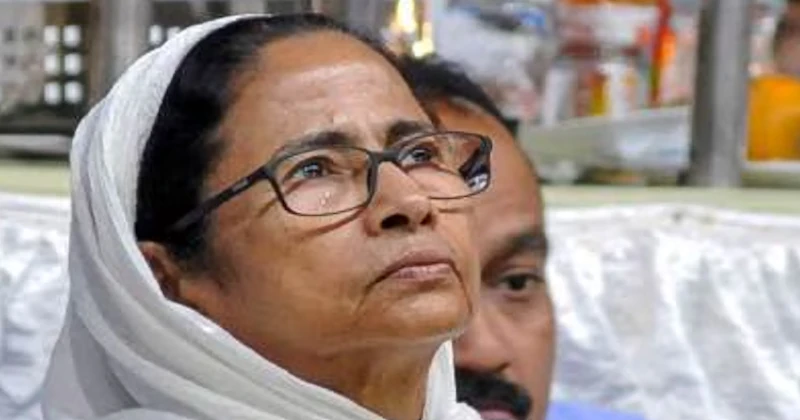
At the centre of this political churn is Mamata Banerjee herself. Once hailed as a grassroots leader who dismantled decades of Left dominance, she now faces criticism for presiding over a system accused of centralised control, declining institutional credibility, and uneven development.
Her governance model, which once thrived on populist schemes and strong organisational networks, appears increasingly challenged by demands for transparency, accountability, and structural reform.
The 2026 elections may therefore represent more than just a contest for power, they could serve as a verdict on whether her leadership still resonates with a changing electorate.
As West Bengal awaits the final results, the 2026 elections stand as a defining moment in its political history.
The transformation from predictable strongholds to volatile swing zones reflects a deeper churn within the electorate, one driven by governance concerns, regional aspirations, and a growing demand for accountability.
Whether this churn translates into a decisive mandate for change or a renewed endorsement of the status quo will become clear on counting day.
But one thing is certain: the political map of Bengal, as it was known for the past decade, has already begun to change.