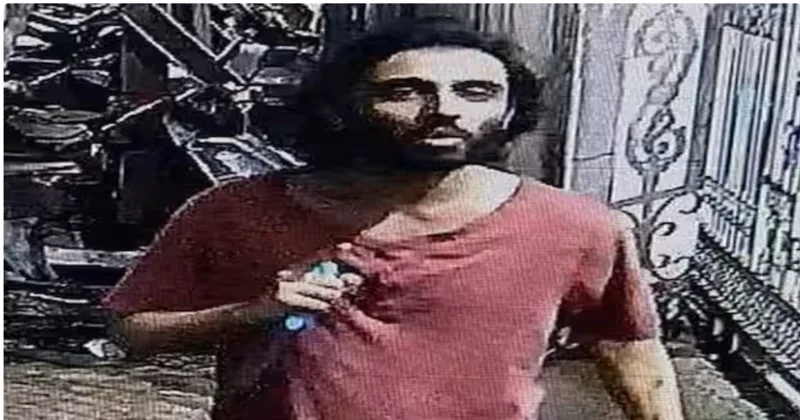
The accused, Zaib Zubair Ansari (31), was arrested within barely an hour of the attack after allegedly stabbing two security guards at an under-construction site in the Mira Road area of Thane district. The speed of the arrest, officials said, prevented what could have potentially escalated into a far more serious security situation.
The case dates back to the early hours of April 27, when two security guards, identified as Subrata Sen and Rajkumar Mishra were brutally attacked at an under-construction building site in the Mira Road area. Both victims sustained serious injuries but survived the assault, and the accused was apprehended by police within a short span after the incident, leading to a wider probe by the Maharashtra Anti-Terrorism Squad into a possible terror angle.
According to investigators, the sequence of events leading up to the attack was particularly chilling. Ansari is said to have first questioned the guards about their religious identity and then demanded that they recite the ‘Kalma’. When the victims were unable to comply, he allegedly launched a sudden and violent knife attack.
The attack, parts of which were captured on video, has since become a crucial piece of evidence and has intensified concerns within security agencies about the possibility of ideologically motivated targeting rather than random violence.
Studied sensitive locations, tactical manuals
What has further alarmed investigators is the emerging evidence that suggests a level of planning far beyond a spontaneous act. Sources indicate that Ansari had been studying maps of sensitive locations across Mumbai, raising the possibility that the Mira Road stabbing was not an isolated incident but part of a broader reconnaissance effort.
Investigators have also found that he was accessing tactical material and manuals associated with so-called “lone wolf” attacks, operations typically carried out by individuals acting independently but inspired by extremist ideologies. This points to a deliberate effort to understand methods, targets, and execution strategies.
Officials are now examining whether the stabbing itself was intended as a “trial run” to test the response time of police and emergency services. If established, this would significantly elevate the seriousness of the case, suggesting premeditation with potential future plans.
Radical content, ISIS references recovered
During searches at his residence, the Maharashtra Anti-Terrorism Squad recovered handwritten notes that have added another disturbing dimension to the investigation. These notes reportedly contain references to lone-wolf attacks and the terror organisation ISIS.
According to sources, the writings included terms such as “jihad” and “Gaza,” along with explicit expressions of a desire to join the terrorist group. Investigators believe that the accused may have perceived the stabbing as a symbolic “first step” towards aligning himself with extremist causes.
In addition to the handwritten material, officials seized a laptop and other documents, including religious texts, from the residence. These are currently undergoing detailed forensic and digital examination to trace online activity, communication patterns, and any possible external links or influences.
Possible self-radicalisation
Commenting on the case, Devendra Fadnavis stated that preliminary findings point towards a case of “self-radicalisation.” According to him, the accused appears to have been influenced by online content, literature, and ideological material that shaped his worldview.
“It seems the individual developed an understanding of concepts like jihad and violence against others through such exposure,” Fadnavis noted, adding that agencies are also examining whether similar patterns of radicalisation may exist among others.
The probe has now expanded beyond the immediate incident, with coordination between state and central agencies, including the National Investigation Agency, to determine whether there are wider networks, influences, or copycat risks.
Background under scanner
Ansari’s personal background has also come under intense scrutiny. He reportedly spent nearly two decades in the United States, from 2000 to 2020, before returning to India after his work permit expired.
After his return, he worked as a chemistry teacher at a local coaching centre, an aspect that investigators are examining closely, particularly in the context of whether he possessed the technical knowledge to potentially experiment with explosives or chemical substances.
Officials are also analysing whether his alleged radicalisation began during his time abroad or developed after his return to India. His recent personal life is also being examined; he had been living alone in Mira Road since 2022 following separation from his wife, who is believed to have returned to the United States.
Larger security implications
The case has triggered heightened alertness among security and intelligence agencies, not only because of the nature of the attack but also due to the combination of ideological motivation, apparent planning, and reconnaissance activity.
The possibility that the incident was intended to test the preparedness and response time of security forces introduces a far more serious dimension, indicating that the stabbing could have been part of a larger design rather than a standalone act.
Authorities have made it clear that no angle is being ruled out at this stage. With digital forensics, behavioural analysis, and intelligence inputs still underway, further revelations are expected in the coming days as agencies work to piece together the full extent of the threat.