As exit polls predict a tight contest in West Bengal, one factor stands out as having fundamentally reshaped the electoral landscape. This is the Special Intensive Revision carried out by the Election Commission of India.
Originally designed as a routine exercise to clean electoral rolls by removing duplicate and ineligible entries, the SIR soon transformed into the nerve centre of political debate. Nearly 91 lakh names, which is over 10 percent of the electorate, were removed during the process, shrinking the voter base significantly. What should have been a technical correction exercise turned into a high voltage political confrontation, reaching from the streets to the courtrooms of the Supreme Court of India.
However, it is important to understand that the SIR and the reason behind its holding cannot be questioned, as it was the need of the hour. Ensuring that only eligible citizens remain on voter rolls is fundamental to the credibility of any democracy. In a state like West Bengal, where concerns over illegal infiltration have persisted for decades, such an exercise was not just administrative but necessary.
Infiltration debate returns to centre stage
For years, the issue of illegal infiltration, particularly from neighbouring Bangladesh, has shaped political discourse in Bengal. While often brushed aside as rhetoric, the scale of deletions during SIR brought the conversation back into sharp focus.
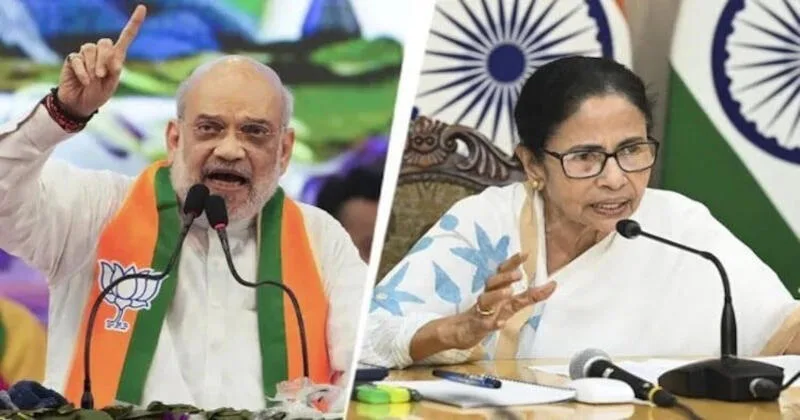
The Bharatiya Janata Party called the exercise as a long-overdue correction. Its leaders argued that unchecked infiltration had not only altered demographics in several districts but had also compromised the integrity of electoral rolls. For them, SIR was about restoring fairness and ensuring that genuine citizens are not overshadowed by illegal entries.
Leader of Opposition Suvendu Adhikari and other BJP leaders openly linked the revision to national security and voter authenticity, presenting it as a corrective measure rather than a political tool.
The argument resonated in regions where demographic shifts have been visibly debated for years. In border districts and minority dominated belts, the conversation moved beyond elections and into deeper anxieties about identity, land and political representation.
Mamata Banerjee’s political gimmick
On the other side, Chief Minister Mamata Banerjee mounted an opposition to the SIR, turning it into a political narrative centred on fear and victimhood.
She described the exercise as discriminatory and even approached the Supreme Court of India to challenge its implementation. In rallies and public speeches, she alleged that the revision disproportionately targeted minorities and vulnerable communities, framing it as an attack on democratic rights.
But this response showed a political compulsion more than constitutional concern. For over a decade, Mamata Banerjee’s politics in Bengal has relied heavily on minority consolidation and welfare driven mobilisation. Any attempt to scrutinise voter rolls, therefore, directly threatens this carefully built electoral base.
Her rhetoric, often emotional and confrontational, transformed a technical process into a mass political agitation. Statements comparing the deletion process to targeted exclusion added fuel to an already charged atmosphere.
Yet, many believe that this strategy also exposed the contradictions in her governance. If voter rolls contained large scale discrepancies, the responsibility for oversight cannot be entirely deflected. Instead of engaging with the issue of infiltration and electoral integrity, the response was seen as an attempt to shift the narrative.
Identity politics overshadows governance
The dominance of the SIR narrative had a significant impact on the election campaign. Traditional issues such as unemployment, corruption, industrial stagnation and governance failures took a backseat.
The BJP had initially planned to highlight allegations against the TMC government, including corruption scandals and law and order concerns. The TMC, in turn, sought to project its welfare schemes and the image of Mamata Banerjee as a pro-poor leader.
However, the scale of voter deletions changed the conversation entirely. Across tea stalls, markets and urban neighbourhoods, the most discussed issue was not development but identity, specifically whether one’s name was on the voter list or not.
This shift suited the BJP’s idea, which emphasised authenticity and citizenship. At the same time, it allowed the TMC to mobilise its base through fear of exclusion. In effect, the election became less about governance and more about belonging.
Impact on key electoral regions
The impact of the SIR was particularly visible in districts like North 24 Parganas, Murshidabad and parts of South Bengal. In several constituencies, the number of deleted names exceeded the victory margins from previous elections, making the outcome highly unpredictable.
The Matua belt, a politically sensitive region with a large refugee population, emerged as a crucial battleground. Many families who had long awaited citizenship recognition found themselves caught in uncertainty. This created a complex political situation, with loyalties shifting and communities divided.
Urban centres like Kolkata also witnessed significant deletions, turning even traditional strongholds into competitive arenas. The reduction of nearly 7 lakh names in the city alone altered electoral calculations dramatically.
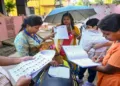
The publication of revised voter lists triggered widespread protests across the state. In several districts, people took to the streets claiming wrongful exclusion despite possessing valid documents.
Road blockades, demonstrations and even confrontations with officials highlighted the scale of public anxiety. In some areas, tensions escalated, reflecting the deep emotional and political stakes attached to the issue.
At the same time, the Election Commission of India initiated a review process, restoring lakhs of names through tribunal mechanisms. Yet, the perception of exclusion lingered, shaping voter sentiment in unpredictable ways.
High turnout reflects high stakes
Interestingly, the controversy surrounding the SIR did not dampen voter participation. Instead, it led to one of the highest turnouts in Bengal’s electoral history, crossing 93 percent in the first phase.
For many voters, casting their ballot became more than a democratic duty. It turned into a symbolic assertion of identity and citizenship. The fear of being excluded in the future drove people to participate in large numbers, adding another layer of complexity to the electoral outcome.
At its core, the Bengal election evolved into a clash of two sharply contrasting narratives. The BJP positioned itself as the defender of electoral integrity and national security, emphasising the need to address infiltration and correct systemic flaws.
The TMC, led by Mamata Banerjee, framed the issue as one of rights and protection, appealing to its core support base through a narrative of victimhood.
However, TMC’s approach shows years of minority appeasement politics, where electoral calculations often overshadow institutional integrity. The reluctance to acknowledge the issue of infiltration, despite growing concerns, is seen as a strategic choice aimed at preserving vote banks.
Beyond Politics: A question of democratic integrity
The SIR controversy has raised deeper questions about the functioning of democracy in Bengal. At one level, it exposed the challenges of maintaining accurate electoral rolls in a complex and dynamic society.
At another level, it highlighted how administrative processes can become politicised, especially in high stakes elections.
Yet, the core principle remains clear. A clean and accurate voter list is essential for free and fair elections. Without it, the very foundation of democratic representation is weakened.
As the state awaits the final results, the impact of the SIR will be closely scrutinised. Whether it benefits the BJP by consolidating its narrative or helps the TMC through mobilisation of its base remains to be seen.
What is certain, however, is that the 2026 elections have fundamentally altered Bengal’s political discourse. The focus has shifted from governance alone to deeper questions of identity, citizenship and institutional accountability.
In that sense, the SIR was not just a procedural exercise. It became a defining moment in Bengal’s political journey, one that forced uncomfortable but necessary conversations.