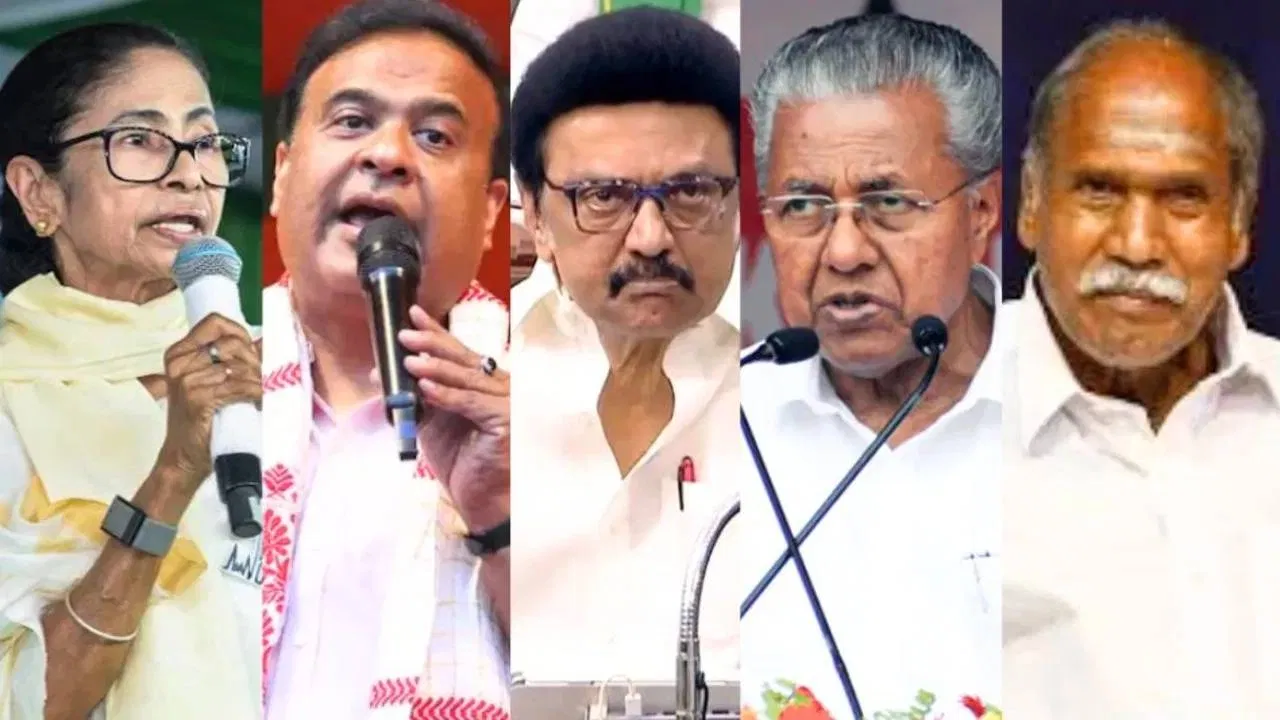
With the final phase of voting in the West Bengal Assembly elections concluding on Wednesday, the stage is set for the release of exit poll results for the high-stakes 2026 Assembly elections across multiple states and a Union Territory. Voters, political parties, and analysts alike are now eagerly awaiting the first indications of electoral outcomes, even as experts caution against treating these projections as definitive results.
The 2026 Assembly elections have covered five crucial regions, West Bengal, Tamil Nadu, Kerala, Assam, and the Union Territory of Puducherry, collectively accounting for 824 Assembly constituencies. The electoral contests in these regions have been marked by intense campaigning, sharp political rhetoric, and high voter turnout, setting the stage for closely fought battles.
What time will exit polls be released?
As per guidelines issued by the Election Commission of India (ECI), exit polls cannot be published until voting in all phases is completed. With polling formally ending on April 29, media organisations will begin releasing exit poll data from 6:30 pm onwards.
This embargo ensures that projected outcomes from earlier rounds do not influence voters in later phases. Once the restriction is lifted, news platforms, survey agencies, and broadcasters will simultaneously release their projections, including estimated vote shares and seat distributions.
The official counting of votes, however, is scheduled for May 4, when the final and authoritative results will be declared.
Where to watch exit poll results
Viewers can follow the exit poll results through major television networks and digital platforms.
In addition to television broadcasts, real-time updates will also be available through social media platforms, live blogs, and mobile applications, ensuring that audiences can track developments as they unfold.
The exit polls are expected to provide the first signals in several politically significant contests:
1. In West Bengal, the battle between the Bharatiya Janata Party (BJP) and the All India Trinamool Congress (TMC) remains the focal point, with both sides claiming momentum after a high-voltage campaign.
2. Tamil Nadu is witnessing a traditional face-off between the Dravida Munnetra Kazhagam (DMK) and the All India Anna Dravida Munnetra Kazhagam (AIADMK), with national parties also attempting to expand their footprint.
3. In Assam, the contest between the BJP and the Indian National Congress has drawn significant attention, especially amid debates over governance and identity politics.
4. Kerala continues its bipolar political tradition, with the Left Democratic Front (LDF) and the United Democratic Front (UDF) locked in a tight race.
5. In Puducherry, regional dynamics and alliances are expected to play a decisive role in shaping the final outcome.
What are exit polls?
Exit polls are post-voting surveys conducted among voters as they leave polling stations. These surveys aim to capture voter preferences immediately after ballots are cast, thereby offering an early estimate of election results.
Typically carried out by research agencies and media organisations, exit polls involve structured questionnaires where voters are asked about their choices, the issues that influenced their decision, and demographic details. The collected data is then analysed using statistical models to project likely outcomes.
However, reports consistently caution that exit polls are estimates, not results. They are subject to various limitations, including sampling errors, non-response bias, and the possibility of voters not disclosing their true choices.
Why exit polls often miss the mark
Despite their popularity, exit polls have a mixed track record in India. On several occasions, their predictions have diverged significantly from actual results.
There are multiple reasons for this:
1. Sampling Limitations: Pollsters may not be able to capture a fully representative sample of voters across diverse regions and demographics.
2. Non-Response Bias: Some voters refuse to participate in surveys, potentially skewing the data.
3. Shy Voter Effect: In certain cases, voters may choose not to reveal their true preference due to social or political pressures.
4. Complex Electoral Dynamics: Multi-cornered contests, regional alliances, and last-minute swings often make accurate predictions difficult.
As a result, while exit polls provide valuable insights into trends, they should be interpreted with caution.
Exit polls vs opinion polls
Exit polls are often confused with opinion polls, but the two serve different purposes and are conducted at different stages of the electoral process.
Opinion Polls are conducted before elections, sometimes weeks or months in advance. They aim to gauge public sentiment and predict voting patterns based on voter intentions. However, these intentions can change over time, making opinion polls less reliable.
Exit Polls, on the other hand, are conducted on the day of voting, after voters have cast their ballots. Since they capture actual voting behaviour rather than intent, they are generally considered more accurate than opinion polls, though still not foolproof.
A waiting game until May 4
While exit polls will dominate headlines in the coming hours, the final verdict rests with the counting process scheduled for May 4. Only then will it become clear whether the projections align with reality or once again highlight the unpredictability of Indian elections.
For now, the political landscape remains in suspense, with parties preparing for both victory celebrations and potential setbacks as the first numbers begin to trickle in.