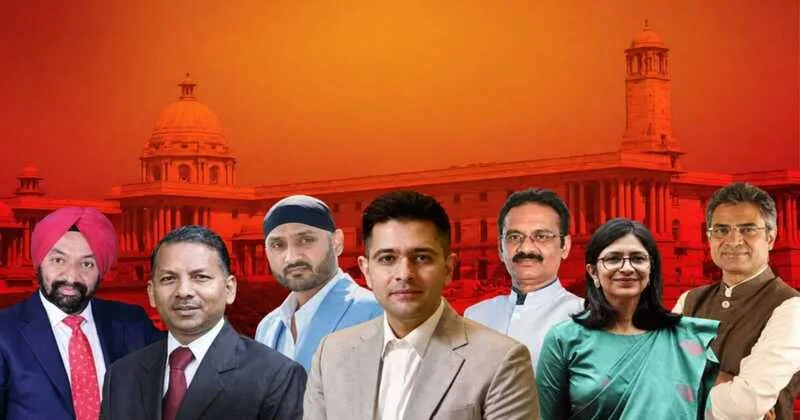
New Delhi: In a major political realignment in the Rajya Sabha, seven Members of Parliament from the Aam Aadmi Party (AAP) have formally joined the Bharatiya Janata Party (BJP), delivering a significant boost to the ruling party’s strength in the Upper House. Following the announcement by prominent leaders, including Raghav Chadha, the merger received official approval from Rajya Sabha Chairman C. P. Radhakrishnan. With this development, AAP’s tally in the House has sharply declined from ten to just three, while the BJP’s strength has risen to 113, consolidating its position as the single largest party.
Mass shift strengthens BJP’s parliamentary edge
Along with Chadha, AAP MPs Sandeep Pathak, Ashok Mittal, Harbhajan Singh, Vikramjit Sahni, Swati Maliwal and Rajinder Gupta submitted a joint request to the Chairman seeking recognition as BJP members after their merger. The request was accepted, and their names were promptly updated under the BJP’s section on the official Rajya Sabha website, formalising the transition. The move has sparked debate over the application of the anti-defection law.
However, legal experts point out that since the MPs moved together in significant numbers, the shift qualifies as a valid “merger” under Paragraph 4 of the Tenth Schedule of the Constitution of India, which permits such action if at least two-thirds of a legislature party agrees, making disqualification unlikely.
AAP has responded with strong protests, submitting a petition to the Chairman seeking cancellation of the membership of all seven MPs.
Politically, the development marks a major setback for AAP, which governs Punjab, as its influence in the Rajya Sabha stands considerably diminished. The departure of several key leaders has weakened the party. For the BJP, however, the development underscores its expanding political footprint and growing acceptability among leaders across party lines. The MPs who crossed over have stated that they felt constrained within AAP and saw limited opportunity to effectively serve the public, positioning their move as one driven by governance priorities and national interest. Coming ahead of key assembly elections, the shift is being viewed as a strategic consolidation by the BJP, further strengthening its legislative leverage and reshaping the contours of opposition politics at the national level.