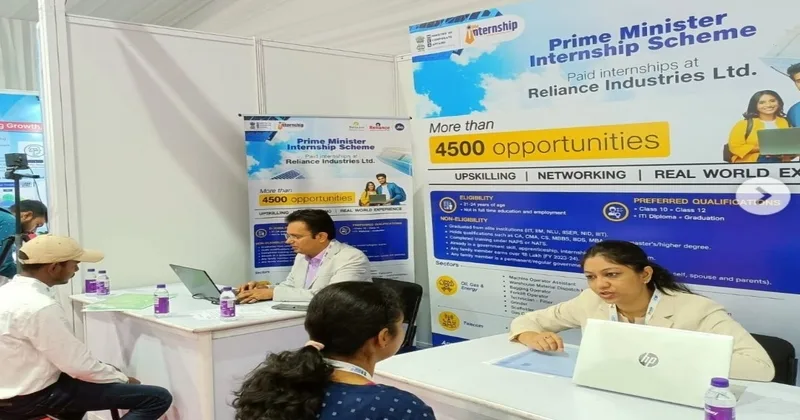
India’s demographic strength is in its youth, but a major challenge has always been the gap between academic learning and real-world job skills. To address this, the Government of India has introduced the PM Internship Scheme (PMIS) under the Ministry of Corporate Affairs. The initiative aims to provide young individuals with structured, practical work experience and help them become job-ready while also easing their transition into the workforce. At its core, the PM Internship Scheme is designed to create opportunities for youth who may not yet be part of the formal employment system. It targets candidates between the ages of 18 and 25 who are not engaged in full-time employment. By focusing on this segment, the scheme ensures that young people at an early stage of their careers get meaningful exposure before committing to long-term job roles.
One of the most attractive aspects of the scheme is the financial support it offers. Selected candidates receive a monthly stipend of Rs 9000, which helps them sustain themselves during the internship period. In addition to this, a one-time joining grant of Rs 6000 is provided to reduce the financial burden of relocation or initial expenses. This dual financial support structure will help candidates and ensure that candidates from diverse economic backgrounds can participate without any hesitation.
Turn your potential into real-world experience with the Prime Minister Internship Scheme.
Learn, earn, and grow with opportunities designed to prepare you for what’s next.
To know more and apply, visit: https://t.co/R92H4hNSOf#MYBharat #PMInternship pic.twitter.com/vQk2NwG4RL
— UGC INDIA (@ugc_india) April 22, 2026
The duration of internships under PMIS ranges from 6 to 9 months. In this time frame, all interns will go beyond the surface-level learning and truly understand workplace dynamics. Unlike short-term internships that often focus on observation, this PMIS will encourage active participation, skill development, and contribution to organisational goals. Interns will gain exposure to professional environments, team collaboration, deadlines, and problem-solving skills, which are critical in today’s job market.
Another feature of the PMIS is its inclusivity in terms of educational qualifications. It is open to candidates who have completed Class 10, Class 12, ITI courses, diplomas, as well as undergraduate and postgraduate degrees. This will ensure that the scheme does not cater only to highly educated individuals but also supports those from vocational and technical backgrounds. By doing so, it aligns with the government’s larger vision of skill development and employment generation across sectors.
The application process has been kept simple and is accessible through the PMIS portal. Interested candidates can browse internship opportunities based on various filters such as location, sector, role, and qualification. This flexibility allows applicants to choose opportunities that are in line with their interests and career goals. Once they identify suitable roles, they can apply directly through the portal.
After selection, candidates will have to accept the offer through the same platform and join at the assigned location. This centralised system reduces confusion and ensures accountability at every stage. It also helps in tracking progress and maintaining a structured record of internships, which can be useful for both candidates and employers.
From a broader perspective, the PM Internship Scheme plays a crucial role in strengthening the link between industry and education. Many young individuals in India face difficulties in securing their first job due to a lack of practical experience. Employers often seek candidates who are already familiar with workplace expectations, creating a cycle where freshers struggle to find opportunities. PMIS will break this cycle by providing a platform where youth can gain that much-needed initial experience.
For companies, the scheme offers an opportunity to identify and nurture talent at an early stage. Organisations can benefit from fresh perspectives, energy, and enthusiasm brought in by young interns. At the same time, they contribute to nation-building by supporting skill development and employment readiness.
The PM Internship Scheme is a well-structured initiative that addresses a critical gap in India’s employment ecosystem. Over time, such initiatives can significantly reduce unemployment and underemployment, especially among educated youth.