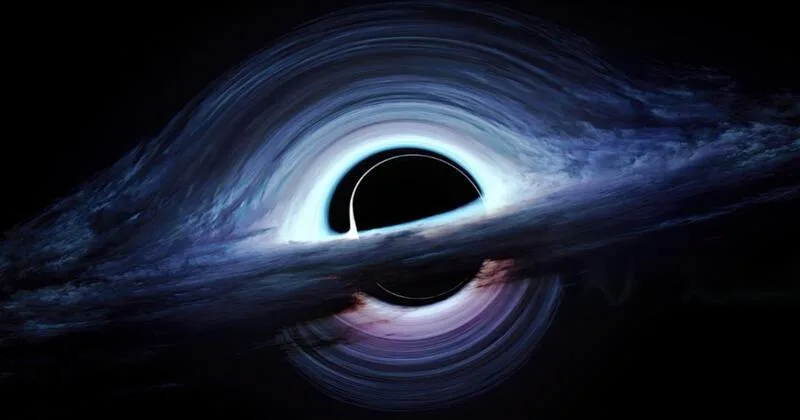
The biggest discoveries of the universe come from studying some of the tiniest features in it. In a breakthrough discovery in science, Indian scientists have focused on one of the tiniest and least understood galaxies in the Milky Way, the dwarf spheroidal galaxies, to address an important question in astronomy. Do dwarf spheroidal galaxies harbour black holes? This research may change the way we look at cosmic evolution and black holes in particular.
This research comes at a time when India is building up its scientific capabilities with missions in line with Aatmanirbhar Bharat. Studies like this can emphasise that scientific explorations in the field of astronomy cannot be considered just academic activities that are essential for expanding.
Understanding the Cosmic Puzzle
Black holes of the supermassive kind have frequently been observed in the centre of large galaxies. They have a mass which may be millions or even billions of times that of our sun. Whether black holes exist in small galaxies, such as dwarf spheroidal galaxies, remains a mystery.
They are extremely dim objects that are full of much gas content. These objects are also heavily dependent on dark matter, making it practically impossible to detect their existence using the present methods. Answering this question would help us to address some other equally important questions. For instance, how was the first black hole formed? How do they evolve within the framework of low-mass environments? Is it the same mechanism at all scales? These answers form an integral part of the development of a universal theory of galaxy evolution.
Indian Contribution to Global Science
It is in this light that the studies conducted by K. Aditya and Arun Mangalam at the Indian Institute of Astrophysics become particularly relevant. In their study, they offer an entirely new approach to studying such low-light objects using dynamical modelling. Their model consists of three basic components, such as stars, a dark matter halo and a possible black hole at the centre of the galaxy.
Contrary to observational techniques, this study utilised stellar kinematics or the behaviour of stars within a galaxy to determine whether there exists any possibility of a black hole existing. They have been able to do this by taking into consideration the radial and tangential motions of the stars to limit the mass of a central black hole. This can be considered an innovative approach towards studying such astronomical phenomena.
The Key Findings: Limits, Not Certainties
The research paper in The Astrophysical Journal provides an interesting insight into the problem. The findings suggest that, whereas there is no requirement for the existence of supermassive black holes in dwarf spheroidal galaxies, the data are consistent with the existence of intermediate-mass black holes.
The researchers determined that in most cases, black hole masses could not exceed one million solar masses with a high degree of confidence. Such information would be valuable for further exploration since now the scope of investigation can be narrowed substantially.
The findings of the study, along with previously obtained data, allowed the researchers to establish the black hole mass-stellar velocity dispersion relation, which covers a broad range of galaxies starting from small dwarf galaxies to the massive ones. Such relations cover a huge range of black hole masses, almost spanning seven orders of magnitude. Such a universal relation is an important finding since it indicates that similar laws operate in all investigated cosmic environments.
Exploring Growth Mechanisms
The article discusses the possible ways in which black holes can be formed and evolve in dwarf galaxies. In particular, the following two models were considered:
• The process of momentum-driven accretion of gases, which leads to black holes of about 1,000 times the solar mass;
• The stellar capture process in which growth can reach values up to 10,000 times the solar mass or more.
All these models correlate with the observational boundaries obtained by the authors of the article. An interesting possibility raised by scientists is that of tidal stripping. According to this model, dwarf spheroidal galaxies may be the remnants of more massive galaxies, which lost most of their mass because of interaction with the Milky Way Galaxy.
The Role of Next-Generation Telescopes and its Implications
The significance of this study lies in the fact that it is timely. Within the decade, there will be an array of new observations from facilities like the upcoming National Large Optical Telescope (NLOT) and the Extremely Large Telescope (ELT). They have an unmatched level of sensitivity and resolution that will allow for precise measurement of stellar motion in dim galaxies. The theoretical model presented by the researchers from India can act as a benchmark to make sense of the observed data.
This study is more than just a current discovery; it paves the way for future discoveries in science. It must be noted that this study pertains to fundamental science; yet, there are broader implications. Basic science has played a pivotal role in innovation and technology development. Improvements in areas like imaging and computing models have found applications across a variety of industries, including medicine and communications.
At the same time, the research puts India on the map in terms of scientific research. It shows that Indian organisations are not only players but also pioneers in the field. For a nation aspiring to establish itself as a knowledge economy, this is an essential milestone to achieve.
A Step Toward Cosmic Understanding
Whether dwarf galaxies contain black holes or not may be a question; by delving into such matters, scientists from India help us better understand what has shaped our universe. By asking questions like this one and answering them through empirical research, these Indian scholars make vital contributions to cosmology. Future astronomers will find the foundations laid by this group of researchers invaluable as they will continue to conduct their studies by having access to more sophisticated telescopes and data.
In the boundless universe, even small-scale astronomical objects can tell us much about the cosmos in which we live. This is the case of the efforts undertaken by Indian scholars when exploring dwarf spheroidal galaxies and the possibility of the existence of black holes there. This approach reflects Indian scientific strategy as a whole. This nation values knowledge, pursues technological innovations and tries to learn more about the universe around us. In the years to come. India will remain a leading scientific force in the world.