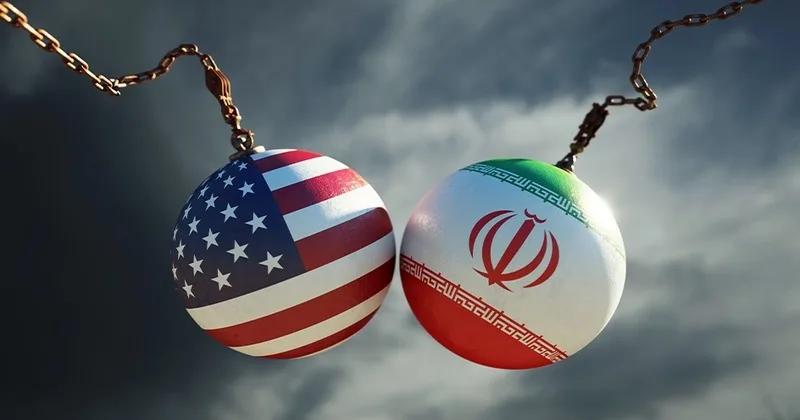
On February 28, 2026, President Donald Trump, long perceived as eager to secure a Nobel Peace Prize, authorised a major military offensive against Iran. The operation, code-named Operation Epic Fury, was spearheaded by the United States Central Command (CENTCOM). Although Washington has referred to “partner forces,” the only nation participating in the offensive is Israel.
The stated objective of the operation is to dismantle Iran’s security infrastructure and neutralise what the United States (US) describes as an imminent nuclear threat. Beneath this formal justification lies a broader strategic ambition of engineering a regime change in Tehran and replacing the current revolutionary establishment with a government more accommodating to US and Israeli interests.
On the very first day of the operation, February 28, Ali Khamenei, Iran’s supreme leader, was killed in Israeli airstrikes near Tehran along with several senior officials in Iran’s political and military command structure. Despite this dramatic developments, the anticipated rapid collapse of the Iranian regime has not materialised.
US–Iran Relations
The origins of the present hostility lie deep in twentieth-century geopolitics. During the cold war, the US viewed Iran as a critical strategic partner against the Soviet Union. Western oil corporations and defence manufacturers also sought extensive commercial interests in the country.
The US and the UK engineered a transfer of power to the traditional monarchy of the country and then, for nearly three decades, Iran maintained cordial relations with the West. This relationship collapsed in January 1979 when the last Shah of Iran, Mohammad Reza Pahlavi, amid a revolutionary uprising, left the country on exile.
The revolution brought to power a new political system. The Islamic Republic, led by an Ayatollah (Shia cleric) came into being. Ayatollah Ruhollah Khomeini was the first supreme leader. Although Iranian culture remained deeply rooted in the country’s ancient Persian civilizational heritage, governance now combined Persian nationalism with an assertive revolutionary interpretation of Shia Islam.
The Breakdown of US–Iran Relations
The revolutionary transformation fundamentally altered Iran’s relationship with the US. Washington refused to recognise the new regime and increasingly viewed Iran as a destabilising actor. Tehran, on its part, branded the United States as the “Great Satan.” The rupture became irreversible post the Iran hostage crisis of November 1979, when Iranian students seized the US Embassy in Tehran and held 52 American diplomats and citizen’s hostage for 444 days.
The US imposed sweeping sanctions on Iran and the latter responded by pursuing strategic autonomy, including an assertion to develop nuclear technology and support regional groups hostile to US and its allies in the region, especially Israel.
Tensions deepened further during the Iran–Iraq War (1980–1988), when Saddam Hussein’s Iraq invaded Iran. Though Washington officially maintained neutrality, it provided intelligence and indirect support to Iraq. Ironically, the US also secretly supplied arms to Iran. The war devastated both countries, killing roughly a million people and ending without significant territorial change.
Iran, Israel, and the “Axis of Resistance”
Iran is predominantly Shia, while most Palestinians are Sunni. The two do not share borders and have no direct territorial dispute. Iran’s antagonism toward Israel is, therefore, not ethnic or geographic.
The Islamic Republic adopted an anti-Israel posture partly because Israel was, and remains, a close ally of the United States. The Ayatollahs further felt that remaining neutral in the context of Israel would negatively impact their ideological credibility and allow domination of the Muslim world by Saudi Arabia or Turkey.
The Iranian leadership, thus, recognised that championing the Palestinian cause would enhance its ideological legitimacy across the Muslim world. By presenting itself as the defender of Jerusalem, Iran sought to challenge the leadership claims of regional powers such as Saudi Arabia and Turkey.
Under this doctrine, Iran cultivated what it calls the “Axis of Resistance.” This network includes groups such as Hezbollah in Lebanon; Hamas in Gaza; Palestinian Islamic Jihad etc. Through these proxies, Iran has sought to project influence beyond its borders.
Israel, however, perceives Iran’s nuclear ambitions and regional militia network as an existential threat. Preventing a nuclear-armed Iran has therefore become a central pillar of Israeli national security doctrine.
Competing Strategic Calculations
Iran’s strategy traditionally relies on proxy warfare; missile deterrence and asymmetric regional influence. These tools allow Tehran to maintain pressure on adversaries without inviting full-scale war. Israel’s strategy, by contrast, focuses on preventing the emergence of multi-front threats from Gaza, Lebanon, Syria, and Iran simultaneously.
The Gulf countries like the United Arab Emirates, Bahrain etc. in present times, have more interest in economic diversification than religious ideology. They look for security through US alignment and are not averse to engaging with both Israel and Iran to avoid becoming a battlefield. Saudi Arabia also recently restored diplomatic ties with Iran in a China-mediated deal.
With the Gulf showing preference to pragmatic engagement with both Israel and Iran to avoid becoming a battleground in a regional conflict, Iran’s belligerent posture has actually helped Israel build alliances with Gulf states. It has almost normalised relations with countries that look at Iran as a bigger long-term threat than Israel.
The Road to the Current Escalation
Donald Trump had pursued an aggressive posture against Iran during his first term. It, however, did not reach the level of open hostilities probably since he had some other priorities. After returning to the presidency, he revived his hard-line Iran policy. New nuclear negotiations began indirectly in Oman and Europe in 2025, but collapsed after Washington issued a 60-day ultimatum demanding stricter restrictions. By early 2026, the United States had significantly increased its military presence in the Middle East, deploying aircraft carriers and expanding regional bases.
Operation Epic Fury
The assassination of the Iranian supreme leader and the subsequent wave of US and Israeli strikes marked an unprecedented escalation. Iran retaliated with missile attacks on US bases across the Gulf region and on Israeli targets.
Both sides claim significant military successes. US statements emphasise operational dominance, while Iranian sources highlight damage to American bases in Bahrain, Kuwait, Qatar, and Saudi Arabia. The criticality lies in the closing of the Strait of Hormuz, the most significant artery for global oil supply.
If reports are even partially accurate, the conflict may already have inflicted substantial strategic and economic damage on the US military infrastructure built in the region over decades. However, Iran may have made a critical strategic error by striking US bases located in Gulf states that had previously opposed escalation. Such actions risk alienating potential diplomatic space.
Iran, it seems had war-gamed and thought through all contingencies and prepared multiple responses. It has also collected the military wherewithal that it requires to play out a long haul. Despite the loss of its senior leadership and massive physical damage, the country is in no mood to succumb. The assumption in Washington and Tel Aviv that eliminating the supreme leader would trigger rapid regime collapse has not proven correct.
The Truce Negotiations
Over the last few days, there are talks underway between Iran and the US in Islamabad post declaration of a ten-day ceasefire. The choice of Pakistan as a mediator is looked upon by global security and political experts as a strategic error committed by the US. This thought process has gained credibility with the emergence of conflicting interpretations of the truce brokered by Pakistan which have stalled the talks rather than facilitating them. As a result, the ceasefire has remained fragile, marked by repeated violations, deep mistrust, and collapsing diplomatic momentum.
Meanwhile, erratic statements by Donald Trump have added volatility to the situation. His earlier threats to “destroy the Iranian civilisation” coupled with military actions affecting civilian infrastructure, have drawn criticism internationally and isolated the US. The world no longer looks at the position of the US as righteous and justified.
India’s Mature Diplomacy
In this evolving geopolitical landscape, India is playing a constructive diplomatic role under the leadership of Prime Minister Narendra Modi and especially so in the current ceasefire phase. India is maintaining working relations with the US, Israel, and Iran and encouraging dialogue. India is also actively engaging with leaders across the globe to pave the path for de-escalation of hostilities and ushering of lasting peace. The process reflects India’s strategic autonomy and her emphasis on negotiations over escalation.
A notable indicator of India’s growing relevance is the multiple interactions between President Donald Trump and Prime Minister Narendra Modi in recent days. These exchanges suggest that Washington values India’s assessment of the situation and sees it as an important interlocutor capable of conveying balanced perspectives.
While Pakistan is formally positioned as a mediator, India’s role appears more substantive though less visible. Track-II diplomacy and quiet engagement is helping create channels for negotiation.
Overall, India is contributing to reducing misperceptions and preventing further escalation.
The Way Forward
The current crisis reflects decades of accumulated strategic miscalculations by multiple actors.
Iran may have succeeded in absorbing the initial shock of US attacks, but a prolonged war with the United States would eventually place overwhelming strain on its infrastructure and economy.
Israel needs to understand that it is carrying its existential threat narrative a bit too far and the same has now reached a point where the entire Middle East is facing a very potent and real existential threat. The country will need to carry out some strategic and policy readjustments in the face of the evolving situation.
For the United States, the conflict already carries substantial costs. Even if Washington succeeds in delaying Iran’s nuclear programme, achieving broader objectives, such as dismantling Iran’s regional proxy network or engineering regime change would be far more difficult. A prolonged conflict could weaken US strategic credibility while destabilising global energy markets.
Even if the immediate intensity of the conflict eventually subsides, the confrontation between the United States, Israel, and Iran is unlikely to end quickly unless the geopolitical, ideological, and strategic contradictions that produced this crisis are resolved.
What is certain, however, is that the conflict already carries the potential to trigger severe economic repercussions globally. The world may therefore be entering a prolonged period of uncertainty, unless restraint, diplomacy, and strategic realism brings about a turnover. All eyes are on India.