Bengaluru: One year after the devastating Pahalgam terror attack, the passage of time has done little to ease the pain of families who lost their loved ones. In homes across Bengaluru, grief lingers in quiet corners, in framed photographs, and in memories that refuse to fade.
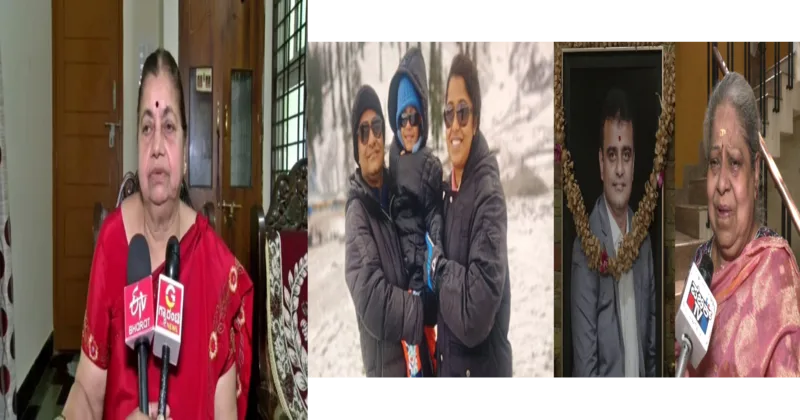
At the residence of Bharath Bhushan in Malleswaram, silence speaks louder than words. The 30-year-old techie had travelled to Kashmir with his wife Dr. Sujatha and their young child, hoping for a brief escape from routine life. Instead, the trip turned into a lifelong nightmare for his family.
The attack at Baisaran Valley claimed 26 lives in a matter of minutes, leaving behind shattered families. For Bhushan’s wife, every day since then has been a struggle to move forward while carrying the weight of that trauma.
“I don’t even realize that a year has passed. The days have gone by so quickly, but every moment is still alive in my mind,” she said, her voice breaking. “We went to Kashmir believing it was safe. That belief is gone now. I am trying to stay strong for my child, but the memories come back again and again.”
She recalled how the attackers blended in with tourists before launching the assault. “They walked among us like ordinary people like tourists, like workers. Suddenly, they pulled out guns and started firing. I was running, holding my child and my bag, not knowing where to go. That fear has never left me,” she said.
For Bhushan’s elderly parents, the loss is immeasurable. Their home, once filled with conversations and laughter, now feels empty. “He had so many dreams. We thought he would return home after the trip. Instead, his body came back,” a family member said. His mother is said to spend long hours looking at his photographs, unable to come to terms with the loss.
The pain is not limited to one family. Manjunath Rao, another victim from Karnataka, was killed in front of his wife and child. His mother, Sumathi Rao, said the grief has only deepened with time. “People say time heals everything, but that is not true. A mother cannot forget her son. We are living with this pain every single day,” she said.
She added that while the nation moved on, families like hers remain trapped in that moment. “For others, it is an incident that happened a year ago. For us, it is something we relive every day,” she said, her words reflecting the silent suffering of many such families.
After the attack, India launched Operation Sindoor, targeting terror infrastructure across the border. While the operation brought a sense of closure at a national level, families say it has not filled the void left behind.
“There may be justice, there may be action, but nothing can bring him back,” Bhushan’s wife said. “There were so many plans, so many dreams. All of that ended in a moment.”
The tragedy has also left survivors questioning safety in tourist destinations. Families have repeatedly called for stronger security measures to ensure that such incidents are not repeated. “No one should have to go through what we did. The government must ensure that tourists are safe,” she added.
As the first anniversary of the attack is marked, there are no ceremonies that can truly console those left behind. For these families, April 22 is not just a date—it is a wound that refuses to heal, a reminder of a life that was full of promise, and a future that was taken away too soon.
In the end, beyond the headlines and official responses, what remains is a deep, personal loss one that continues to echo in the lives of those who survived, but will never truly move on.