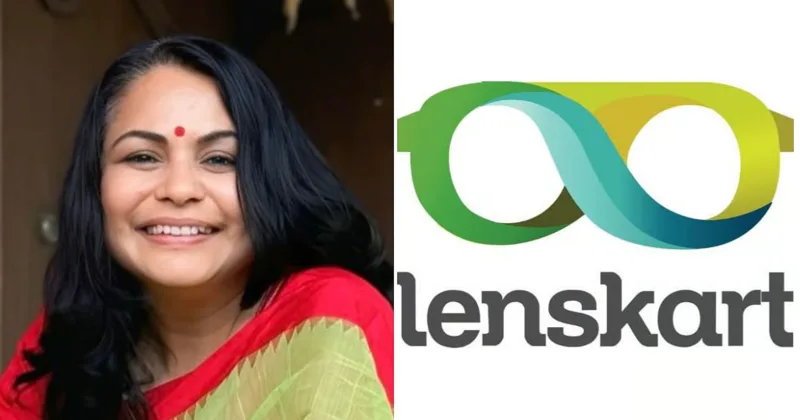
NEW DELHI: Author, activist, and public intellectual Shefali Vaidya has a message for the Hindu youth: “If you face discrimination at your workplace for being a Hindu, file a complaint and go public with it… Stop waiting for someone else’s courage to be contagious. Dharma does NOT protect those who will not protect it!” she says in a post on X.
As I write this, my inbox is overflowing with messages from TCS employees, from Lenskart employees, from Hindu students of Ashoka University and Azim Premji University, from teachers, from mothers, from civil servants.
They are sharing screenshots, they are sharing their…
— Shefali Vaidya. 🇮🇳 (@ShefVaidya) April 21, 2026
What began as a controversy over a leaked internal training document has now evolved into a wider public debate on workplace norms, religious expression, and corporate accountability. At the centre of this churn is Shefali Vaidya, who has not only questioned the contents of the document but has also urged individuals to stop relying on a few voices and instead assert their own rights and identity.
From Leaked Slides to Public Debate
The controversy emerged after internal training slides, attributed to Lenskart, began circulating online. The material outlined grooming and accessory guidelines for store employees and quickly drew attention for the way different forms of religious expression appeared to be treated. The perception that certain visible markers pertaining to the religion of the majority of the population – Hinduism – were restricted while others (viz. those of Islam) were accommodated triggered a strong reaction, with many questioning whether the framework reflected neutrality or inconsistency.
Optics That Fuelled the Perception
As the debate grew, publicly available images of employees working at Lenskart stores added another dimension. In several such visuals, Muslim women can be seen wearing the hijab and burqa while on duty.
This is a latest picture shared by a @Lenskart_com employee in Bengaluru, since it appears to be in public domain, see no harm in sharing it. Notice anything? I guess Hindu employees themselves have no spine! No wonder @peyushbansal can get away with such blatantly anti-Hindu… pic.twitter.com/qdWJHRxWWx
— Shefali Vaidya. 🇮🇳 (@ShefVaidya) April 17, 2026
My inbox in overflowing with videos and accounts like these by ex-employees and employees of @Lenskart_com. This is not just about grooming. @peyushbansal led a full on Jehadi outfit, that was publicly listed and comes under @SEBI_India guidelines. pic.twitter.com/7cE1zGQ7ei
— Shefali Vaidya. 🇮🇳 (@ShefVaidya) April 20, 2026
For critics, these images reinforced the argument that while Hindus and other Sanatanis were disallowed wearing their religious symbols, Muslims were visibly accommodated within the retail environment. This contrast became central to the public discourse, even as others pointed out that corporate dress codes often attempt to balance uniformity with operational practicality.
From Online Reaction to Ground Action
The response soon moved beyond social media. In multiple instances across cities, individuals walked into Lenskart stores asking store managers as to why there was a ban on wearing tilak and kalawa. These were not organised protests in the conventional sense but acts of assertion that reflected a growing sentiment that questions of identity must be addressed not just online but in everyday spaces. During one such interactions, a team of activists claim they found Hindu Gods’ photos were kept at feet level, hidden under employees’ desk, so as not to be seen by customers.
@Lenskart_com and @peyushbansal to address this directly. Can you clarify if there is any truth to this claim about your store policies? We should wait for an official statement before jumping to conclusions. pic.twitter.com/HvC5hrpQ08
— Sandip Mittal (@TheSandipM) April 21, 2026
Company Response and Revised Guidelines
Amid mounting criticism, Peyush Bansal issued a clarification stating that the circulating material was an outdated internal training document and not an official HR policy. He acknowledged that certain lines within it were incorrect and said they had been removed earlier.
We have heard you. Clearly and openly. Over the past few days, our community and customers have spoken – and we have listened.
Today, we are standardizing our In-Store Style Guide and sharing it publicly and transparently: https://t.co/lC8KlLLUZm
These guidelines explicitly and…
— lenskart (@Lenskart_com) April 18, 2026
Following this, Lenskart released a revised style guide that adopts a more inclusive tone. The updated guidelines explicitly permit religious and cultural expressions such as bindi, tilak, sindoor, kalawa, mangalsutra, and kada, while reiterating that all employees are to be treated fairly and without discrimination. The document positions inclusivity as part of the company’s core values and attempts to address the concerns raised in the aftermath of the leak.
The Email to the Board
Shefali Vaidya has also stated that she wrote directly to Lenskart’s board seeking clarity and accountability. Her questions centre on whether the earlier guidelines reflected a deeper institutional approach or were simply a lapse in internal training material. The outreach to the company’s leadership signals an attempt to push the issue beyond social media and into formal corporate response mechanisms.
A Call That Goes Beyond One Company
What distinguishes Vaidya’s intervention is that it does not stop at critiquing a single organisation. She tells a supporter who worries about her safety while taking on big corporations that she is not afraid as she comes from a family of freedom fighters. “I hear you. You mean well. But I am ONE person. A private citizen with no institutional backing, no legal team, no corporate PR machine. I am doing what I can, using my voice, my credibility and my social media presence for the cause…”
It is messages like these, from ordinary Hindus that give me the courage, that and my own legacy that comes from 3 generations of freedom fighters who fought against the Portuguese in Goa. Of course there are abuses, threats, gaalis, every single day, but I will never whine or… pic.twitter.com/o0Blvc8lMs
— Shefali Vaidya. 🇮🇳 (@ShefVaidya) April 21, 2026
In a widely shared appeal, she emphasised that her inbox is filled with accounts from individuals across sectors who feel that expressions of their identity are often subject to subtle constraints. Her message is that this cannot remain the burden of a few voices.
She has urged individuals to speak up for themselves, document their experiences, and respond when they feel their identity is being sidelined. The argument is not just about corporate policy but about personal agency, and about the willingness of individuals to assert their rights in spaces they inhabit daily.
A Debate Still Unfolding
The Lenskart episode now sits within a larger and more complex conversation about how workplaces navigate uniformity and diversity. It raises questions about where professionalism ends and cultural expression begins, and whether the balance between the two is being applied consistently.
While the company has issued a clarification and revised its guidelines, the debate it triggered continues to resonate. It is no longer confined to the authenticity of a document or the wording of a policy, but extends to how individuals interpret fairness and how they choose to respond to it.
At its core, the controversy has shifted from being about what a company prescribed to what individuals are willing to accept and challenge. And as Shefali Vaidya’s call suggests, that response may ultimately shape the direction of many such debates in the future.
She correctly asks: “But here is the question that bothers me; What are YOU doing? Why are Hindus depending on a handful of voices like mine to fight their fight for them in their own land?”
The answer to that question will seal the fate of how we defend our Dharma in the only land that is home to the majority of us.