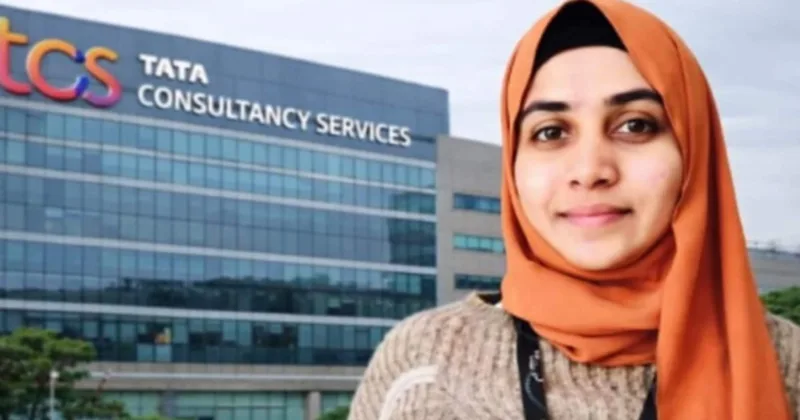
When Mary Wollstonecraft authored “A Vindication of the Rights of Woman” in 1792, the essay was hailed as the cornerstone of first-wave feminism. The essential argument was that women must have access to education in a rational manner so that they may contribute equally to society. Little would have Mary thought that working women in her own country and globally would become prey to the fundamentalists.
The Subjective Approach of Feminist Ideologues in India
The ideological composition and structural inheritance of “feminist” groups in India are anomalous. Historically, these advocacy groups have relied heavily upon the left side of the political spectrum for survival. The intersectional activism by such groups, therefore, has no self-reliant agenda. While pro-left feminist groups were active agents in kindling Shaheen Bagh sit-ins, their conspicuous silence over the radical subjugation of working women at TCS Nashik divulges their convenience bias. Do Hindu women’s rights matter to them? How can the subaltern speak now? They should introspect.
The Facade of Public Intelligentsia
In academic institutions, Women’s Studies courses often include lofty readings from Eurocentric feminist foremothers who often overlooked the lived experiences of colored women. It prompted Alice Walker to coin the term “Womanism” in 1983 to demonstrate the departure from the dominant white feminist discourse. However, in Bhārat, this lack of inclusivity based on selective cultural amnesia has continued, mimicking the west. Irrational resistance to one’s own Indic intellectual inheritance arising from the Vedic female philosophers has solidified gentrified feminism which is incapable of fostering an authentic egalitarian approach. As a result, there are absurd arguments by feminist right groups against Nari Shakti Vandan Bill whereas in the current TCS Nashik scandal they have gone kaput. Hence, the facade of public intellectualism is unmasked in the reticence and taciturnity regarding Hindu women’s rights.
Charting a New Path
In the wake of recent developments, it is imperative to prepare a blueprint for the future at the earliest. Stree Vimarsh has been a part and parcel of Bhāratiya civilisation since the beginning. Therefore, it is incumbent upon stakeholders including social reformers, industry leaders, political representatives and academics to collectively enforce equal rights and access to judicial remedies enshrined in the Constitution.
Moreover, it is the social obligation of all to integrate strong faith in family values (kutumb prabodhan) to create unhesitant and seamless dialogue around workplace harassment and exploitation. Championing gender rights is about transparency and accountability. Clearly, the established hegemonic feminist groups have been ineffective. Beyond the web of leftist propaganda and narrativisation is the kernel of truth that underscores the germaneness of the above proposal to ascertain equal rights and opportunities for Hindu women.