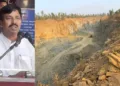
Bengaluru: In a major setback to both officials and private entities involved in controversial land dealings, the Karnataka High Court has ordered a probe by the Central Bureau of Investigation(CBI) into an alleged large-scale land acquisition fraud involving nearly 55 acres in Hebbal and Amanikere villages on the outskirts of the city. The case revolves around land acquired by the Karnataka Industrial Areas Development Board, where the court found prima facie evidence of serious illegality and procedural violations.
The division bench comprising Justice D.K. Singh and Justice Tara Vitasta Ganju passed the order while hearing appeals filed by the relatives of deceased landowner Krishna Reddy and other affected farmers. These appeals had challenged an earlier single-judge order that had upheld the acquisition process. However, upon detailed examination, the division bench found glaring irregularities that pointed towards a well-orchestrated fraud involving both government officials and private stakeholders.
In its strongly worded judgment, the High Court observed that the entire acquisition process appeared to be the result of a “criminal conspiracy”. It noted that valuable agricultural land belonging to farmers was acquired at meager compensation under the pretext of development, which, in reality, never materialized even after more than a decade. A key point flagged by the court was that the land was acquired in the name of Lake View Tourism Corporation.
Shockingly, the bench observed that the company either did not exist at the time of acquisition or lacked the legal and financial capacity to undertake such a large-scale project. Using the name of such an entity to justify acquisition was termed as clear deception and abuse of power. The court went a step further and quashed the entire acquisition process, declaring it illegal. It also imposed a penalty of ₹10 lakh on the company, underlining the seriousness of the violations.
The judgment has also raised serious questions about the role of the state government. Referring to official records, including the company’s 2022-23 financial disclosures, the court noted that the firm was still in the stage of identifying business opportunities and had not initiated any substantial operations. Despite this, land was acquired in his favor, indicating possible complicity at multiple levels of administration.
“Such circumstances clearly indicate the involvement of authorities in facilitating the fraud”, the bench observed, adding that expecting a fair and impartial investigation from state agencies would not be realistic under the circumstances. This observation formed the basis for transferring the probe to the CBI. The origins of the project date back to the year 2000, when a proposal was submitted to develop a tourism hub comprising a resort, five-star hotel and amusement park. Initially, several well-known individuals were listed as promoters.
However, by the time the company was formally incorporated in 2011, none of the original promoters were associated with it, raising further doubts about the authenticity of the project. Between 2002 and 2004, KIADB issued preliminary and final notifications for acquiring the land. However, despite acquiring the land, no development activity took place for over 12 years. This prolonged inaction further strengthened suspicions about the real intent behind the acquisition.
The controversy deepened in March 2023, when a single-window clearance committee granted approval to convert the same land for commercial use, including construction of office spaces and a tech park. This sudden shift in land use, without any prior development, added another layer of suspicion to the case. Legal experts believe that the High Court’s order could have far-reaching implications, potentially exposing a larger nexus between officials and private developers involved in land transactions.
If the CBI probe confirms the allegations, it may lead to criminal proceedings, recovery of land and action against those responsible. The case has once again brought the spotlight on land acquisition practices in Karnataka, highlighting the urgent need for transparency, accountability and protection of farmers’ rights in the face of rapid urban expansion.